
 Русский







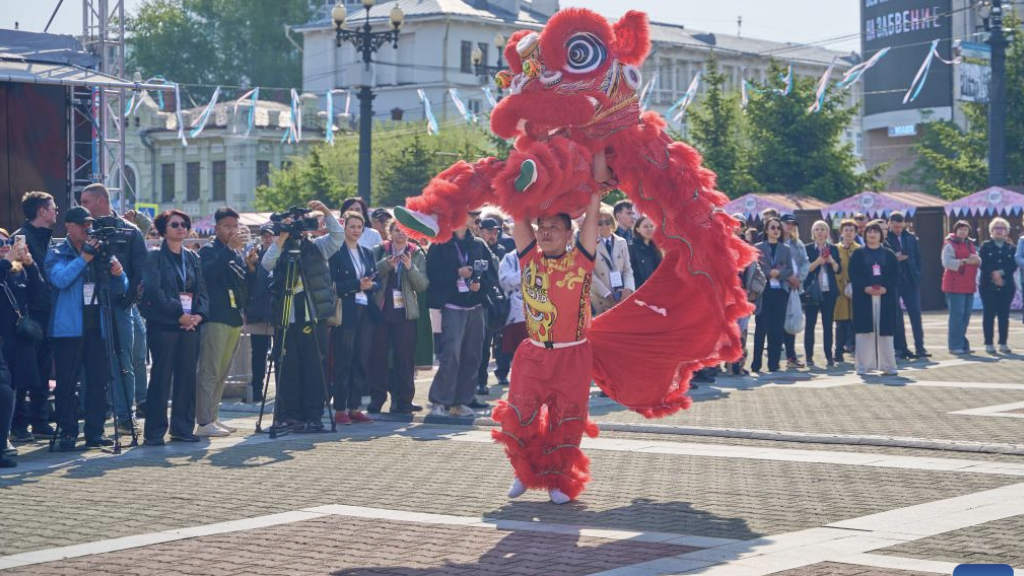

While this weeks’ Eastern Economic Forum in Vladivostok dealt with Russia’s strategic energy and national investment coordination with China – and took most of the headlines – the second Russian-Chinese Forum held in Khabarovsk between September 4-6 dealt with implementation at the regional level. Put simply, this region is where Russia’s Far Eastern regions meet China’s industrial Northeast
The Forum involved around 4,000 participants from 21 Russian regions and 14 Chinese provinces with more than 270 individual B2B meetings covering 15 sectors, including food, agriculture, fishing, wood processing, machine-building, construction, fuel and energy, metallurgy, tourism, IT and telecommunications, creative industries, logistics, chemicals and finance.
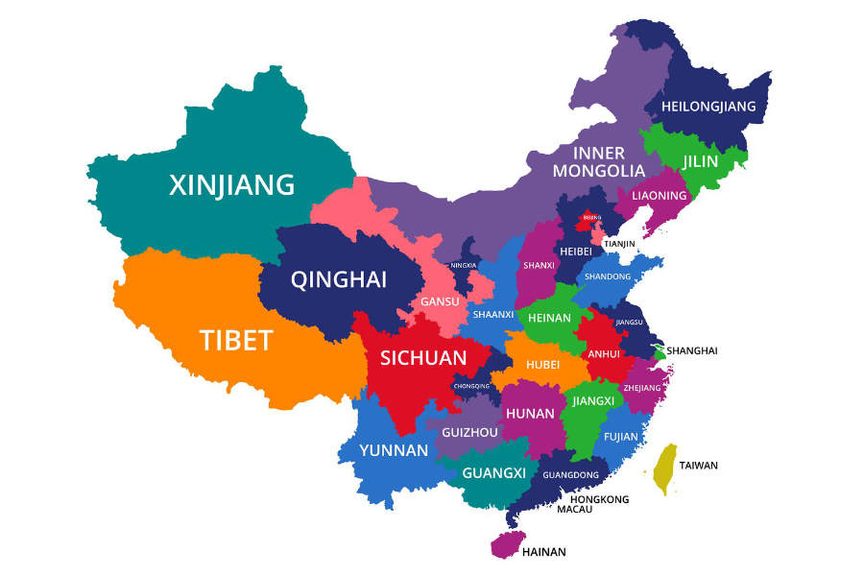
The geographical structure is important: the Russian side was led by Khabarovsk Krai and other Far Eastern and Siberian regions, while Chinese participation included not only the border provinces of Heilongjiang, Jilin, and Inner Mongolia, but also Liaoning, Shaanxi, Hebei, Shandong, Guangdong, Yunnan, and Zhejiang. This demonstrates that Russia-China regional cooperation is no longer limited to the immediate border. It is increasingly connecting Russia’s resource-rich Far East and Siberia with China’s industrial northeast, manufacturing provinces and major coastal markets.
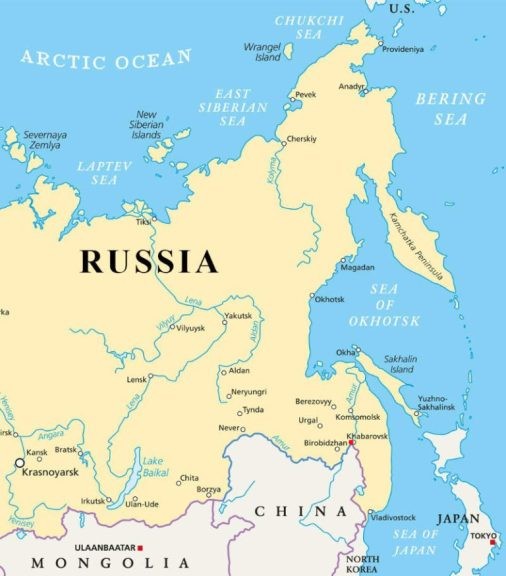
Khabarovsk, the administrative centre and largest city of Khabarovsk Krai, is located 17 km from the Russia–China border, at the confluence of the Amur and Ussuri Rivers. The nearest Chinese city is Fuyuan, which is about 65 km from Khabarovsk by river. A regular hydrofoil service between the two takes just over an hour. Fuyuan is connected to Harbin by rail, also has an Amur River port, and a regional airport with flights to Jiamusi, Mohe, Harbin, all close to the Russian border, as well as to Beijing and Chengdu.
The key cooperation project is Greater (Russian: Bolshoi) Ussuriysky Island, located in the centre of the Amur River; its Chinese part is administratively part of Fuyuan County. The island is now being extensively developed by both sides and provided the main connectivity theme of the Forum.
With the forum held under the theme “Greater Ussuriysky: Cooperation in the Joint Development of the Island” the scale was substantial: 4,000 participants from 21 Russian regions and 14 Chinese provinces, more than 40 thematic platforms, and over 270 individual B2B meetings across 15 sectors. More than 25 agreements and memorandums were signed. We can examine the developing relationship between Khabarovsk and various Chinese provinces as follows:
Khabarovsk – Heilongjiang: The Natural Cross-Border Economic Pair

The strongest geographical complementarity is between Khabarovsk Krai and Heilongjiang Province. Khabarovsk is Russia’s major administrative, industrial and transport centre on the Amur, while Heilongjiang is China’s principal northeastern gateway to Russia. Their economic relationship is therefore based less on simple distance than on a natural division of economic functions: Khabarovsk supplies agricultural products, fish, timber, metals, machinery, energy resources and industrial inputs, while Heilongjiang provides manufacturing capacity, processing, machinery, logistics services, consumer markets and access to China’s much larger domestic economy. The Greater Ussuri Island project gives this relationship an unusually concrete geographical platform. The island is being positioned as a potential centre for cross-border logistics, tourism, investment and ecological cooperation between Khabarovsk and Heilongjiang. The forum’s organisers explicitly made Greater Ussuri one of its central themes, alongside industrial cooperation and logistics.
The commercial logic is already visible in the regional trade numbers. Khabarovsk Krai’s overall exports increased by roughly 200% in 2025, while non-resource, non-energy exports approximately doubled. Its principal export categories included machine-building products, precious metals, fish and seafood, wood-processing products and ferrous metallurgy. In Q1 2026, exports increased by about 40%. Far Eastern regions collectively accounted for around 42% of Russia’s agricultural exports to China in 2025, while Khabarovsk’s agricultural exports to China have doubled over the past five years. At the national level, Russian agricultural exports to China reached US$5.7 billion in the first seven months of 2026, up 40% year on year. This gives Heilongjiang a particularly strong role as a nearby processing, distribution and consumption market for Khabarovsk’s fish, grain, timber and agricultural products, while Khabarovsk can absorb Chinese machinery, components, transport equipment and investment.
Khabarovsk – Liaoning: From Raw Materials To Industrial Localization

Liaoning Province represents a different but equally important form of complementarity. Whereas Heilongjiang’s advantage is its direct border position and agricultural/logistics links, Liaoning is one of China’s major heavy-industrial and equipment-manufacturing bases. That makes it particularly relevant to Khabarovsk’s ambitions in machine-building, shipbuilding, ship repair, industrial equipment and metallurgy. The Khabarovsk forum produced a memorandum concerning the creation of production facilities for internal-combustion engines and mechanisms for shipbuilding and ship repair in the Russian Far East, building on earlier Chinese interest in engine manufacturing. The significance is larger than one factory: Khabarovsk provides the Russian industrial site, natural-resource base and regional market, while Chinese industrial partners can supply equipment, components, production technologies and capital. That is precisely the type of cooperation that can move bilateral trade from finished-product exchange toward localised production chains.
Khabarovsk – Jilin: Agriculture, Automotive And Border Connectivity

Jilin Province has another complementary profile. Its economy combines agriculture with automotive, equipment manufacturing, pharmaceuticals and advanced industrial production. For Khabarovsk, this creates opportunities to move beyond the traditional export of fish, timber and raw materials into agricultural processing, machinery, vehicle-related services, components and industrial cooperation. Jilin’s proximity to Heilongjiang and the broader Northeast Asian transport network also gives it relevance for cross-border supply chains linking the Russian Far East with northeastern China. The presence of Jilin in the 2026 forum matters because the regional architecture is becoming more diversified: Heilongjiang can serve as the immediate border gateway, Jilin as an industrial partner, and Liaoning as a heavier manufacturing and maritime-industrial partner. The forum’s broader sectoral programme, covering machine-building, agriculture, logistics, tourism, IT and finance, provides the institutional framework for these different roles to converge.
Shaanxi And China’s Inland Provinces: Linking The Far East To China’s Industrial Market

The participation of Shaanxi is significant because it demonstrates that Russia-China regional cooperation is moving beyond the border provinces. Shaanxi is an important inland industrial and technological centre, with strengths in engineering, aerospace-related industries, equipment manufacturing, chemicals and transport infrastructure. Its participation creates potential links between the Russian Far East and China’s interior industrial networks rather than restricting cooperation to Northeast China. The forum’s confirmed Chinese delegations included Shaanxi alongside Heilongjiang, Liaoning and Jilin, while the wider B2B programme involved companies from provinces including Hebei, Shandong, Guangdong, Yunnan, Inner Mongolia, Zhejiang and Jiangsu. Economically, this matters because Russia’s Far East can provide raw materials, energy, agricultural products and market access while China’s inland provinces provide machinery, engineering, processing capacity and technology. The relationship therefore begins to resemble a multi-provincial supply-chain network rather than a single border trade corridor.
Guangdong, Zhejiang & Jiangsu: Connecting Khabarovsk To China’s Manufacturing Coast

The participation of China’s coastal manufacturing provinces, and particularly Guangdong, Zhejiang and Jiangsu added another layer. These provinces are not geographically adjacent to Russia, but they possess enormous manufacturing ecosystems, private-sector networks, export companies, electronics and machinery suppliers, logistics companies and financial resources. Their involvement means that a Khabarovsk enterprise does not have to remain dependent on the relatively narrow markets of China’s Northeast. A fish-processing company, timber processor, machinery producer or technology firm in Khabarovsk can use Heilongjiang as the geographical entry point while connecting to manufacturing and consumer networks farther south and east. The forum’s 15 B2B sectors from food and agriculture to IT, chemicals, logistics and finance are precisely the areas in which this coastal-industrial capacity can complement the resource and land advantages of the Russian Far East.
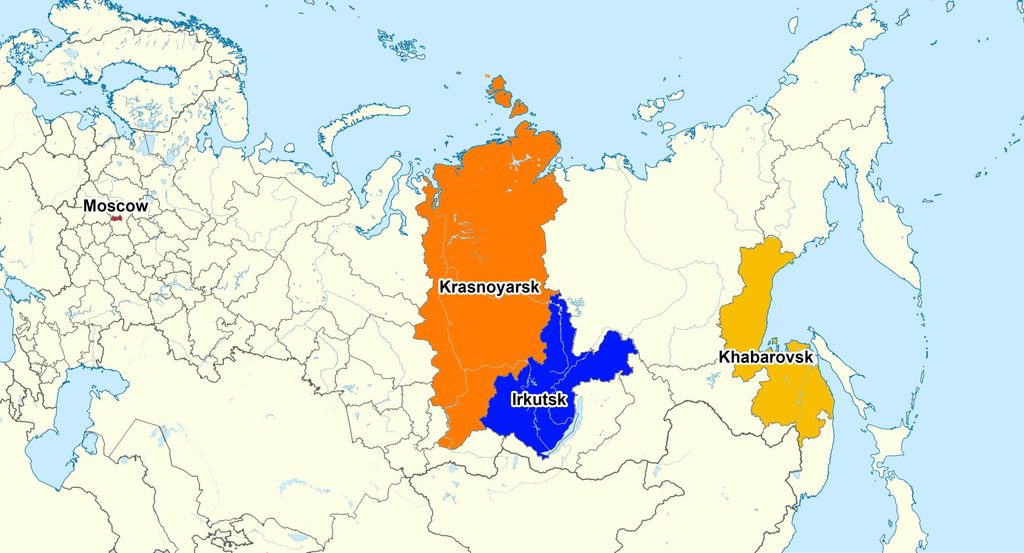
Moscow, Krasnoyarsk And Irkutsk

An important point is that the Russian participation also included other regions than purely the Far East. The B2B programme included companies from Moscow, Krasnoyarsk Krai, Irkutsk Oblast and Khabarovsk Krai, together with other Russian Far Eastern and Siberian territories. This creates a particularly interesting Russia-China economic triangle. Moscow contributes finance, corporate headquarters, technology, trade services and access to Russia’s national market; Irkutsk and Krasnoyarsk contribute Siberian resources, energy, timber, metals and industrial capacity; and Khabarovsk provides the physical bridge to China through the Amur region, ports, border crossings and the wider Far Eastern transport system. In other words, Khabarovsk is increasingly functioning not merely as a destination for Chinese investment but as a distribution point connecting Chinese companies with Russia’s wider Siberian economic space.
Key Agreements & Investment Projects
Key agreements included an MoU to establish production of internal-combustion engines and mechanisms for shipbuilding and ship repair in the Russian Far East. It should be noted that MoU can be legally binding in China depending on its specific wording, the intent of the parties, and how Chinese courts interpret the document. Generally, Chinese investors will not commit to such documents unless they are sure the project will proceed.
An internal Russian agreement between the Khabarovsk Krai Government and the Russian Export Center (REC) to help regional companies access foreign markets was also signed.
The business programme focused on the joint development of Greater (Bolshoi) Ussuri Island, including logistics, industrial and technological cooperation, tourism, education, space technologies, AI, new transport routes and interregional cooperation, alongside the 30th meeting of the Russian-Chinese Transport Cooperation Sub-Commission. Several investment projects were presented, including Khabarovsk City development, East Bridge Industrial Park and the Hechtsir ski complex.
Khabarovsk is expanding its urban landscape through major commercial, waterfront, and infrastructure development plans, including a modern financial and business cluster covering a 28.2-hectare site. It is being built by Russia’s Etalon Group, with construction beginning this year. It will include residential zones, a hotel, a school, a congress hall, and parking facilities.
The East Bridge Industrial Park is a newly approved, high-profile joint Russia-China industrial project located in the northern Krasnoflotsky district of Khabarovsk. Championed by Khabarovsk Governor Dmitry Demeshin, the project officially received the status of a “large-scale investment project,” with an anticipated completion date by 2029.
The Hekhtsir Ski Resort is a newly modernized, year-round tourism and winter sports complex located 25 kilometers south of Khabarovsk. It sits on the scenic slopes of the Bolshoy Khekhtsir mountain range, adjacent to the protected Bolshekhekhtsirsky Nature Reserve. The resort currently operates two main ski slopes with a total length of 2,766 meters and a vertical drop of 311 meters. Both tracks are regularly groomed with snowcats and supported by an advanced automated snowmaking system.
Finally, the Khabarovsk Krai Government and Roscongress Foundation agreed to hold the forum annually, with Greater Ussuri Island as a key agenda item and the goal of making the forum a major Russia-China cooperation platform by 2030. It should be noted that this is not a retreat from deal-making. It is a shift from announcing projects to building the mechanisms through which projects can be implemented.
Investment: China Has Become the Far East’s Dominant Asian Capital Partner

The investment numbers explain why this regional model is commercially significant. According to figures presented around the forum, approximately 100 Russia-China joint projects are currently being implemented in the Russian Far East, with combined investment approaching ₽1 trillion (US$11.7 billion). Chinese investors currently account for over 80% of foreign investment in preferential-regime projects in the Russian Far East, suggesting they alone have placed the equivalent of US$9.36 billion into the region.
The Russian, state-supported Far Eastern investment portfolio now exceeds ₽16 trillion (US$187 billion) in declared projects, with approximately ₽6.8 trillion (US$79 billion) already invested. At the same time, the trade turnover between the Russian Far East and China has grown almost 2.5 times in recent years as bridges, terminals and other transport infrastructure have expanded. The investment relationship is therefore increasingly complementary: Russia needs capital, machinery, processing technology and access to Asian markets; Chinese companies need resources, land, energy, logistics locations and new production sites. Khabarovsk sits where those requirements overlap.
Iron Ore, Shipbuilding & Machinery: The Industrialisation Test

The forum also produced a memorandum concerning the creation of production facilities for internal-combustion engines and mechanisms for shipbuilding and ship repair in the Russian Far East. This matters because the Far East is becoming an increasingly important platform for marine transport, energy infrastructure and Arctic logistics.
Another related project discussed is the Milkanskoye iron-ore cluster in Khabarovsk Krai. The Milkanskoye mine is one of the largest iron ore reserves in the world having estimated reserves of 2.7 billion tonnes of ore grading 31.5% iron metal. The proposed production volume is approximately 16 million tonnes, potentially supplying Far Eastern industry while also creating export capacity.
The Russian Far East holds around 10% of Russia’s iron-ore reserves, and the project has been recommended for development under the Khabarovsk advanced-development regime and inclusion among priority Russia-China initiatives. This is where the Russia-China relationship begins to change the industrial geography of the Russian Far East. Instead of exporting ore or timber and importing finished machinery, the objective increasingly becomes to establish processing, manufacturing and logistics inside the region.
Logistics: The Amur As An Economic Corridor

The most important long-term potential may ultimately be logistics. The 30th Russia-China Subcommission on Transport Cooperation was held in Khabarovsk during the forum, specifically addressing infrastructure, capacity expansion and higher transportation volumes. This matters because regional trade cannot expand indefinitely on existing border infrastructure. The economic logic is to create a system in which the Amur River, railway crossings, bridges, road corridors, aviation links and the Greater Ussuri Island operate as complementary components. The forum therefore placed logistics alongside industrial cooperation, tourism and investment rather than treating transport as a separate technical issue. This is particularly important for Chinese provinces farther from the border: better Khabarovsk connectivity can reduce the cost of moving Russian raw materials and agricultural goods into China while giving Chinese manufacturers a shorter route to Russian Far Eastern and Siberian markets.
S7, Khabarovsk Airport And The Creation Of A China-Facing Transport Hub

One of the most commercially concrete agreements was the strategic partnership between the Government of Khabarovsk Krai, S7 Group and Khabarovsk International Airport. Its purpose is to increase passenger traffic, improve airport efficiency, introduce modern passenger technologies and expand the route network, including routes connecting Khabarovsk with Vladivostok, Irkutsk, Yuzhno-Sakhalinsk, Magadan, Yakutsk – and Beijing. The new international terminal can handle up to 1.5 million passengers annually, while S7 reported a 24% increase in passenger traffic through its Novosibirsk hub to and from Khabarovsk during the first eight months of 2026. This is more than a tourism measure. Air connectivity is essential for high-value investment, specialist movement, business travel and services. If Khabarovsk is to become a regional business centre rather than merely a border city, passenger infrastructure has to develop alongside bridges, railways, ports and customs systems.
65 Khabarovsk Companies Enter An Export Acceleration Pipeline

Another important agreement linked the Khabarovsk regional government with the Russian Export Center, part of the VEB.RF group. A monitored list of 65 regional companies was approved for export acceleration, covering agriculture, industry, creative industries, wood processing, metallurgy and fisheries. Support includes first-time export assistance, certification, partner search, financing and promotion under the Made in Russia programme.
The companies are operating in an environment where regional exports are already expanding. Khabarovsk Krai’s total exports increased by about 200% in 2025, while non-resource, non-energy exports doubled. Machinery, precious metals, fish and seafood, wood processing and ferrous metallurgy were among the principal products. Export growth continued in the first quarter of 2026, with estimates suggesting these have grown roughly 40% year on year.
The Chinese market is especially important for agriculture. Far Eastern regions accounted for around 42% of Russia’s agricultural exports to China in 2025, while Russia’s overall agricultural exports to China reached US$5.7 billion in the first seven months of 2026, also up 40% year on year. The next stage, therefore, is not simply to export more raw fish, grain or timber. It is to process more of these products locally and move higher-value goods through Chinese distribution networks.
Greater Ussuriysky Island: The Smallest Geography With The Largest Strategic Meaning
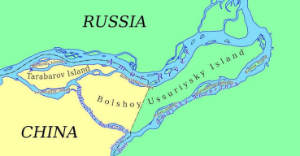
Greater Ussuriysky Island may ultimately become the most important regional symbol emerging from the Khabarovsk forum. Its significance is not its size but its location: it sits directly at the Russia-China border and provides a practical setting for experimenting with cross-border logistics, tourism, environmental projects, customs procedures and people-to-people interaction. The forum placed the island at the centre of its business programme, alongside logistics, investment, tourism, industrial cooperation and technology. The Khabarovsk regional government and Roscongress also signed an agreement at the EEF to hold the Russian-Chinese Forum annually, with the aim of making it a leading bilateral business platform by 2030 and maintaining Greater Ussuriysky as a permanent priority. This is precisely where the broader national strategy becomes regional policy. The island can become a laboratory for the practical integration of Russian and Chinese standards, customs, logistics, tourism and investment procedures.
The Real Complementarity: Resources On One Side, Industrial Capacity And Markets On The Other
The deeper economic significance of the Khabarovsk forum is therefore not simply that Russian regions met Chinese provinces. It is that their economic structures are increasingly complementary. Khabarovsk, Primorye, Sakhalin, Amur and other Far Eastern territories possess proximity to China, natural resources, agricultural land, fisheries, timber, metals, energy and large areas available for industrial development. Heilongjiang, Jilin and Liaoning bring proximity, manufacturing, processing, logistics and established China-Russia trade networks. Shaanxi adds inland industrial and technological capacity, while Guangdong, Zhejiang and Jiangsu provide access to China’s enormous coastal manufacturing and consumer economy. Moscow, Irkutsk and Krasnoyarsk broaden the Russian side into finance, Siberian resources and national industrial supply chains. This creates the basis for a division of labour in which Russia does not simply export commodities to China and China does not simply export manufactured goods to Russia; instead, the two sides can increasingly combine Russian resources and industrial sites with Chinese capital, machinery, processing, logistics and market access.
The evidence already points in that direction. The forum generated more than 25 agreements and memorandums, more than 270 B2B meetings and investment pitches covering Khabarovsk-City, the Vostochny Most industrial park and the Khekhtsir ski complex. A separate agreement placed 65 Khabarovsk companies from agriculture, industry, creative industries, timber, metallurgy and fishing under an export-acceleration programme involving certification, financing, partner search and international promotion. The forum therefore produced something more valuable than a single headline investment number: it built a pipeline linking regional exporters, Chinese buyers, investors, logistics operators, industrial parks and financial institutions. That is the real economic story of Khabarovsk in 2026. Vladivostok remains the federal window through which Russia presents its Far East to Asia, but Khabarovsk is becoming the place where the Russia-China relationship is tested at the level of provinces, companies, factories, border crossings, airports, industrial parks and individual supply chains. With China identified by 73% of respondents as the most promising Asia-Pacific investment partner, compared with 26% for South Korea, 25% for India and 23% for Japan, the commercial centre of gravity is clear but the next test is whether the rapidly expanding network of regional contacts can produce sustained production, processing and logistics projects rather than another cycle of forum declarations.
The Russia – China ‘Win-Win’

For Russia, the immediate gain is market diversification and infrastructure. China provides a large and geographically accessible destination for oil, gas, coal, agricultural products, metals and other exports. More importantly, Chinese equipment, investment and logistics can help Russia industrialise parts of the Far East that previously lacked sufficient domestic demand or capital.
For China, the gains are equally concrete. Russian energy strengthens supply security; Arctic and Far Eastern resources diversify China’s import geography; the Northern Sea Route offers another potential logistics corridor; Russian agricultural and mineral supplies broaden sourcing; and cooperation with Russian industrial and scientific institutions provides access to resources and technologies complementary to China’s manufacturing ecosystem.
The greatest gain, however, is regional. Northeast China and the Russian Far East are increasingly being treated as parts of a connected economic space. Vladivostok provides the national-level energy and investment coordination centre; Khabarovsk provides the regional business platform; Greater Ussuriysky provides the cross-border development laboratory; while the Northern Sea Route provides the emerging northern extension.
Summary
The cumulative results of the Vladivostok Eastern Economic Forum and the Khabarovsk Forum point toward a new division of economic labour. Russia supplies energy, minerals, agricultural products, timber, land, industrial resources and Arctic infrastructure. China supplies manufacturing scale, equipment, technology, logistics, capital, consumer demand and increasingly digital systems. The Far East supplies the geography where these factors can be combined.
The numbers demonstrate the direction. Bilateral trade has surpassed US$135 billion in six months, up 22%. The bilateral investment portfolio has reached US$240 billion. Energy trade now exceeds US$50 billion over the past seven months, up more than 20%. The Power of Siberia moved 38.8 bcm in 2025, while the Power of Baikal is designed for another 50 bcm. Russian agricultural exports to China reached US$5.7 billion in seven months, up 40%. Around 100 Russia-China projects worth nearly US$11.6 billion are under way in the Russian Far East. These figures reveal a relationship that is becoming increasingly inappropriate to describe simply as “energy trade.”