 Русский




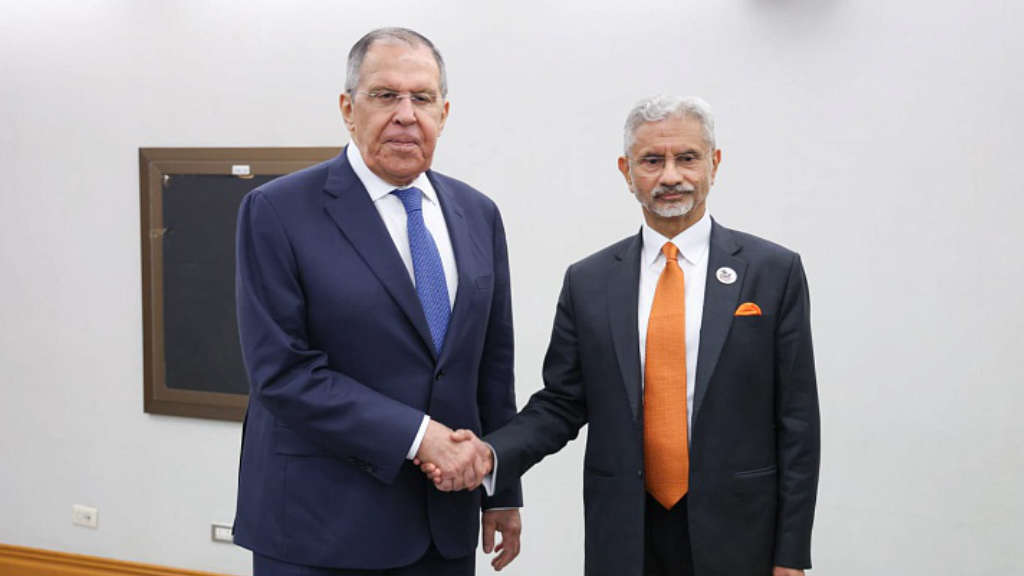

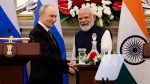
Russia’s Foreign Minister Sergey Lavrov has met with Subrahmanyam Jaishankar, the Indian Minister of External Affairs. They ministers discussed the schedule of upcoming political contacts at various levels and various international platforms, main issues of bilateral cooperation, and current issues on the global and regional agenda.
The two countries are in the process of substantially developing their mutual cooperation across multiple levels. They are both founding members of BRICS and the Shanghai Cooperation Organisation (SCO) with SCO meetings earlier this week also involving India. Our report on that is here.
India is also negotiating a Free Trade Agreement with the Eurasian Economic Union, which would be a global game changer and a substantial win for both economies. The Iran-EAEU FTA in 2023 eliminated tariffs on 90% of all traded goods and has resulted in significant trade boosts between Iran and Russia and the other EAEU members – Armenia, Belarus, Kazakhstan and Kyrgyzstan.
The two countries are also committed to de-dollarizing 100% of their trade, and are involved in establishing branches of commercial banks in each other’s countries to help facilitate this expected, major boost to bilateral trade. India-Russia trade is now r unning at about US$60 billion per annum, with both countries pursuing a trade target of US$100 billion by 2030.
Russia and India also have a strong military industrial base, with India producing both under licence and in the form of India-Russia Joint Ventures a wide variety of military equipment, including ammunition, cruise missiles, tanks and jet fighters such as the SU-57 and Frigates.
Industrial cooperation is also very strong with the two countries involved in the mutual building of commercial aircraft such as the Sukhoi Superjet, and Ilyushin aircraft, icebreakers as well as other ships and developing ship repair services. The two have also collaborated on high-speed railway construction and railway carriage design and manufacturing.
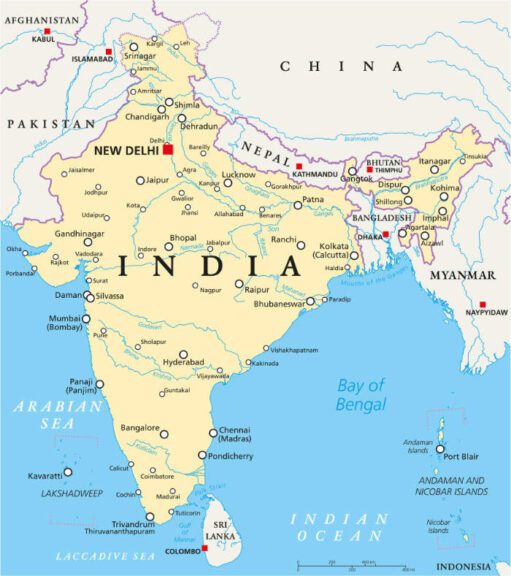
Logistics is also very much part of this mix, with India continuing to import Russian LNG and Oil, using the Northern Sea Route via Vladivostok to Chennai. It is for this reason that India wants to develop icebreakers – New Delhi wants to insert itself into the Russian energy supply chains and be able to provide transport assistance not only to its own refineries but potentially to other countries as well. Russia is training thousands of Indian engineers and maritime personnel to allow them this access. There are also plans to recruit up to 1 million Indian engineers and workers for employment in Russian factories to help alleviate Russia’s labour shortage.
Quite apart from the industrial manufacturing and logistics developments, bilateral agricultural trade is also booming. Russia’s exports of sunflower oil, an essential ingredient in Indian cooking have risen by 43%, while exports of Russian fertilizers and grains has also increased by huge amounts. In light of the pending India-EAEU trade agreement, India’s Ministry of Trade has identified over 300 products it wants to sell to the Russian market.
Technologies of the Future are also very much part of this dynamic mix. Russia and India are set to collaborate on Quantum Computing projects, as well as collaboration in semi-conducting, where India has a technical lead. Indian institutions are testing Siberian rare earths for their suitability in these technologies. Joint Ventures are almost certain to arise. The relationship is also going out of this world – literally – as Roscosmos is preparing to work with the Indian Space Research Organisation to develop an Indian Space Station.
The upshot is that the Russia-India axis is very much on the way up and will be globally influential in determining future supply chains, logistics – and future tech.