Русский








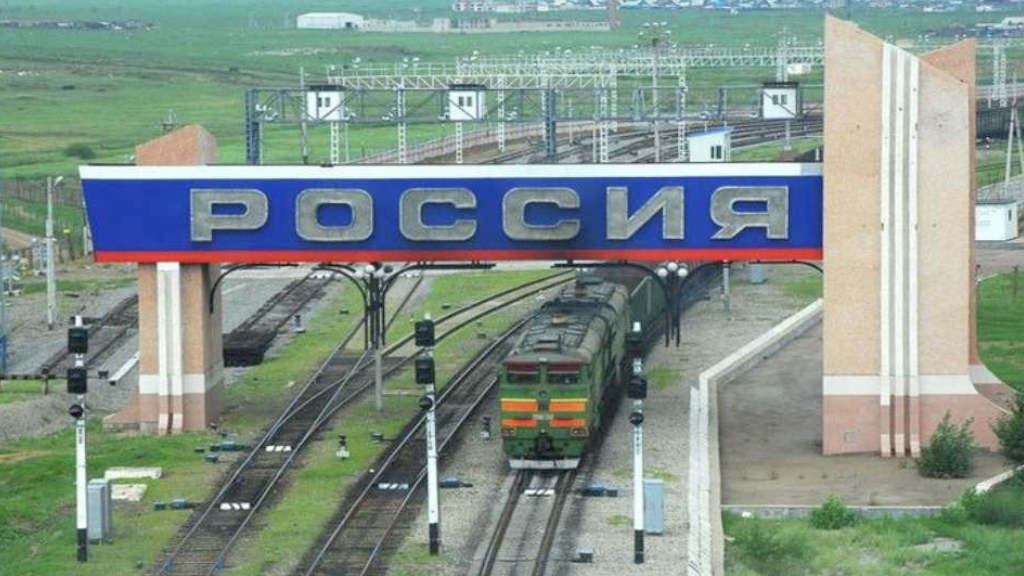

Russia’s railway diplomacy and global railway partnership are entering a new phase. What was once largely a system of infrastructure links connecting Russia with Europe, the former Soviet space and China is increasingly becoming a broader network reaching much deeper into Asia.
As we saw a few days ago with the announcement that Russia is interested in building direct rail connectivity with India, opinions are divided as to whether this is feasible, particularly given animosity between India and Pakistan, security issues between Iran and Pakistan, and similar security problems, not to mention the additional, hugely expensive costs of building a railway transiting Afghanistan.
Yet the process is already well underway and has largely flown under the radar. Russia is already developing railway connectivity and multimodal routes to Iran, Indonesia, Thailand, Azerbaijan, India, Pakistan, Afghanistan, China, Central Asia (Kazakhstan and Tajikistan), Latin America and selected European partners such as Serbia.
Recent developments, and especially during this year highlight Russian Railways (RZD/OAO RZD)’s expanding partnerships across Asia. These also include projects involving Belarus, the Caucasus and Central Asia, and Latin America, notably Cuba. These partnerships and transport initiatives focus on the International North-South Transport Corridor (INSTC), railway infrastructure development, digitalization, cross-border connectivity, and freight growth.
The important point is that these are not simply a collection of unrelated railway projects. Taken together, these developments illustrate that Moscow is attempting to convert its enormous continental geography into a new economic advantage. Railway connectivity is becoming an instrument for redirecting trade, reducing dependence on maritime chokepoints, opening markets for Russian railway technology and creating new industrial and logistics partnerships across the Global South.
Russian Railways Financial Position & Operating Performance

The timing is significant. Russian Railways is pursuing international expansion while operating in a challenging financial environment marked by high borrowing costs and weaker freight demand. According to RZD Holding’s 2025 IFRS results, revenue rose 10.4% to ₽3.64 trillion (US$44 billion) while operating profit increased 19.1% to ₽544.6 billion (US$6.6 billion). RZD’s EBITDA reached ₽1.059.8 billion up 16.9%.
However, RZD’s financial expenses climbed to ₽534.1 billion, reducing net profit from ₽50.7 billion to ₽2.3 billion. Net debt-to-EBITDA stood at 3.37 times, against a maximum threshold of 3.5 times. The financial operations of the business remain tight, yet manageable. Yet despite these pressures, RZD continues to modernise its network, upgrade locomotives and remove bottlenecks on key freight routes.
For example, on July 31, at the Kremlin, Russian Railways CEO and Chairman of the Management Board Oleg Belozerov briefed President Vladimir Putin on the RZD’s performance and expanding international railway links. In remarks to President Vladimir Putin, Belozerov said the company’s operating revenue reached ₽1.7 trillion (US$20.6 billion) in the first six months of 2026, with freight turnover gaining momentum after a weak start to the year caused partly by weather conditions. By June, freight turnover had increased 4.5% year on year and met the company’s development plans.
Redirecting Rail Connectivity To Friendly Countries

Against this backdrop, international railway cooperation is being used to develop new cargo flows, expand transport corridors and strengthen Russia’s connectivity with foreign markets. The strategy is therefore aimed not only at infrastructure development, but also at securing long-term freight growth and wider international market access.
Belozerov also reported that more than 93% of Russian Railways’ international transportation is now connected with friendly countries, reflecting Russia’s growing focus on the Global South and alternative trade corridors. Freight traffic with China increased by 5.5%, while transportation with Belarus rose by 3% and traffic with Eurasian Economic Union (EAEU) countries continued to grow.
Russia is also expanding transport through the INSTC, with export shipments rising by more than 3.4% in H1 2026 and by over 4.4% in June, while container transportation grew by more than 13% in June, with RZD expecting a record for container traffic in 2026.
Belozerov highlighted the continued development of the Eastern Operating Domain, where freight capacity is targeted at 180 million tonnes, alongside increasing exports of grain, fertilisers, containers and other non-coal cargo.
In contrast, transportation with European countries has declined sharply, including a nearly 25% fall with Finland and a 42% fall with Estonia. These developments demonstrate Russia’s efforts to redirect railway trade toward China, the EAEU and other partner countries while strengthening the North-South and eastern transport corridors as alternatives to traditional European routes.
This creates an important strategic calculation. Russia’s railway system remains financially pressured by high financing costs and uneven freight demand, yet the company is continuing to strengthen infrastructure and pursue growth in international transport corridors. Moscow is therefore not simply seeking to expand railway infrastructure abroad, it is also seeking to create new and more diversified cargo flows, strengthen connections with foreign markets and ensure that Russian railway capacity can support longer-term trade growth. It is a point missed by Western analysts. They may point out RZD’s tight financial operating position – as does the Kremlin – but they fail to understand the strategy Moscow and RZD have developed to handle this.
The North-South Corridor Is Becoming the Backbone of Russia’s Southern Strategy
The clearest example is the INSTC. The Russia-Azerbaijan-Iran axis is moving from political declarations toward operational integration. On July 3-4, 2026, senior railway officials from the three countries met in Moscow. Russian Railways CEO Oleg Belozerov, Iran’s railway chief Jabbar Ali Zakeri and Azerbaijan Railways Chairman Rovshan Rustamov discussed increasing freight volumes, improving route efficiency and accelerating digitalization. The meeting produced a trilateral protocol focused on further development of the western route of the INSTC. Importantly, the parties also agreed to establish a unified digital transport corridor and standardize electronic data exchange. This will speed up customs and transit procedures while eliminating paper documentation.
Tax and trade incentives also apply here. Russia and Azerbaijan have a Free Trade Agreement and are both members of the Commonwealth of Independent States. Azerbaijan and Iran have a preferential trade agreement and have signed multiple customs and transit memorandums to reduce trade barriers, while Iran has a Free Trade Agreement with the Eurasian Economic Union, which includes Russia as well as Armenia, Belarus, Kazakhstan and Kyrgyzstan – with numerous onward rail connectivity routes through to China.
The numbers demonstrate why this matters. In June 2026, freight transported through the Astara border crossing reached 47,500 tonnes, 50% more than in June 2025. During the first half of 2026, shipments moving south increased by approximately 27%, while Russian grain exports to Iran were more than four times the level of the previous year.
The Azerbaijani section of the North–South railway is 511 kilometres long, with Baku saying the corridor can reduce delivery times between the Persian Gulf and Northern Europe (Russia) from roughly 45-60 days via the traditional maritime route to approximately 20–25 days. The three participating countries have committed to measures aimed at increasing cargo transportation on the northern and southern branches toward 15 million tonnes, or around 660,000 TEU.
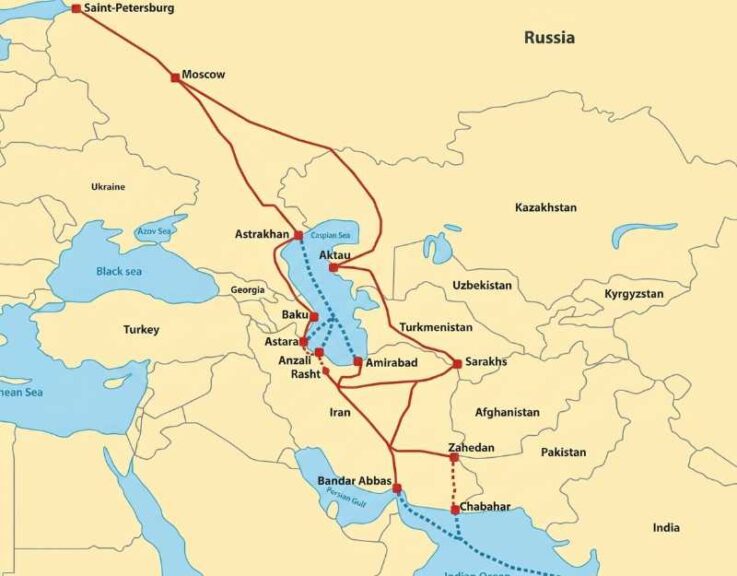
This is the point at which INSTC becomes more than a transit route. For Russia, it creates a southern export channel. For Azerbaijan, it strengthens its position as a transit bridge between Russia and Iran. For Iran, it offers an opportunity to become a central Eurasian logistics platform connecting Russia to the Persian Gulf and Indian Ocean. And for all three, digitalization is increasingly as important as physical infrastructure. A railway can only move as fast as customs procedures, border inspections, documentation and transshipment operations allow. The digital corridor therefore addresses one of the fundamental weaknesses of international rail freight: the fragmentation of national systems.
Rasht-Astara Remains the Critical Missing Link
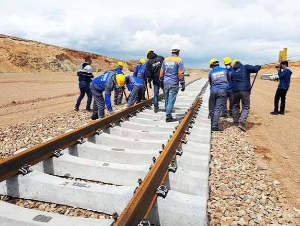
The strategic importance of Iran is impossible to separate from the Rasht-Astara railway. During his Moscow visit, Iran’s railway chief Jabbar Ali Zakeri met Russian Deputy Transport Minister Dmitry Zverev to discuss the latest status of the Rasht-Astara project and the development of INSTC routes. The significance of Rasht-Astara is straightforward. It is one of the key missing links preventing the western branch of the North-South system from functioning as a fully integrated rail corridor. The present route already demonstrates commercial potential. Grain exports from Russia to Iran have surged, and total southern-bound freight through the corridor is rapidly growing. Completing the missing infrastructure would not be creating demand from zero; it would be increasing the capacity and reliability of an already expanding trade route. That distinction is important for investors. Russia is increasingly moving from the logic of “build infrastructure and then find cargo”toward“identify existing cargo flows and build infrastructure around them.”
The Russia-Gulf States Rail Connectivity To Africa Concept
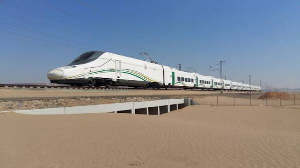
Russia is preparing to sign related documents with Qatar, Saudi Arabia and other Gulf states, according to the Russian Ministry of Transport as of August 11 2026. The ministry said that, in addition to memorandums already signed with Iran, Bahrain, and Oman, similar documents are being prepared with Qatar, Saudi Arabia and other states, while countries in the Persian Gulf and Southeast Asia have also shown interest in connecting their port facilities to this new corridor.
With the Strait of Hormuz now being shown to be a weak link Maritime choke point, the Gulf nations are keen to develop overland, rail transport corridors as alternatives. New multimodal transport operations and supply chains are already being discussed with Riyadh, while the country already possesses an operational railway network spanning over 5,500 kilometers of track, operated by Saudi Arabia Railways (SAR). The infrastructure includes major corridors like the 2,750 km North-South Railway, the East Train Network, and the 449 km Haramain High-Speed Railway. Plans are underway to expand the total network past 8,000 kilometers.
Oman meanwhile has expressed a strong interest in joining the INSTC and to develop port hubs that could reach out to East Africa via additional maritime routes and connect with African railways. Russian transport companies are also now thinking about extending the INSTC further south from the Middle East to East Africa.
Russian Railways has already expressed interest in the potential to extend the International North-South Transport Corridor (INSTC) to Africa and is also studying railway projects in a number of African countries, RZD first deputy CEO Sergei Pavlov stated last year. He was speaking at the State Duma during a meeting of the expert council for the development and support of comprehensive partnership with African countries.
Pavlov said that “Given the potential of developing trade with African countries, we see prospects for the further development and extension of the International North-South Transport Corridor to Africa with the creation of the appropriate transport infrastructure. We are prepared to actively get involved in this work with interested Russian operators and logistics companies.
In addition, we are currently studying opportunities to implement projects to build and modernize railway infrastructure in certain countries, namely Burkina Faso, Ghana and South Africa, and we’re also waiting for the normalization of the situation in Libya. In this area we’re prepared to offer African partners the whole range of services, from feasibility study to construction and equipment supplies. Of course, the issue of financing and ensuring mutual settlements is extremely important. But here we’re working with our specialized Russian agencies and institutions in the support of African railway economic activities.”
In East Africa, Kenya has a railway network of over 2,066 kilometers, Tanzania 3,682 kilometers, and Mozambique of 3,116 kilometers. If connected to the INSTC these could assist Russia, EAEU and Middle Eastern countries dramatically improve and increase their logistics reach deep into East and Central Africa.
Pakistan Brings the Russian Railway Strategy to the Indian Ocean
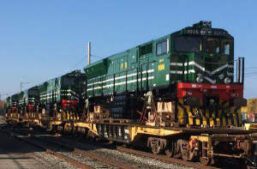
The most strategically significant new development came on August 8, 2026. Russian Ambassador to Pakistan Albert Khorev confirmed that Moscow and Islamabad are working to establish the first direct freight railway routes between Russia and Pakistan, with proposed services connecting Moscow-Faisalabad and Moscow-Karachi in both directions. The possibility of Belarus joining the project is also being examined. The parties are currently completing a service contract and selecting companies in the countries along the proposed route that are interested in moving cargo.
The route has already been tested with agricultural products travelling between Russia and Pakistan via Iran, although recent security issues in Iran have curtailed this at present. Nonetheless, this is potentially much bigger than a bilateral railway project. Direct road transport along the same route has also been tested between Pakistan and Russia. These left Pakistan for Iran at the Taftan-Mirjaveh border crossing, continue on the main Iranian Highway 84, cross into Azerbaijan, and continue to the Russian border at the Yarag-Kazmalyar checkpoint. Upgrading the supporting infrastructure along this route is also being put into place.
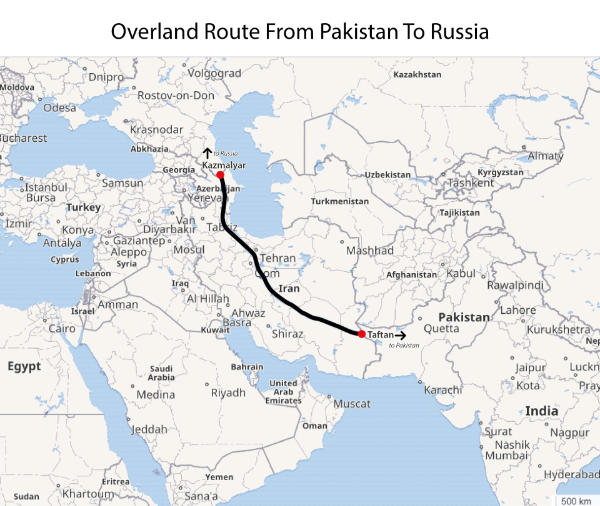
The proposed rail route would provide a regular service connecting Russia with Pakistan through Iran, creating a logistics chain linking the Russian railway system to the Indian Ocean. The project had been delayed by regional tensions during 2025 and early 2026, but negotiations have now moved toward operational arrangements.
The geographical logic is reinforced by comments from Russian Deputy Prime Minister Marat Khusnullin on August 6. He argued that Russia should explore railway access to the Indian Ocean because instability around the Bosphorus and Strait of Hormuz creates risks for international trade. This is a major change in Russian transport thinking. Moscow is no longer looking only for alternative routes around Western sanctions. It is beginning to think about redundancy, having several independent routes to the same major markets. A Russia-Iran-Pakistan route could therefore complement, rather than replace, INSTC routes through Azerbaijan.
Russia and Pakistan are also working on the parameters of trial cargo transportation along the INSTC, as well as routes through Afghanistan in conjunction with the Trans-Afghan Railway project. According to the Russian Ministry of Transport, both the Russian and Pakistani railway administrations have established the necessary framework for trial transportation, and the two sides are now working on the route, types of cargo, tariff conditions and delivery times. The date of the test shipment will be agreed with the Pakistani side and the transit countries.
The trial transportation is intended to assess the readiness of the corridor and develop procedures for cargo handling at the interstate level.
It should also be noted that Pakistan and the Eurasian Economic Union are holding negotiations over a Free Trade Agreement, with the Pakistani Ambassador to Russia, Faisal Niaz Tirmizi saying on August 5 that he expected this to be signed within the coming two years.
India Is Becoming the Ultimate Economic Destination of the Southern Railway Network
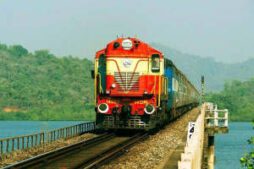
The logical destination of this strategy is India. Russia and India already have a strong economic relationship, particularly in energy, fertilizers, industrial products and machinery. But growing trade requires transportation capacity that is not fully dependent on a single maritime pathway.
The INSTC offers a major advantage. Existing planning envisages transit times between Russia and India of approximately 20-25 days, compared with around 40 days for traditional sea routes. The latest proposal to examine a railway connection reaching the Indian Ocean takes this concept one step further.
The potential geography is extraordinarily ambitious: Russia through Central Asia, Iran and potentially Afghanistan and Pakistan toward the Indian Ocean and ultimately India. It is not yet a completed project, and significant infrastructure, security and financing challenges remain. But strategically, the proposal is important because it changes the question from “How can Russia reach India?” to “How many routes can Russia develop to reach India?” That is a much more resilient trade model.
An example is the Siberian city of Berezovsky planning to develop as a logistics hub to specifically reach the Indian consumer market. It is not a pipe dream. Construction of the logistics centre is being handled by AlEnSi, one of Russia’s largest container fleet operators, and is designed to absorb some of the existing, almost-at-capacity freight flows, bypassing the Moscow region, while establishing direct delivery routes, and reducing transport timelines and costs. The project cost is over ₽2 billion, (US$25 million).
The railway agenda is also being integrated into wider industrial cooperation. Russia and India have discussed railway infrastructure, the Vande Bharat train programme and signaling equipment, alongside cooperation in UAVs, 3D printing, the SJ-100 regional aircraft and aero-engines.
Railway cooperation is becoming part of a broader Russian-Indian technology and industrial relationship. While direct services between Russia and India is very much a development project for the future, New Delhi has shown great interest into inserting its companies into ambitious infrastructure projects, and will almost certainly be looking at how it can provide equipment to Eurasian rail services.
India is also preparing for increased trade with Russia and the Eurasian Economic Union and is expected to sign off a Free Trade Agreement shortly.
China: From Cross-Border Freight to Integrated Logistics
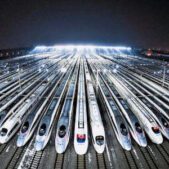
China remains the most important railway partner in Russia’s eastern strategy. The Russian–Chinese railway relationship differs from the INSTC model because much of the basic physical infrastructure already exists. The priority is therefore increasing capacity, reducing border delays, expanding container traffic and integrating digital systems.
The reopening of passenger rail service between Zabaikalsk and Manzhouli in March 2026 after a nearly six-year pandemic interruption was an important symbolic development. The service is scheduled twice a week throughout the year. More strategically important is freight. Russia and China are working to improve border-crossing efficiency, expand containerized transportation and increase the range of commodities moving by rail. Possible additional railway connectivity across the Russian-Chinese border would further strengthen the role of Russia’s Far East as a bridge between Chinese production centers and the Russian rail network. The economic importance is considerable because China is simultaneously Russia’s largest trading partner and one of the principal sources of Asian demand for Russian commodities.
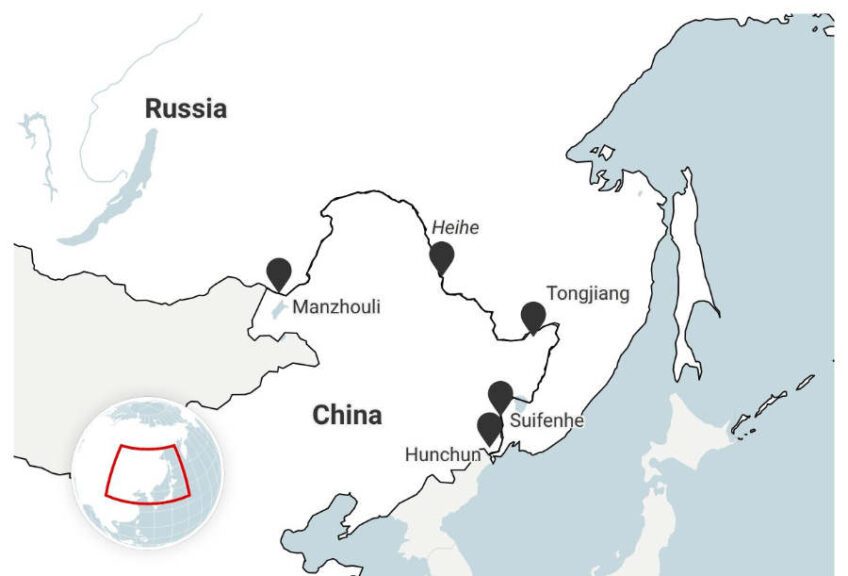
The eastern railway system therefore provides Russia with something different from INSTC: a high-volume industrial corridor connecting Russia directly to the largest manufacturing economy in Asia. China and Russia are planning a fifth cross-border railway to strengthen trade and transport links. Heilongjiang province has issued a tender for a feasibility study and preliminary design of a railway connecting Heihe in China with Blagoveshchensk in Russia, across the Heilong (Amur) River. An existing bridge, opened in 2022, handles road transport, and has already become close to capacity. A Free Trade Zone has also sprung up handling the processing and adding value to goods intended for each others markets, meaning that a lot of the trade supporting infrastructure is already in place.
The project is intended to reduce bottlenecks caused by the limited capacity of the existing road bridge and waterway, particularly during harsh winter months, and connect with Russia’s Trans-Siberian Railway. It would become the fifth China-Russia rail corridor, alongside crossings at Manzhouli, Suifenhe, Tongjiang and Hunchun. Officials hope the line will increase trade with Russia’s Far East and promote tourism, supported by a bilateral visa-free-entry agreement. The project comes as China-Russia economic ties deepen, with Russia increasingly dependent on Chinese trade amid Western sanctions, while Russian energy supplies support China and Chinese cars, electronics and other goods gain market share in Russia.
China and Russia have also agreed to add a new rail line between Zabaykalsk and Manzhouli, including a possible international-standard-gauge track to increase port capacity and improve integration with China’s railway network. At present, goods crossing the border often need to be reloaded or have their wheelsets changed because Russia and China use different railway gauges. Chinese researchers have suggested greater cooperation on railway standards and network integration.
Chinese officials have also called for more transport infrastructure along the shared border to reduce logistics costs. Ambassador Zhang Hanhui highlighted the need for additional crossings and bridges over boundary rivers, citing the Tongjiang–Nizhneleninskoye railway bridge, which opened in November 2022 and has become an important route for Russian coal and iron ore entering China. Overall, the new Heihe-Blagoveshchensk railway is intended to improve year-round connectivity, expand trade and tourism, and deepen China-Russia economic cooperation.
Mongolia: New Trade Routes & China Energy Transit
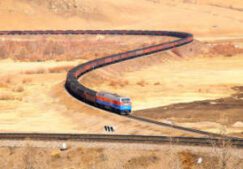
Russia and Mongolia are directly connected via the Trans-Mongolia railway, which branches off from the Trans-Siberian rail and runs south through Mongolia before terminating in Beijing. At present, this is a one track line and running very close to capacity. However, both countries are involved in advancing joint modernization plans for the Ulaanbaatar Railway (UBTZ) joint venture, targeting an increased freight capacity of 50 million tonnes per year by 2030 through infrastructure upgrades, track expansions, and trilateral economic corridor alignment with China.
This includes expanding loop capacities and adding parallel tracks (such as at the Hangai crossing) to support longer trains exceeding 100 railcars, as well as advancing project paperwork for domestic links like the Bagakhangai–Khushig Valley branch railway to better funnel cargo flow.
These developments are important due to two reasons: Mongolia has recently signed a Free Trade Agreement with the Eurasian Economic Union, meaning it can export commodities at minimal tariffs to neighbouring markets in Russia and Kazakhstan, while also creating (and earning income from) additional capacity and transit services between Russia and China.
North Korea: Opening Up To The Russian Far East

Russia’s border with North Korea is Russia’s shortest international border, spanning a 17 kilometer land boundary along the lower Tumen River and a 22.1 kilometer maritime boundary in the Sea of Japan, connecting Khasan in Russia with Tumangang in North Korea. A rail link features dual-gauge tracks to bridge Russia’s broad gauge and North Korea’s standard gauge, facilitating freight and the world’s longest non-stop passenger service running between Moscow and Pyongyang.
Russia and North Korea are expanding cross-border transport by modernizing the Khasan-Tumangang rail link, adding expansive track canopies and rebuilding local infrastructure to manage higher volumes. A new road bridge is also being constructed and may open later this year or early in 2027. It will alleviate the capacity issues with the railway while also operating as a highway partner to the upgraded existing rail network.
This dramatically lowers logistical costs while creating opportunities for entirely new forms of cross-border commerce. For Russian exporters, it reduces dependence on rail transport and increases flexibility for delivering agricultural products, machinery, construction materials and consumer goods. For North Korea, the bridge provides faster access to the Russian Far East, where Vladivostok, Ussuriysk and other regional centers increasingly serve as commercial gateways to wider Eurasian markets.
North Korea holds immense mineral wealth, with total estimated reserves valued between US$6 trillion to US$10 trillion. The country contains over 200 kinds of economically valuable minerals. These include:
- Magnesite & Limestone: Ranks among the world’s largest reserves, with an estimated 6 billion tons of magnesite and 100 billion tons of limestone.
- Coal & Iron: Holds roughly 5 billion tons of iron ore and 5 billion tons of high-quality anthracite coal.
- Base & Precious Metals: Estimated reserves include 21 million tons of zinc, 3 million tons of copper, and roughly 2,000 metric tons of gold.
- Critical & Rare Minerals: Substantial deposits of natural graphite, tungsten, molybdenum, and barite, which are vital components for high-tech and clean energy supply chains
It is for this reason that Russia is upgrading both its rail and road connectivity with North Korea and why Russia is developing a substantial logistics services hub near the North Korean border to assist with processing and related activities.
Kazakhstan, Tajikistan and Central Asia: Railway Equipment Becomes an Export Industry

Russia’s Central Asian strategy is increasingly focused not only on transit but also on railway industrial cooperation. Kazakhstan has been working with Russia on increasing freight volumes, expanding border capacity, digital logistics and the eastern branch of the North-South corridor. On 21 July 2025, Kazakhstan Temir Zholy (KTZ) Chairman Talgat Aldybergenov and Russian Railways CEO Oleg Belozerov met in Moscow to review their Strategic Partnership Agreement, signed in November 2024 in Astana, with plans to increase rail freight volumes in the second half of 2025 and into 2026.
The two sides signed a protocol to improve operations at interstate junctions, with train throughput set to rise 30%, from 65 to 85 train pairs per day, beginning in the second half of 2025. They also agreed to strengthen freight traffic along the eastern branch of the North-South International Transport Corridor, which runs through Kazakhstan and links Russia with Turkmenistan and Iran, with current annual capacity of 10 million tonnes. The partnership includes plans to modernise infrastructure at nine key border crossings, expand capacity and introduce a unified digital logistics system, supporting greater cross-border trade and transit, including routes connecting China and Europe.
Tajikistan is another important example. In April 2026, Tajik Deputy Transport Minister Shoista Saidmurodzoda discussed with Russian Deputy Transport Minister Dmitry Zverev in St Petersburg the acquisition of Russian freight, passenger and specialized railway cars, including through leasing arrangements. The railway discussion is supported by expanding bilateral trade. Russia-Tajikistan trade reached approximately $2.6 billion in 2025, up 17.3%, while around 97% of settlements were conducted in national currencies. This is precisely the type of market Russian railway manufacturers need. The sale of a railway car creates a one-time transaction. But supplying a national railway system creates a long-term ecosystem of maintenance, spare parts, leasing, modernization, technical training and replacement equipment. That is why Russian railway diplomacy increasingly resembles industrial diplomacy.
Russia, Kazakhstan and Tajikistan are all members of the Commonwealth of Independent States, making their trilateral trade competitive by reducing or eliminating import tariffs.
Afghanistan: The Missing Link Between Central Asia and South Asia

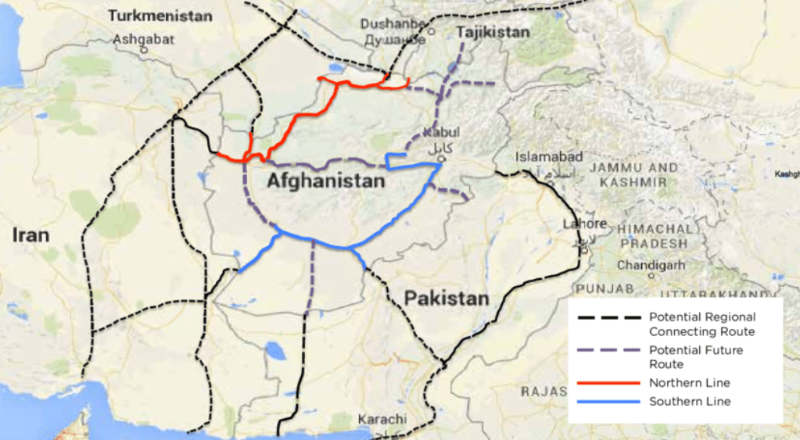
Afghanistan remains much more difficult, but potentially extremely important. The country does have operational cross border railways, with four railway lines in the north and northwest. This includes the Mazar-i-Sharif and Hairatan line in Balkh Province, which connects with Uzbekistan.
The second links Torghundi in Herat Province with Turkmenistan, another route between Turkmenistan and Aqina in Afghanistan’s Faryab Province, which extends south to the city of Andkhoy. A new rail link from Herat in Afghanistan to Khaf in Iran for both cargo and passengers is under construction.
Russian railway representatives are continuing discussions with Afghan authorities on infrastructure development. The emerging agenda includes the North-South corridor and lower tariffs at Aqina and Torghundi. Afghanistan could theoretically connect Central Asian railways with Pakistan and the Indian Ocean. But this is also one of the most challenging elements of the entire Russian railway strategy. Infrastructure gaps, security risks, financing constraints and the need for coordination between multiple governments make the Afghan route substantially more complicated than the Azerbaijan-Iran corridor. Nevertheless, its strategic importance is precisely why Moscow continues to keep it on the agenda. Afghanistan is poised to emerge as key link in Russia’s proposed railway route to Indian Ocean, while other regional actors such as China are also interested in expanding its CEPA railway infrastructure build with Pakistan into Kabul.
The prospect of a Trans-Afghan railway runs in two directions – west to east from Iran to Herat, and north-south from Uzbekistan to Pakistan’s southern ports. Tashkent sees this as a potential route to secure oceanic supply chains. Russia meanwhile sees such a route as capable of handling up to 15 million tonnes of Russian transit freight per annum.
Abdul Rahman Habibaliban, the Taliban’s Minister of Economy, stated on August 12 this year that Afghanistan will ensure the safety of such the railway, adding “Afghanistan is in a vital geographical location. This project will create employment in Afghanistan. We support such projects.”
All players see stability in Afghanistan, and the subsequent wealth creation as a primary concern for their own security. Discussions on how such a railway can be achieved remain ongoing.
Thailand: Russia Is Exporting Railway Know-How, Not Just Hardware
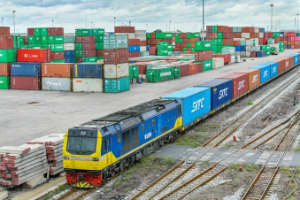
Russia’s railway expansion is no longer limited to physical routes. Thailand provides a strong example of a new technology-oriented model. On August 5 2026, Thai Transport Minister Phiphat Ratchakitprakarn, Permanent Secretary Chayathan Promsorn and other officials met Russian railway researchers in Moscow, including VNIIZHT Deputy Director Mikhail Mekhedov.
Established in 1918, VNIIZHT has played a vital role in Russia’s railway system, with operations spanning railway system development, infrastructure advancement, rolling stock technology, and more recently digital innovation. This meeting focused on establishing a Thai-Russia railway system cooperation initiative through a Memorandum of Understanding (MoU) based on communication and transportation technology.
The discussions covered railway technology, research, skills development, maintenance, digital systems and supply-chain development. Thailand also expressed interest in selected Russian railway standards. The proposed cooperation includes exchanges with 19 Russian transport colleges, training in railway engineering and digital systems, joint research and technology transfer.
One particularly interesting element is the planned development of domestic railway-wheel production in Thailand. This indicates a shift from simple equipment exports toward localization. Thailand does not merely want Russian technology imported into the country. It wants to build domestic capabilities around that technology. For Russia, this offers a potentially larger commercial market: standards, engineering, education, maintenance systems, digital platforms, components and eventually localized manufacturing.
On the same day, Thailand and Russia also signed a Letter of Intent (LOI) on transport cooperation in Moscow, led by Phiphat Ratchakitprakarn and his Russian counterpart Andrey Sergeevich Nikitin. The agreement aims to strengthen cooperation in rail, aviation, maritime transport, intelligent transport systems, automation, infrastructure, multimodal transport, workforce training, academic research, satellite technology, and transport safety and security.
Russia will share expertise in smart transport and unmanned technologies, including smart rail systems, train control, autonomous vehicles, driver-assistance systems, autonomous trucks, and autonomous maritime navigation. The technologies will be assessed and adapted to Thailand’s needs to improve transport efficiency, safety, cost-effectiveness and competitiveness. The agreement also strengthens Thailand-Russia bilateral relations ahead of the 130th anniversary of diplomatic ties in 2027 and follows Prime Minister Anutin Charnvirakul’s visit to Russia in June 2026. Both countries will also cooperate through international organisations and forums such as ESCAP, APEC, ASEAN and ASEM.
Indonesia: A Potential Entry into Southeast Asia’s Largest Infrastructure Market
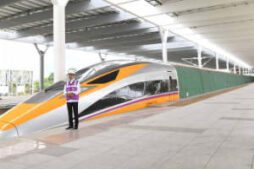
Indonesia represents an even larger potential opportunity. On August 6, this year, Indonesian Transport Minister Dudi Purwagandhi said that Indonesia is in discussions with investors from Russia and China over a proposed railway network across Kalimantan.
In June this year, Indonesia invited Russian companies to participate in major railway developments across Sumatra, Sulawesi and Kalimantan. Indonesian officials emphasized the need to expand the national rail network across an archipelago of 17,380 islands and roughly 280 million people, with President Prabowo Subianto subsequently ordering the acceleration of the Trans-Sumatra and Trans-Kalimantan railway projects.
By August, Russian participation in Trans-Kalimantan was being explored alongside Chinese and domestic investment. Feasibility calculations are now under way. The significance is enormous because Kalimantan does not currently possess an interconnected railway network comparable with Java. Russia therefore has an opportunity to participate not simply in modernization, but potentially in the creation of entirely new infrastructure.
This is a different commercial proposition from Europe, where Russian railway companies largely competed to modernize mature railway systems. In Southeast Asia, Russia can potentially become a technology, engineering and infrastructure partner in markets where rail networks are still expanding.
It should also be noted that Indonesia has signed a Free Trade Agreement with Russia via the Eurasian Economic Union, significantly reducing tariffs on imported Russian goods and making these more economically attractive. Indonesia is also a full member of the BRICS.
Armenia: Railways as an Instrument of South Caucasus Connectivity
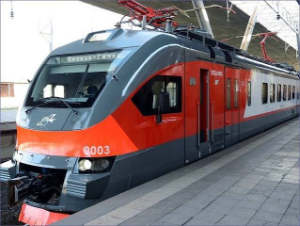
Armenia is another special case because railway infrastructure intersects directly with regional geopolitics. Russian Railways operates the South Caucasus Railway under a long-term concession. In July-August 2026, Russian officials reaffirmed Moscow’s willingness to continue fulfilling the concession agreement amid Armenian discussions about its future. Russia has also expressed readiness to participate in the restoration of strategically important railway sections around Yeraskh and the Gyumri-southern border direction.
The economic importance is potentially substantial. If Armenia gains additional railway connections toward Azerbaijan and Turkiye, the country could become more deeply integrated into regional trade networks. This would also alter the economic role of the South Caucasus Railway from a primarily Armenia–Georgia–Russia connection toward a potentially wider regional transit system. The Armenian case therefore demonstrates a broader principle: railways can create economic interdependence even where political relations remain complicated.
Belarus: Integrating the Russian and Eurasian Railway Space
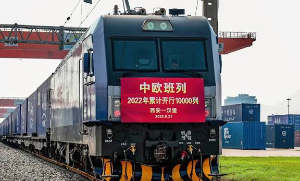
Belarus occupies a different position because its railway system is already deeply integrated with Russia. The emerging Russia-Pakistan freight project could potentially include Belarus, according to Ambassador Khorev. If implemented, this would create an unusual but strategically significant logistics chain extending from Belarus through Russia and Iran to Pakistan. Such a corridor would demonstrate that the Eurasian Economic Union space can connect not only with Central Asia but also with South Asia and the Indian Ocean. It would also reinforce the importance of Belarusian and Russian rail infrastructure as the northern starting point of southern trade corridors.
Meanwhile, on August 3, Belarus launched the second freight train under the Slavic Caravan project, carrying over 4,000 tonnes of export goods through Russia, Kazakhstan and Uzbekistan to Central Asian markets. The initiative, following the first train dispatched on July 30, highlights growing demand and potential for expanding Belarusian exports to Central and South Asia.
Serbia: Russia’s European Railway Bridge
While Russian railway engagement with many Western European countries has declined sharply, Serbia remains an important European exception. RZD remains involved in Serbia’s railway modernization. The most technologically significant project is the Unified Dispatch Center near Belgrade. This project is valued at approximately €127 million and was around 83% complete in 2026. It incorporates automation and artificial intelligence for centralized railway traffic management. The system currently manages about 540 kilometres of track, while the long-term objective is to cover 3,357 kilometres of Serbia’s railway network. Approximately 500 kilometres of fiber-optic cable has already been installed.
The project is strategically important because it shows that Russia’s railway exports are becoming increasingly digital. The old Russian railway export model was associated primarily with tracks, locomotives and rolling stock. The new model includes AI-supported dispatching, fiber-optic networks, traffic management, predictive systems and digital control. That gives Russia a way to compete through engineering and technology even when conventional infrastructure markets are politically restricted.
It should be noted that Serbia and Russia have a Free Trade Agreement via the Eurasian Economic Union, making Russian imports highly competitive compared to EU alternatives.
Cuba: The Installed Russian Fleet Creates a Long-Term Market

Cuba demonstrates another model. At the International Transport Summit in Moscow in August 2026, Cuban First Deputy Transport Minister Luis Roberto Rosés Hernández sought Russian cooperation in modernizing railway infrastructure and maintaining rolling stock. Approximately 70% of Cuba’s locomotives and railway cars are of Russian origin. That installed base is commercially important, as it means that Russia already possesses technological compatibility with a large part of the Cuban railway fleet. Modernization can therefore focus on maintenance, replacement parts, refurbishment, digital control and upgrades rather than replacing the entire system. The Cuban case also illustrates the political-economic logic of Russia’s Global South railway diplomacy: infrastructure cooperation can continue even when partners face restrictions on access to Western financing and technology.
The Financial Contradiction Behind Russia’s Railway Expansion

However, Russia’s railway development strategy faces a fundamental constraint: money. Russian Railways cut its investment programme by 20% in 2026 after reducing it by 40% in the previous year from a 2024 peak of roughly ₽1.5 trillion (US$18 billion).
The company owns approximately 85,000 kilometres of track, serving 77 of Russia’s 89 regions. This is an enormous infrastructure burden. At the same time, the company has proposed a “ship-or-pay” principle under which businesses would guarantee freight volumes and pay even if those volumes are not fully shipped. It has also proposed shifting some responsibility for freight-car conditions from the carrier to shippers. The proposals reveal how urgently RZD needs predictable freight flows.
The international corridors therefore serve a second purpose: they can potentially generate new long-term demand for Russian railway infrastructure. This is particularly relevant given the dramatic weakness in several domestic freight categories during the first half of 2026. The 56.1% increase in grain loading is instructive. Russia is becoming increasingly dependent on agricultural exports as one of the major sources of railway freight growth, while several traditional industrial cargoes are declining. The North-South corridor is perfectly suited to this trend because grain is already one of the major commodities moving south from Russia toward Iran and further toward the Persian Gulf and South Asia. Evidence of this strategy is with Moscow discussing the creation of Grain Distribution Logistics Hubs with Egypt and Oman and an overall push for the BRICS members to also establish a grain exchange. Food security has become a priority in these turbulent times for many of Russia’s partners. It will require transport infrastructure – with rail ideally suited – to accomplish this.
Russia is also seeking to diversify agricultural export routes and strengthen grain logistics via rail amid restrictions affecting shipping through the Sea of Azov, with estimates that up to 25% of flows through that corridor have been affected by Ukrainian attacks. A proposed ₽10-billion (US$122 million) rail-support package will subsidize alternative rail routes from Rostov toward Black Sea/Baltic ports and from Siberia toward Far East ports. This measure reflects broader Russian efforts to use infrastructure subsidies and alternative ports to maintain agricultural exports.
Summary: Russia Is Building a Eurasian Rail Network, Not a Single Corridor
The most important conclusion is that Russia is not constructing one railway to the Global South, but a network of overlapping transport options. The western North-South route connects Russia with Azerbaijan and Iran, while its southern extension would open access to Pakistan and the Indian Ocean.
Quietly, this is also being supported by soft institutional power in terms of Free Trade Agreements both already in place within the Commonwealth of Independent States and the Eurasian Economic Union (EAEU) members. This too is also expanding and will spur additional momentum to Eurasian trade. The EAEU has a loose trade agreement with China, more formal agreements with Serbia, Indonesia, Iran, Mongolia, and Vietnam, and is negotiating the same with India, Pakistan and several other ASEAN, Middle Eastern and African nations. This means that not just the railway infrastructure and development projects are being put into place – the financial, trade-motivating aspects to encourage the use of these railway hardware developments are also being put into position.
India represents the major consumer market at the end of this southern network, while China provides the eastern industrial corridor. Kazakhstan, Tajikistan and potentially Afghanistan connect Russia with Central and South Asia, while Thailand and Indonesia create opportunities for railway technology and infrastructure exports into Southeast Asia.
Serbia preserves a technologically advanced Russian railway presence in Europe, while Armenia could become a bridge between Russia, the South Caucasus and new regional markets.
This illustrates that Russia’s railway strategy is increasingly about exporting an entire connectivity ecosystem rather than simply locomotives or tracks. This includes rolling stock, signaling, AI-based traffic management, digital freight documentation, engineering, maintenance, workforce training, standards, leasing, infrastructure construction and logistics management.
Thailand demonstrates the training and standards model; Serbia the digital-control model; Tajikistan the rolling-stock and leasing model; Cuba the maintenance and modernization model; Iran and Azerbaijan corridor integration; Pakistan a new freight-route model; and Indonesia potential infrastructure construction. India represents the large-scale trade destination. Together, these projects create a broader commercial proposition: Russia is attempting to make its railway expertise part of the infrastructure architecture of an emerging multipolar economy.
Political agreements alone will not determine success. Many projects discussed in 2025-2026 remain at the memorandum, feasibility, contract-negotiation or early implementation stage. The decisive test is whether they generate regular, commercially viable freight.
However, the North-South corridor already provides measurable evidence. Freight through Astara increased 50% year-on-year in June, southern-bound shipments rose 27% during the first half of 2026, while Russian grain exports to Iran increased more than fourfold.
The proposed Russia-Pakistan service faces a harder test: it must secure sufficient cargo from Russia, Belarus, Central Asia, Iran and Pakistan to justify regular operations. The Indian Ocean connection faces greater infrastructure challenges, while Indonesia requires major capital and long-term feasibility studies. Afghanistan remains constrained by security and infrastructure conditions, and RZD faces, to some extent, manageable debt ratios, investment and freight pressures.
The point is that these obstacles are manageable and can be prioritized at any one time. This explains why Moscow is pursuing several corridors simultaneously rather than relying on one route: Russia is building a multi-directional railway system for a multipolar trading economy. Its objective is not simply to replace Western routes kilometre for kilometre, but to create alternative corridors so trade can be redirected when maritime passages, borders or political relationships become unreliable.
This strategic architecture already includes freight corridors, digital infrastructure, railway exports, technology transfer, industrial localization and port access. If successful, Russia’s geography could shift from an advantage primarily for European trade into an advantage connecting China, Central Asia, Iran, India, Pakistan, Southeast Asia and the wider Global South. The railway is becoming an instrument for reshaping Russia’s external economy. Ultimately, however, success will depend on whether these links carry enough grain, fertilizers, machinery, metals, containers, industrial goods and investment flows to transform Moscow’s railway diplomacy into a self-sustaining economic network.
This article was written by Ms. Khatun, an expert in Russia-Asian affairs. She may be reached at info@russiaspivottoasia.com