
 Русский




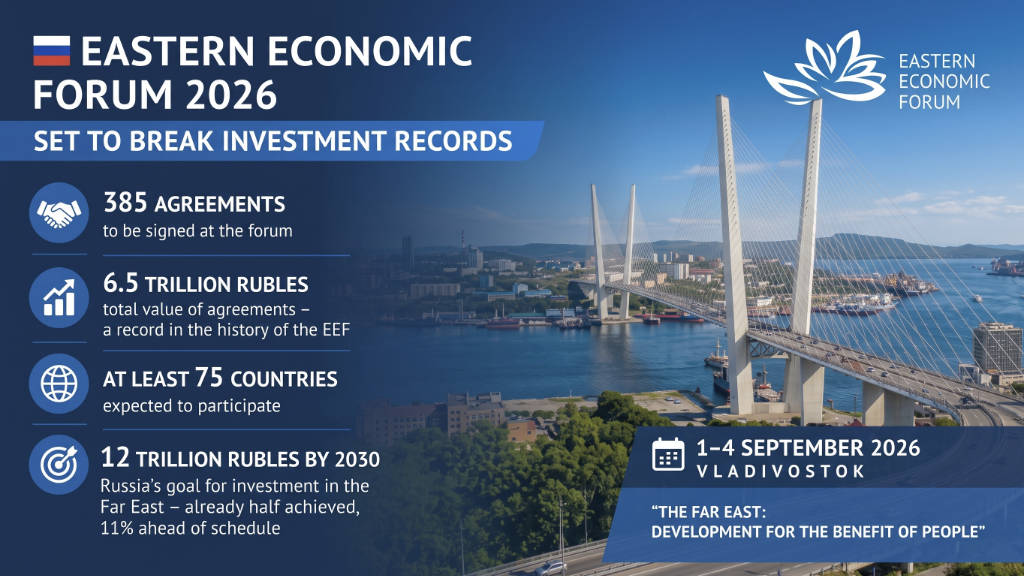

The 11th Eastern Economic Forum, or EEF 2026, opens in Vladivostok on September 1 and runs through September 4 at the Far Eastern Federal University campus on Russky Island. Its official theme, “The Far East: Development for the Benefit of People,” captures a fundamental change in the economic logic of Russia’s eastern strategy. The Far East is no longer being presented simply as Russia’s remote resource province or as a “gateway to Asia”. It is increasingly being constructed as a production, technology, financial, transport and human-capital platform through which Russia intends to engage the Asia-Pacific economy.
More than 5,000 participants from more than 70 countries and territories have registered for EEF 2026. The largest delegations are expected from China, India, Mongolia, Japan and South Korea. Russia’s presidential aide Yury Ushakov separately confirmed that substantial delegations will also come from Myanmar, Laos and other ASEAN countries. Business dialogues are planned with China, India, the United Arab Emirates, Mongolia, Vietnam and ASEAN countries. The political level is unusually high: the September 3 plenary is scheduled to bring together Russian President Vladimir Putin, Indonesian President Prabowo Subianto, Chinese Vice Premier Ding Xuexiang, Mongolian Prime Minister Nyam-Osoryn Uchral and Myanmar First Vice President Nyo Saw.
The important point is not simply that these leaders are attending. Their countries occupy different positions in the emerging economic geography around Russia’s Pacific territories. China is the principal neighbouring industrial economy; India is a major South Asian market; Mongolia is a Eurasian continental bridge; Indonesia is Southeast Asia’s largest economy; Myanmar provides another Southeast Asian connection; Vietnam is one of Russia’s most established ASEAN economic partners; while Japan and South Korea remain major Northeast Asian economies. EEF 2026 therefore comes at a moment when Russia’s eastern economic strategy is moving from the redirection of trade toward the physical construction of an integrated economic system.
The Numbers Behind The Forum
The Far East already has an economic base much larger than the conventional image of a sparsely populated frontier suggests. According to figures cited by Deputy Prime Minister and Presidential Plenipotentiary Envoy to the Far Eastern Federal District Yury Trutnev, more than 3,000 investment projects worth ₽13.5 trillion (US$157.4 billion) are being implemented in the Far East. Around ₽6 trillion (US$70 billion) has already been invested, including ₽1 trillion (US$11.6 billion) during 2025 alone. More than 1,000 enterprises have been launched, creating more than 180,000 jobs.
These figures are quoted in a slightly different format elsewhere. According to the Corporation for the Development of the Far East and the Arctic (KRDV), investment commitments across the Far East and Arctic under Russia’s preferential development regimes have reached approximately ₽15 trillion (US$195 billion, of which ₽6.8 trillion (US$88.5 billion) has already been invested. Investment momentum reached a record in 2025, when investors committed ₽1 trillion (US$11.6 billion) to Far Eastern projects, the highest annual investment since the preferential development framework was introduced and almost one-fifth of all capital invested in the region over the past decade.
During that year alone, 674 new projects were launched, generating ₽137 billion (US$1.8 billion) in tax revenues and bringing cumulative tax contributions over the previous decade to more than ₽550 billion (US$7.1 billion).
The Russian Far East’s performance indicators are also significant. Since 2014, fixed-capital investment growth in the Far East has reached 1.5 times the Russian national average. Industrial production has increased 1.3-fold, mineral extraction 1.4-fold, housing commissioning 1.5-fold, and construction volumes 2.3-fold.
Housing prices, which were at the Russian average in April 2024, are now reported to be 21% below the national average. State-backed projects alone account for ₽5.6 trillion (US$65.2 billion). These figures explain why the 2026 forum is different from the Far East development discussions of a decade ago. The question is no longer whether the state can attract investment in the region. It is whether the next cycle can make that investment more productive, technologically sophisticated and internationally connected. Our deep dive into the investment potential of Asian countries is here.
Attendance: Five Thousand Delegates, More Than 70 Countries
The current attendance figures show more than 5,000 registered participants from 70 countries and territories. China is among the largest delegations, with Vice Premier Ding Xuexiang attending the plenary and Hou Qijun, Chairman of Sinopec’s Board of Directors, participating in the business programme. India is sending a large official and business delegation, with Indian Ambassador to Russia Vinay Kumar confirming substantial participation.
Mongolia will be represented by Prime Minister Nyam-Osoryn Uchral, who heads a delegation including ministers, government agencies and business representatives.
The programme also contains a broader Russia-ASEAN business dialogue, while Putin invited Cambodian companies to participate in the EEF during the Russia-ASEAN summit in Kazan, showing that Moscow is attempting to use Vladivostok to turn ASEAN political engagement into company-level commercial relationships.
The wider ASEAN geography is particularly important because Russia-ASEAN cooperation is increasingly moving from diplomatic declarations toward fisheries, food, logistics, energy and investment. Russian fisheries authorities say the EEF will be used to discuss logistics, domestic consumption, shipbuilding and coastal development with ASEAN partners, with the intention of moving cooperation toward concrete joint projects.ia is the host and the dominant governmental and corporate participant.
Indonesia has the highest political profile after Russia because President Prabowo Subianto is the Guest of Honour. Myanmar will be represented at the plenary by First Vice President Nyo Saw. Laos is sending a business delegation, while Vietnam has its own Russia-Vietnam business dialogue.
Thailand, Malaysia and Qatar have also been specifically connected with the EEF preparations through official invitations and bilateral discussions, while the United Arab Emirates, Japan, and South Korea are part of the international business programme.
A further international group is represented by the Friends for Leadership community. Approximately 100 participants from 35 countries are expected from this network of young entrepreneurs, innovators, scientists and social activists, whose wider community brings together project teams from more than 130 countries. Their EEF agenda covers sustainable development, social entrepreneurship, new technology, environmental protection and AI governance. The result is a participation map broader than conventional Russia-China economic cooperation – it reaches from Northeast Asia to Southeast Asia, South Asia and the Gulf.
The Political Leaders Giving The EEF Its Political Weight
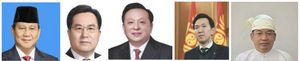
President Vladimir Putin is visiting the Far East on September 2-3. On September 2, he is scheduled to chair a meeting on development of the Far Eastern Federal District, receive an interactive presentation of regional development results, participate in the launch of newly constructed enterprises by videoconference and meet Primorye Governor Oleg Kozhemyako.
On September 3, Putin will participate in the plenary session and meet Indonesian President Prabowo Subianto. The Indonesian president’s participation is particularly significant. Russian Ambassador to Indonesia Sergei Tolchenov has indicated that new bilateral agreements could be signed in Vladivostok, while identifying grain, oil and fertilizers among the existing areas of trade.
Putin and Subianto’s previous April discussions in Moscow also covered economy, energy, aerospace, agriculture, industry and pharmaceuticals.
China’s Ding Xuexiang, the Vice-Premier brings the Chinese state level into the central political discussion, while Hou Qijun, Sinopec’s Chairman, gives the Chinese corporate side a senior voice.
Mongolia’s delegation, headed by Nyam-Osoryn Uchral, is explicitly designed to cover government agencies, ministers and business. The Russia-Mongolia agenda is concentrated on transport, energy and industry. Myanmar’s Nyo Saw adds a Southeast Asian political dimension. The composition therefore transforms the plenary into a map of the economic relationships Moscow is trying to consolidate around the Pacific.
The Russian Institutional Delegation
The Russian side includes virtually the entire economic architecture of the Far East. Yury Trutnev is the central political coordinator. Alexey Chekunkov, Minister for the Development of the Far East and Arctic, represents investment policy and regional development. Alexey Overchuk, Deputy Prime Minister, is involved in international economic cooperation. Vitaly Altabayev, First Deputy Minister for the Development of the Far East and Arctic, represents investment and regional development mechanisms. The published programme also names Irina Yarovaya, Deputy Chair of the State Duma; Anna Tsivileva, State Secretary and Deputy Minister of Defence; Nikita Stasishin, Deputy Minister of Construction, Housing and Utilities; Igor Barinov, Head of the Federal Agency for Ethnic Affairs; Mikhail Mamuta, Deputy Governor and Board member of the Bank of Russia; Anatoly Aksakov, Chairman of the State Duma Financial Market Committee; Alexey Moiseev, Deputy Finance Minister; Ilya Shestakov, Head of the Federal Agency for Fishery; Alexander Kozlov, Minister of Natural Resources and Environment; Vladislav Davankov, Deputy Chair of the State Duma; Denis Sekirinsky, Deputy Minister of Science and Higher Education; Alexey Likhachev, Director General of Rosatom; Igor Levitin, Presidential Adviser and Special Representative for international transport cooperation; and Alexander Grushko, Deputy Foreign Minister. The composition is revealing. EEF 2026 is not confined to a regional-development ministry. Finance, transport, energy, natural resources, fisheries, science, education, construction, foreign policy and technology are all being brought into one development mechanism.
The Corporate Map: From Sinopec And Rosatom To Drones And AI

The companies named in the published programme and official EEF material cover a surprisingly broad spectrum. China’s Sinopec is represented by Chairman Hou Qijun. Russia’s PSB Bank is represented by Chairman Pyotr Fradkov. Rosatom is represented by Director General Alexey Likhachev. HX Energy Labs / Eurasia Industries Group is represented by Olivier Linossier, Director General and founder. Just these four companies annual turnover alone is in excess of US$400 billion.
The forum’s Russian institutional corporate structure is even larger. A7 and VEB.RF are title partners. VTB is the general sponsor. Gazprom, RusHydro and Elga are general partners. Rosseti is strategic partner. Aeroflot is official airline. Sber is the giga-partner. Rosatom and Udokan Copper are official partners.
The creative economy has its own corporate dimension: the A7 payment system and PSB Bank are general partners of the “Soul of Russia” exhibition. The SME programme includes Ozon, which is organizing a session on cyber-security, marketplaces, digital sales and online banking. The technology exhibition brings another group of companies into view.
GenMaster will display distributed-energy equipment, including a containerized mini combined heat-and-power plant with anti-drone protection. Inoface, the biometric ecosystem of Metrika B, will demonstrate facial-recognition and biometric-payment technologies.
LGSF Frame Factory will present mobile construction technology designed for remote and earthquake-prone areas. Ecotermix will present polyurethane, polyurea and epoxy-based construction and infrastructure materials. QMonitoring will demonstrate AI-based video analytics capable of monitoring construction, warehouse and property-management processes, with reported detection accuracy of 97%, incident response of 15-20 seconds and potential reductions in specialised-equipment downtime of up to 60%.
Sherpa Robotics will demonstrate business-process robotisation using its own large language model in a closed environment, with the company claiming resource savings of up to 20%. Interros will showcase its Far Eastern projects, including the Three Volcanoes Park resort in Kamchatka and the Petrovskaya Sopka centre on Russky Island.
The Development Corporation of the Republic of Sakha (Yakutia) will present Jeweller AI, while Yakut game studios New Game+ and Ykt Games will demonstrate VR products. Unmanned systems will be represented by Aeromashiny Design Bureau, Sakha Drone and Geoscan Group.
AEROHIT, a resident of the Khabarovsk Priority Development Area, is particularly notable: it reports production capacity of up to 25,000 drones per month, including fibre-optic communications, AI terminal guidance, thermal and night-vision cameras. It will present its Veles unmanned vehicles, GCS 4.0 ground-control station and domestically produced batteries. This is one of the clearest signs that the Far East’s economic agenda is changing from “resources plus infrastructure” toward “resources plus infrastructure plus technology”.
Eleven Far Eastern Regions – Eleven Different Investment Propositions
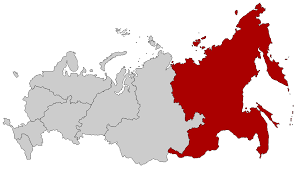
The Far Eastern Federal District comprises Amur Region, Jewish Autonomous Region, Zabaykalsky Territory, Kamchatka Territory, Magadan Region, Primorye Territory, Republic of Buryatia, Republic of Sakha (Yakutia), Sakhalin Region, Khabarovsk Territory and Chukotka Autonomous Area. Their presentations at the EEF reveal how different the region’s economic structure has become.
Primorye

The Primorye Territory is the international gateway. Vladivostok, Nakhodka and Bolshoy Kamen combine Pacific ports, manufacturing, logistics, tourism, technology and cross-border trade. Primorye’s EEF exposition is organised around the sequence “Yesterday-Today-Tomorrow” and is presenting itself as a “point of departure” and “gateway to the Asia-Pacific”, combining ocean, taiga, hills, infrastructure, human capital and state support. The technology section covers digitalisation, AI, industrial robotics and new materials. Investors will be shown the Far Eastern Hectare, Priority Development Area mechanisms and the Vladivostok Free Port. A dedicated meeting room will be available for negotiations. The social component is equally prominent: campuses, schools, medical institutions and urban development are being presented as part of the investment proposition because companies cannot expand if the region cannot retain workers.
Amur

The Amur Region is the Russia-China land corridor, with Blagoveshchensk facing China’s Heihe. Its priorities include industrial projects, mineral processing, logistics, unmanned cargo delivery, robotics and the development of Bolshoy Ussuriysky Island. The economy and industry of the Amur Region are driven by rich natural resources, cross-border trade with China, and large-scale federal energy projects. Power generation accounts for over half of the region’s industrial output, anchored by major hydroelectric stations like the Zeya and Bureya dams. A massive gas processing and chemical cluster is developing in Svobodny via Gazprom and Sibur, while the region is a major national hub for gold extraction, ranking high in Russian gold reserves, alongside coal mining and deposits of titanium and iron ore. The Amur is a strategic breadbasket in the Far East, the region produces record harvests of soybeans and grains, supported by expanding domestic processing plants.
Khabarovsk

Khabarovsk Territory is focusing on industrial technology, mineral processing, precious-metals refining, gold processing and technology parks connected to Bolshoy Ussuriysky Island. Khabarovsk Governor Dmitry Demeshin has said that Khabarovsk will present new industrial technologies, including cargo delivery by unmanned aerial systems and robotic equipment. But the more strategic proposal is local processing. The region wants a precious-metals refinery and gold-processing facilities in the Far East. It will also present development plans for Bolshoy Ussuriysky Island, including technology parks intended to become hubs for technological exchange with China and other Asia-Pacific countries. This is precisely the type of project that the new international investment regime is intended to encourage: higher-value processing located closer to the resource base and integrated with Asian partners.
Sakhalin

The Sakhalin Region is combining oil and gas with fisheries, coal, logistics, tourism, agriculture, housing, oilfield-service localisation, utilities, healthcare, education and unmanned aviation. It offers one of the clearest sets of regional numbers. Within the Sakhalin Priority Development Area, 95 resident companies are implementing projects. Twenty-two projects have already been commissioned. The region has received ₽51.5 billion (US$597 million) of the planned ₽234.8 billion (US$2.7 billion) in investment. More than 3,500 jobs have been created, with another 12,300 planned. Governor Valery Limarenko says investment increased by approximately 20% over the past year. The region is also preparing for the active phase of Sakhalin-3 and a gas-condensate processing plant. The economic diversification is striking: logistics, tourism, fisheries, coal, processing, agriculture, housing, oilfield services, utilities, healthcare and education all feature alongside hydrocarbons.
Buryatia

Buryatia is presenting mining, agriculture, logistics, and creative industries such as tourism. Lake Baikal is the regions main attraction. The economy of Buryatia relies heavily on manufacturing, mineral extraction, mechanical engineering, and agriculture. Key industries are entered in the capital city of Ulan-Ude, aviation manufacturing (producing helicopters) and railway locomotive repair making up a massive share of the regional industrial output. The region holds rich deposits of coal, gold, and uranium, which drive both local energy production and raw material exports. Livestock farming, crop growing, and meat processing (such as large-scale pork and canned meat production) form an essential part of the agrarian sector. Buryatia’s vast taiga forests support extensive timber harvesting, cardboard manufacturing, and pulp-and-paper production, while Lake Baikal and regional Buddhist cultural sites attract growing numbers of tourists.
Magadan

The Magadan Region is combining gold production, seafood, tourism, urban development and northern employment. Magadan’s pavilion puts gold production and premium seafood at the centre of its economic proposition. Its exhibition is divided into “Power of the Territory”, “People of the Territory”, “Gold of the Territory” and “Present and Future”. The “Gold” section will display industrial projects and real-time precious-metal prices. The seafood component is represented through advanced marine-bioresource processing and an Omega-3 demonstration. The region is also attempting to turn Kolyma’s high wages and natural-resource economy into a broader proposition for families and professionals. Governor Sergey Nosov explicitly frames the goal as making Kolyma a place to build a life, career and family.
Jewish Autonomous Region

The Jewish Autonomous Region is focusing on tourism, industry, agriculture and logistics, including iron-ore concentrate, airfield equipment, brucite, graphite and a logistics centre. The Jewish Autonomous Region’s EEF pavilion is built around industrial, agricultural, logistics and tourism potential. Its “Active Projects” zone will present iron-ore concentrate production, airfield equipment, brucite and graphite extraction and a logistics centre. Its investment portfolio will include project volumes, payback periods and state-support measures. Governor Maria Kostyuk describes the region as a territory where investment, industry, logistics and infrastructure are developing alongside tourism and cultural identity. Its geographical position on the Chinese border makes the logistics component especially important.
Chukotka

Chukotka’s “Dawn of Russia” pavilion presents the region’s Arctic location, mining projects and Northern Sea Route potential. The pavilion will highlight the investment attractiveness of the autonomous area, the Arctic economy and the region’s distinctive indigenous culture. The economic proposition is straightforward: minerals require transport, and the Northern Sea Route increasingly offers a strategic route for Arctic resource development. The cultural side is equally significant. The region marks the 95th anniversary of the Uelen Bone Carving Workshop and the 50th anniversary of the Wrangel Island State Nature Reserve, a UNESCO World Heritage site.
Country By Country Involvement
China – From Trade Partner To Industrial Co-Producer
China remains the anchor of Russia’s Far Eastern strategy. The China component operates at political, regional and corporate levels. Ding Xuexiang represents the central government. Sinopec Chairman Hou Qijun represents major industrial capital. The border regions of China connect directly with Amur, Primorye and other Far Eastern territories. Bolshoy Ussuriysky Island is a major joint-development issue. The Russia-China economic relationship is also expanding into digital trade. The broader AmurExpo process, an off-site EEF platform, has already introduced discussions on e-commerce and digital cooperation, reflecting growing demand from Chinese partners. The Russian Export Center will also hold a Russia-China “Made in Russia” online livestream during the EEF with Chinese influencer Yang Runxin, known as Dan Dan, who has nearly 100 million Kuaishou followers and has conducted more than 500 livestreams. The previous livestream in May 2025 promoted more than 100 Russian products from 62 companies, covering confectionery, seafood, groceries, dairy products, cosmetics, household goods and toys. Sales exceeded ₽1 billion (US$11.5 million), with some products selling out within three to seven seconds, while the broadcast generated 11.3 million views. That is a different kind of Russia-China economic relationship: not oil pipelines, but consumer brands entering China’s digital retail market.
India: Aviation May Be As Important As Trade

Russian Transport Minister Andrey Nikitin has put the expansion of direct Russia-India aviation links on the EEF agenda. The proposal concerns increasing frequencies on existing routes and opening new services. This may sound like a transport issue, but it is actually a business-connectivity problem. Russia-India trade has expanded dramatically since 2022, particularly in energy. Yet direct passenger connectivity remains much thinner than the economic relationship would imply. If the EEF produces movement on additional air routes, the effect could extend beyond tourism to investment, executive travel, education, technology cooperation and SME relations. The forum’s India track therefore has significance far beyond commodities.
Indonesia: The Political Headline Could Become A Commercial Breakthrough
Indonesia is arguably the most consequential new political dimension of EEF 2026. Prabowo Subianto’s presence gives Russia an opportunity to deepen ties with a large Southeast Asian economy while using the EEF as a business platform rather than a purely diplomatic venue. Russian officials have indicated potential agreements. Existing trade areas include grain, oil and fertilizers, while the April Putin-Prabowo talks covered economy, energy, aerospace, agriculture, industry and pharmaceuticals. The commercial opportunity is therefore wider than hydrocarbons. It includes food security, agricultural inputs, industrial goods, energy, aviation and technology. The real test will be whether the September meeting produces contracts rather than another political declaration.
Thailand, Malaysia, UAE, Qatar – and Falcons

The EEF’s international geography is expanding beyond the core China-India-Mongolia axis. Russia and Thailand recorded 2.3% growth in bilateral trade last year, while Russian exports to Thailand increased by 25% last year and another 50% in the first five months of 2026. The Russian-Thai agenda includes pharmaceuticals, IT, fintech, cybersecurity, smart-city systems, banking, investment, science, biotechnology, biopharmaceuticals and tourism. The two countries also discussed direct flights. Malaysia’s agenda includes tourism, energy, digitalisation, technology forecasting, natural resources, environmental sustainability, science and education.
The Russian and Malaysian sides have also been preparing joint research mechanisms, with bilateral trade up by 13% in 2025 to exceed US$3.6 billion, reflecting closer economic ties.
The UAE has a more developed business channel. Its SPIEF 2026 delegation contained 107 people, including government officials, private companies and business associations, with 18 SME representatives. The EEF invitation is part of a wider Russia-UAE strategy covering investment, energy, tourism, SMEs and humanitarian cooperation. Qatar has been invited to participate in the EEF and Falcon Day. The two sides are also discussing fuel and energy cooperation and falcon-conservation projects. These countries demonstrate that the EEF’s international strategy is becoming genuinely multi-vector.
The Five Business Tracks

The official programme contains more than 70 sessions divided into five tracks, as follows:
Living and Working in the Far East
This addresses the implementation of master plans for 25 cities, rental housing, demographic programmes, education, science, engineering training, continuing professional education and the development of practical university programmes. The emerging Strategy for the Socioeconomic Development of the Far Eastern Federal District through 2030, with a forecast to 2036, is a central theme.
Mechanisms for Attracting Private Investments
This is perhaps the most commercially important. It covers a new unified priority development area, “people’s bonds”, digital financial assets, the Eastern Financial Centre, stock-market mechanisms, infrastructure finance, subsoil use, extractive and processing industries and tourism.
The Far East – A Pole of International Interaction
This track covers cooperation with Asia-Pacific countries, joint development of Bolshoy Ussuriysky Island, special administrative regimes for foreign companies, international commercial arbitration, international aviation, tourism as soft power and consumer protection.
Technologies of the Present and the Future
This covers AI, robotic-process automation, unmanned transport, data centres, platform economics, technology financing and the bioeconomy.
Logistics and Infrastructure for Economic Growth
This section covers transport corridors, gas infrastructure, the Northern Sea Route, the Trans-Siberian Railway, ports, northern delivery, passenger and freight transport and energy independence.
Together these tracks form a coherent economic chain. People provide the workforce. Investment mechanisms provide capital. International cooperation provides markets and partners. Technology raises productivity. Logistics moves the resulting goods. That is the real architecture of EEF 2026.
The Eastern Financial Centre
One of the most important discussions at EEF 2026 will concern the proposed Eastern Financial Centre on Russky Island. President Putin instructed the Government and Bank of Russia after EEF 2025 to prepare proposals for a Far Eastern financial centre based on the Eastern Exchange. A draft federal law prepared by the Crystal Fund and Eastern Exchange, with support from the Finance Ministry and Ministry for the Development of the Far East, would create a special legal regime on Russky Island.
The proposal is ambitious. Foreign investors would receive direct access to Russian financial instruments, either directly or through foreign brokerage and banking structures. The framework would establish a two-level investment-protection mechanism involving Russian law and special international investment-protection agreements. Russian assets could be traded conventionally, through investment funds or in tokenised form. Settlements could be conducted in rubles, foreign currencies, digital financial assets and digital currencies, including through foreign information systems.
The proposal also includes special listing rules, infrastructure-replacement mechanisms in case of external restrictions, investor-rights protection, specialised arbitration, foreign-language procedures and recognition of foreign credit-rating agencies. This is potentially more important than another tax concession. Russia is attempting to build not only a preferential territory but a financial jurisdiction capable of connecting Far Eastern assets with foreign capital. That would change the meaning of Vladivostok. It would no longer simply be a place where Asian investors meet Russian companies. It could become a financial entry point into Russia’s eastern investment market.
Russian Far East Investment Incentives
The Russian Far East’s investment system should not be understood as one generic tax-break programme. There are different instruments for different types of investors.
Advanced Development Areas
Russia’s Advanced Development Areas (also known as Advanced Special Economic Zones or ASEZs, and newer International Advanced Development Zones) are Special Economic Zones designed to boost regional growth and attract foreign investment by offering major tax and administrative perks. Resident enterprises can receive a zero corporate profit tax rate for the first 10 years, alongside reduced property and mineral extraction taxes. Social insurance contribution rates are lowered to a minimum of 7.6%. Tax and regulatory conditions can remain completely unchanged throughout a project cycle for up to 15 years under updated regional frameworks, while investors also benefit from priority infrastructure access, free customs zone regimes, simplified administrative procedures, and reduced state inspections. They are ideal for manufacturing, processing and export-driven businesses.
Vladivostok Free Port
The Free Port of Vladivostok (FPV) is more territorially distributed and commercially flexible. Current FEDC data shows 1,930 residents, approximately 116,424 jobs and ₽2.03 trillion (US$23.5 billion) of investment across 22 municipalities in five Far Eastern regions. The FPV covers municipalities in Primorye, Kamchatka, Khabarovsk Territory, Sakhalin and Chukotka.
Its current framework includes a zero percent profit-tax rate for the first five years, followed by a preferential regional component; zero land tax for the first three years; and zero property tax for the first five years, subject to the applicable regional rules. Administrative benefits include simplified employment of foreign workers, investor one-stop support, the possibility of a free-customs-zone procedure and land allocation without a tender under the applicable rules.
The FPV is particularly suited to new businesses and projects oriented toward the Asia-Pacific and Far Eastern markets. The current regime can be especially attractive to SMEs: the official FPV investment portal gives a minimum own-investment threshold of ₽500,000 (US$5,800) for qualifying projects. That is a fundamentally different proposition from a huge mining or industrial project and is designed to attract SMEs as well as major corporates.
International Priority Development Territories
The new International Priority Development Territory mechanism is more targeted. These are Special Economic Zones in the Russian Far East and Arctic designed to boost joint ventures and high-value manufacturing with foreign partners. They are intended for large projects involving foreign partners and the production of high-value-added goods. The minimum investment requirement is ₽500 million (US$5.8 million). Residents receive zero profit tax, discounted insurance contributions of 7.6% for ten years, and stability guarantees for up to 15 years, including protection concerning taxation, land-management conditions, urban-development rules and state-support measures.
This makes the three mechanisms complementary rather than competing. The FPV is particularly useful for flexible, smaller and medium-sized projects in designated municipalities. ASEZs are suitable for larger industrial projects with prepared infrastructure. The International Priority Development Territory is designed specifically to encourage international industrial cooperation and high-value-added production. That distinction is crucial for EEF 2026 because Moscow’s objective is changing from attracting investors to attracting foreign partners who will manufacture inside Russia.
Technology And The Low-Altitude Economy
EEF 2026 is also a technology forum. The organisers are explicitly positioning Vladivostok as a launchpad for Russia’s low-altitude economy, including civil unmanned aviation and autonomous transport. Alexey Raikevich, Director General of GLONASS, has discussed the possibility of exporting GLONASS products to BRICS, ASEAN and African markets. Russia’s ERA-GLONASS system is being used as the technological foundation for a unified identification system for unmanned vehicles. The Far East is particularly suitable for this technology because its geography makes conventional logistics expensive. The EEF programme therefore links drones with agriculture, road construction, ports, customs, logistics and remote infrastructure. This is where the presence of AEROHIT, Geoscan, Sakha Drone, Aeromashiny Design Bureau and other technology companies becomes commercially relevant.
SMEs: A New Pillar Of The EEF

For the first time, EEF 2026 will host a dedicated SME International Cooperation Day on September 1. Its agenda covers productivity, automation, AI, workforce readiness, risk management, business-model adaptation, digital marketplaces, online banking and cybersecurity. The inclusion of Ozon is significant because the Far East’s SME problem is partly a distance problem. Digital marketplaces can reduce the geographical disadvantage of remote businesses. The forum is therefore increasingly treating digital commerce as infrastructure.
The Cultural Economy Is No Longer An Accessory
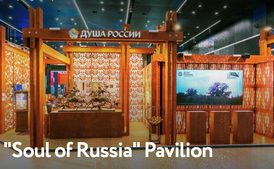
EEF 2026 is also taking place during Russia’s Year of Unity of the Peoples of Russia. The “Soul of Russia” project is a humanitarian and cultural initiative launched by the Roscongress Foundation to showcase the historical and contemporary achievements of Russia’s diverse peoples. It combines culture, creative industries, regional branding, craft production, media, intellectual-property exports and the platform economy. The separate “Folk Art Crafts – The Soul of Russia” exhibition will show more than 50 pieces of folk art, crafts and contemporary art, from Gzhel and Zhostovo painting to Far Eastern artisans. The Soul of Russia programme includes regional brands, music, creative exports, platform economics, social investment and theatre. This has direct economic relevance. The Far East needs not only factories and mines but products capable of being sold internationally as brands.
Transport: The Infrastructure Test
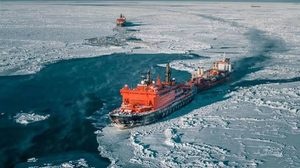
The EEF logistics programme is focused on the Northern Sea Route, Trans-Siberian Railway, port modernisation, freight and passenger transport, northern delivery, gas infrastructure and energy independence. The conference “Crossroads of Civilizations: The Role of Transport Integration in the History of the Asia-Pacific” brings together Russian and Asian researchers and policymakers. Named participants include Sergei Naryshkin, Ruslan Gagkuev, Konstantin Pashkov, Yury Kulchin, Alexey Maslov, Yury Nosov and Denis Tsypkin. Foreign participants include Indonesia’s Arif Satria, China’s Ma Bin, Chinese entrepreneur Sun Tianshu, founder of the Russia-China B2B digital platform QIFA, and Vietnam’s Le Thanh Bac, together with experts from India, Malaysia, Mongolia, South Korea, Thailand and Japan. The underlying issue is straightforward: the Asian pivot cannot operate without Asian-scale transport capacity.
Logistics: Dealing With The Bottlenecks
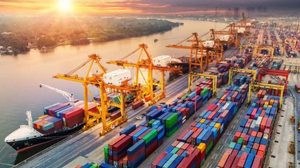
The forum’s logistics track may ultimately be more important than its investment track. Russia can offer Asia minerals, energy, food and industrial products. Asian investors can offer machinery, technology, capital and consumer goods. But the commercial relationship works only if goods can move predictably. The 2026 programme therefore focuses on the Northern Sea Route, Trans-Siberian Railway, port modernisation, transport corridors and regional energy independence. The logic is straightforward. The Trans-Siberian and Baikal-Amur railways connect the Far East with European Russia and Central Eurasia. Pacific ports connect Russia with China, Korea, Japan, India and Southeast Asia. The Northern Sea Route offers a second Arctic dimension. Border crossings with China and Mongolia create continental corridors. Together these routes could turn the Far East into a multi-directional logistics platform rather than a dead-end export zone.
Fisheries
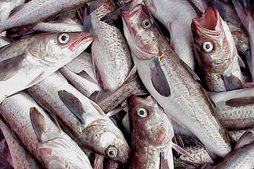
The fisheries programme is particularly revealing because it combines companies, regional authorities, finance and export promotion. The September agenda includes the development of domestic seafood consumption, regional brands and the expansion of Russian fish exports. The corporate network is extensive: Gidrostroy, Dobroflot, Russian Fishery Company, Russian Crab, Unifrost, Magadanryba, Ozernovsky Fish Processing Plant No. 55, Kamchatsky Meridian, Oceanrybflot and Vladivostok Sea Fishing Port, among others. This makes the EEF not merely an investment conference but a sectoral marketplace for a major Far Eastern export industry. A planned agreement between the Russian Fish Products Promotion Agency, Roscongress and the Primorye government will also seek to expand domestic demand and promote Russian seafood.
Day-By-Day: What Happens From September 1 To September 4

Tuesday, September 1 – The Commercial Ecosystem Opens
The first day begins the Creative Industries Forum, the five-track business programme, SME activities, Youth Forum events, Falcon Day and the opening of Far East Street. The first SME International Cooperation Day will focus on productivity, AI, automation, digital marketplaces and cybersecurity. The “Crossroads of Civilizations” conference will examine transport integration and the development of Asia-Pacific trade. The Far East Street exhibition opens its regional showcases, while the fifth anniversary Parade of Sails begins its programme.
Wednesday, September 2 – Putin And The Investment Machinery
Putin’s Far Eastern development meeting becomes the political focus. He will receive a regional-development presentation and participate in the remote launch of new enterprises. The five business tracks continue in parallel. The international business dialogues with China, India, UAE, Mongolia, Vietnam and ASEAN intensify. The “Towards a Common Future: Inclusion as a Development Resource for the Far East” session links human capital and social policy with economic growth. The “Soul of Russia” concert and cultural programme also become part of the city’s international profile.
Thursday, September 3 – The Political Centre Of Gravity
The plenary brings together Putin, Prabowo, Ding Xuexiang, Nyam-Osoryn Uchral and Nyo Saw. Putin and Prabowo are scheduled for bilateral talks. The China, India, Mongolia, Vietnam, ASEAN and UAE business dialogues continue alongside the political programme. This is likely to be the most important day for announcements on international cooperation.
Friday, September 4 – Conversion of Negotiations into Agreements
The final day is devoted to concluding thematic sessions, specialised conferences, networking, the Vladivostok-2050 city-development business game and the final agreement process. The objective is to leave Vladivostok with documents that can be translated into investment, infrastructure and policy decisions rather than simply conference statements.
What To Expect From EEF 2026: Ten Key Outcomes

The likely outcomes:
- A large new package of investment agreements.
- Progress on the Eastern Financial Centre.
- Refinement of Advanced Development Areas, the Free Port of Vladivostok and International Priority Development Territories.
- Additional Russia-China projects in processing, logistics, technology and digital trade.
- New Russia-Indonesia agreements.
- Deeper Russia-India cooperation, particularly aviation and business connectivity.
- Expansion of Russia-ASEAN cooperation in tourism, energy, food, fisheries, technology and logistics.
- New projects involving AI, drones, autonomous transport, data centres, robotics and distributed energy.
- Greater emphasis on housing, urban development, education and workforce policy.
- The continued transformation of Vladivostok and other Far Eastern cities into areas capable of retaining the people needed to operate the new economy.
Why EEF 2026 Is Strategically Different

The most important change is that the Far East is moving from an investment-attraction model to an ecosystem-building model. The first generation of policy was about offering investors land and tax preferences. The second generation was about building roads, ports, power and industrial sites. The third generation is now emerging: build the financial system, technology base, workforce, cities, international partnerships and digital infrastructure around those assets. That is why the five tracks are interconnected. The ₽13.5 trillion (US$156.5 billion) project pipeline needs capital. Capital requires financial infrastructure. Factories require workers. Workers require housing and cities. Factories require technology. Technology requires universities and skilled labour. Products require logistics. Logistics require ports, railways and energy. And all of it requires foreign markets. EEF 2026 is essentially an attempt to coordinate this entire chain.
The Broader Asian Economic Contour

China remains the anchor. India is becoming a major second pillar. Mongolia provides continental connectivity. Indonesia opens the Southeast Asian dimension. Vietnam provides an established industrial and trade channel. Thailand offers pharmaceuticals, IT, fintech and tourism. Malaysia brings science, education, energy and digital cooperation. The UAE contributes investment, tourism, energy and SME links. Qatar adds energy and Gulf cooperation. Japan and South Korea remain important Northeast Asian economic participants. ASEAN provides the broader Southeast Asian market. This is why Vladivostok matters geographically. It is one of the few places where the Russian economic system directly meets the Pacific economic system.
The Human Capital Question Will Decide Whether The Investment Model Works

The theme “Development for the Benefit of People” is not simply political language. The Far East has a structural labour constraint. More than 180,000 jobs have already been created through current projects. New mines, factories, ports and technology companies will create additional demand. The response is visible in the programme: 25 city master plans, rental housing, Far Eastern mortgages, the Far Eastern Hectare, education reform, engineering training, continuing professional education and urban improvements. The master plans alone encompass more than 1,000 facilities and activities. The logic is becoming unavoidable: investment without population is not development.
Culture, Tourism And Sport Are becoming Economic Infrastructure

The EEF programme extends beyond business. The “Vladivostok Seasons” cultural festival will feature exhibitions, concerts, museums, indigenous culture and contemporary art. The State Russian Museum will display a previously rarely travelled masterpiece by Alexander Deineka, which has left the museum only eight times, including appearances at the São Paulo Biennial and Rome’s Palazzo delle Esposizioni. The Far East Street exhibition will showcase regional culture and tourism. The sports programme includes a traditional 5-kilometre run, coastal rowing, international mas-wrestling, chess, table tennis and the new 68-kilometre open-water swim along the Amur River involving participants from Russia and China. The fifth EEF Parade of Sails will bring together more than 1,000 Russian and international sailors and yachtsmen, including Chinese professionals, with the training ships Nadezhda and Pallada and the Far East Cup regatta. These are not substitutes for investment. They are part of the wider attempt to make Vladivostok an international city rather than simply a conference location.
What Happens After The Event? The Key Critical Questions

The EEF’s importance should not be measured solely by how many presidents appear, how many companies sign memoranda or how large the headline agreement number becomes. The decisive test is implementation. Can the ₽6 trillion (US$69.5 billion) already invested generate another investment cycle? Can the ₽13.5 trillion project portfolio move toward completion? Can the Far East’s industrial growth move beyond extraction into processing? Can Chinese, Indian, ASEAN and Gulf partners become joint producers rather than simply buyers and sellers? Can the Eastern Financial Centre attract long-term capital? Can unmanned technologies reduce the cost of operating an enormous territory? Can the Trans-Siberian Railway, Northern Sea Route and Pacific ports absorb rising Asian trade? Can 25 city master plans make the region attractive enough to retain skilled workers? And can the preferential regimes become sufficiently predictable that foreign investors treat the Far East as a long-term production location rather than a temporary opportunity?
Those questions are more important than the speeches.
Russia’s Pivot to Asia will provide a detailed summary of the 2026 EEF meetings, results, outcomes and singed agreements later this week with a full analysis of what happened and the wider implications. To make sure you receive this intelligence, a complimentary subscription, including our weekly email update, can be obtained here.
Summary: Vladivostok is becoming Russia’s Asian Economic Control Room
The 2026 Eastern Economic Forum arrives after a decade during which the Far East has moved from being a peripheral development problem to becoming one of Russia’s central economic policy experiments. The statistics are substantial: more than 3,000 projects, ₽13.5 trillion in the implementation pipeline, ₽6 trillion already invested, more than 1,000 enterprises, more than 180,000 jobs, investment growth at 1.5 times the national rate, industrial production up 1.3 times, mineral extraction 1.4 times, housing commissioning 1.5 times and construction 2.3 times.
But the next stage requires a different economic model. It requires moving from extraction to processing, from bilateral trade to production chains, from tax incentives to financial architecture, from infrastructure construction to logistics integration, from imported technology to domestic technological capability, and from attracting workers to building cities in which people want to stay.
That is why the presence of Putin, Prabowo, Ding Xuexiang, Uchral and Nyo Saw matters. That is why Sinopec, Rosatom, PSB, A7, VEB.RF, VTB, Gazprom, RusHydro, Elga, Rosseti, Sber, Aeroflot, Udokan Copper and the growing technology ecosystem matter.
It is also why Primorye, Amur, Khabarovsk, Sakhalin, Yakutia, Buryatia, Magadan, Chukotka and the Jewish Autonomous Region are not merely displaying regional pavilions. They are competing for a position in the next economic cycle. This is why EEF 2026 should be watched not simply as an annual Russian economic forum, but as a working laboratory for Russia’s new Asian economic geography. The Far East is no longer being built merely to face Asia. It is being built to operate inside Asia. Vladivostok is increasingly the place where that strategy is negotiated, financed, demonstrated and, if the agreements are implemented, turned into physical economic reality.
This report was written by KP Majumdar, a geostrategic and geo-economics analyst based in South Asia whose work has been widely published by international news media and publications. He may be reached at info@russiaspivottoasia.com