 Русский





The 11th Eastern Economic Forum (EEF) in Vladivostok proved to be rather more than another annual showcase of Russia’s Far Eastern investment projects. Its real significance was that several previously separate economic agendas began to converge at the same time: the development of the Russian Far East, the Northern Sea Route, the Trans-Arctic Transport Corridor, the modernization of the Baikal-Amur Mainline and Trans-Siberian Railway, deeper integration with China, the expansion of trade with ASEAN, the emerging Indonesia-EAEU free-trade architecture, the development of Russia’s technology base and the search for new channels of investment and payments.
The Numbers
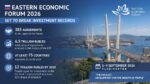
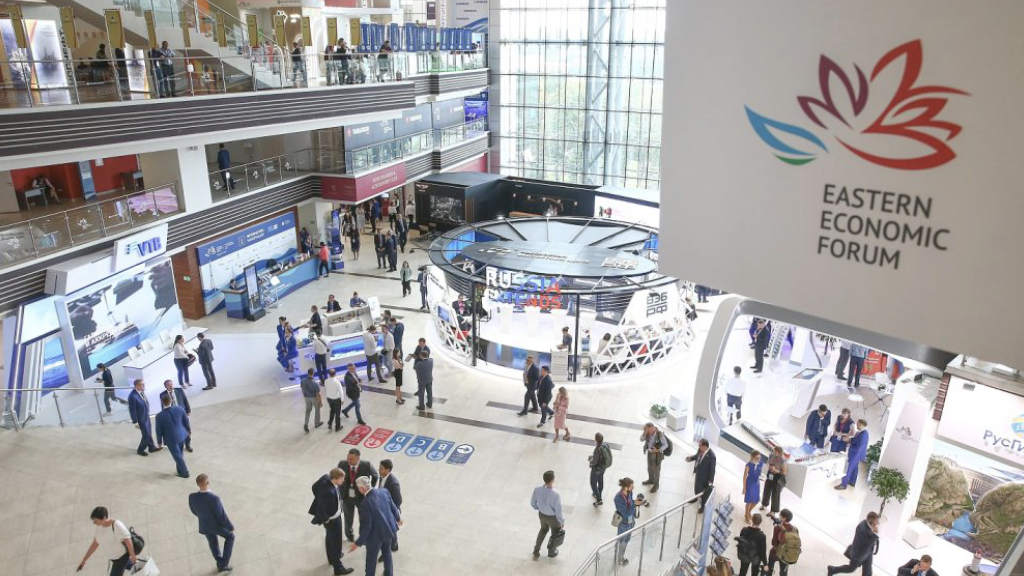
Held from September 1 to 4, 2026, at the Far Eastern Federal University campus in Vladivostok under the theme “The Far East: Development for the Benefit of People,” the EEF brought together more than 9,300 participants from 78 countries, including about 2,400 Russian and foreign business representatives from more than 1,050 companies and more than 2,000 exhibitors. Fifteen foreign Ambassadors, nine Russian federal ministers, ten federal services CEO’s and agencies and thirteen regional governors also participated. The programme contained more than 150 business events with more than 1,000 speakers, while around 1,200 business negotiations focused on Far Eastern development projects.
The final commercial tally was even more substantial than the preliminary figures. During the first three days, Deputy Prime Minister and Presidential Plenipotentiary Envoy to the Far Eastern Federal District Yury Trutnev reported 328 agreements worth ₽6.84 trillion (US$79 billion) had been signed. Including contracts, MoU, action plans and road maps.
However, the more consequential development was the geographical and economic logic behind those agreements. The Far East is increasingly being treated not simply as a resource-producing periphery, but as Russia’s Pacific gateway and, increasingly, as the eastern end of a continental logistics system stretching from China and Southeast Asia through Siberia and the Arctic toward European Russia and global markets. That is the central economic message of Vladivostok in 2026.
Putin’s Speech: Transition From Regional Development To A National Economic Corridor
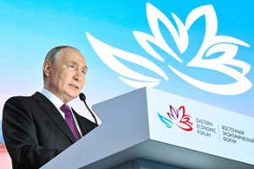
President Vladimir Putin’s appearance at the September 3 plenary session placed the forum’s economic programme inside a much broader national strategy. Sitting alongside Indonesian President Prabowo Subianto, Mongolian Prime Minister Nyam-Osoryn Uchral, Myanmar Vice President U Nyo Saw and Chinese Vice Premier Ding Xuexiang, Putin presented the Far East as one of the principal areas through which Russia intends to connect its domestic development agenda with the Asia-Pacific economy.
President Vladimir Putin’s central message was that the Far East is no longer an experimental development project but a strategic economic priority for the entire 21st century. Discussing the development of the Far Eastern and Arctic regions, he emphasised the need to strengthen their economies, transport networks, energy systems, infrastructure and social sphere while improving living standards. Key takeaways form his engagements are that the region’s development dynamics in several key indicators are ahead of the Russian average. The numbers explain why Moscow continues to attach such importance to the region. According to Putin, the Far Eastern regions attracted approximately ₽25 trillion in capital investment during the previous 11 years. Industrial and construction growth has consistently exceeded the Russian average, while the gross regional product of the Far East has more than tripled over the same period. The investment has produced a physical economic base: port terminals, railway lines, the Zvezda shipbuilding complex, the Amur Gas Processing Plant and the Amur Gas Chemical Complex.
This is a critical change from the traditional economic image of the Russian Far East. The region is no longer being developed around a single export commodity or a single infrastructure corridor. Shipbuilding, gas processing, petrochemicals, mining, electricity, logistics, agriculture, tourism, digital technology and advanced manufacturing are being developed simultaneously. The forum therefore functioned as a kind of annual balance sheet for this transformation. Putin also stressed the social consequences. New productive jobs are being created, incomes in the Far East have now moved above the Russian average, and the unemployment situation has changed dramatically compared with two decades ago. Moscow is no longer dealing only with the question of how to attract capital into an underdeveloped region, it is increasingly dealing with how to ensure that infrastructure, housing, skilled labour, electricity, transport and social services keep pace with industrial expansion. That is why the forum’s investment programme and its social agenda were so closely connected.
Linking The Russian Far East With The Arctic
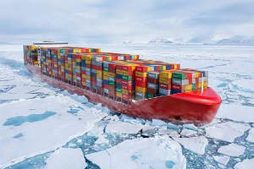
The most important structural idea emerging from the forum was the integration of the Far East and Arctic into one economic and logistical macro-region. Minister for the Development of the Far East and Arctic Alexei Chekunkov said that the Russian government had advanced the Strategy for the Development of the Far East to 2036, while the Russian Security Council had considered and approved the Strategy for the Development of the Arctic Zone to 2050. The Russian Foreign Minister, Sergey Lavrov recently outlined Russia’s strategy for developing the Arctic, including with international partners.
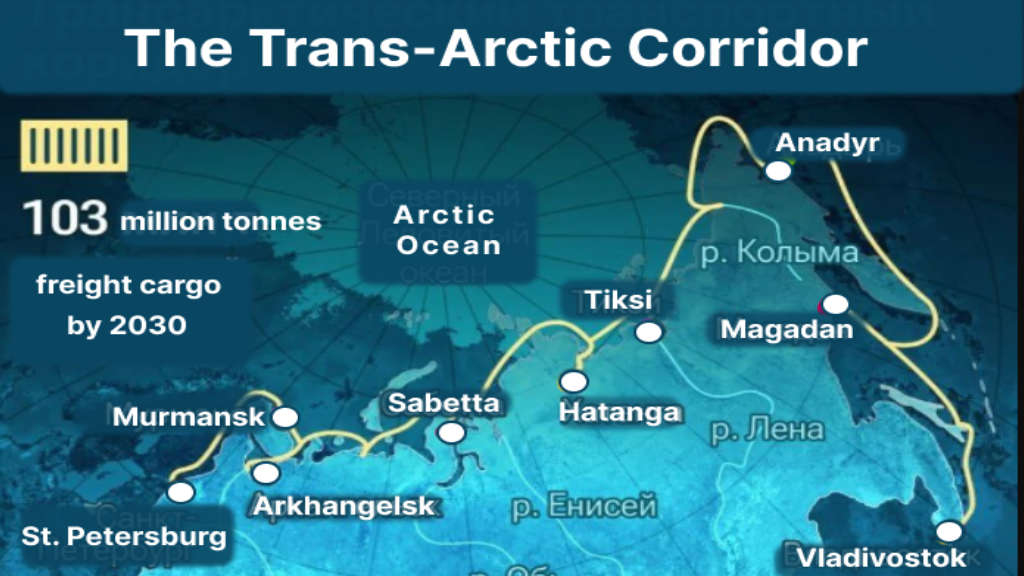
The Trans-Arctic Transport Corridor discussed at the forum is intended to link the two spaces into a single geostrategic economic system covering more than half of Russia’s territory. This is not simply an administrative concept. It changes the economic geography of Russia.
The traditional Russian export model moved commodities from Siberia and the Far East toward Pacific ports or westward into European markets. The emerging model is more complex. Raw materials can be processed closer to their source, transported along modernized railways, moved through Arctic and Pacific ports, connected with Asian supply chains and potentially re-exported to markets in Southeast Asia, South Asia and beyond. The Trans-Arctic Transport Corridor is therefore being conceived as a bridge between the European, Siberian, Arctic and Pacific parts of Russia. The economic scale of the agreements signed in Vladivostok reflects this ambition.
Key Signed Agreements: Analysis
As noted above, the Forum resulted in the signing of 328 agreements, treaties, memorandums, plans and road maps, with the total value of the signed documents reaching ₽6.84 trillion. The key agreements cover major areas of strategic development, including transport and logistics infrastructure, Arctic development, the Northern Sea Route, deep-water ports, petrochemical processing, mineral-resource development, industrial production and investment cooperation.
The Mohe-Naiba Corridor
Among the largest deals, the Republic of Sakha (Yakutia), JSC Far East and Arctic Development Corporation and JSC Development Corporation of the Republic of Sakha (Yakutia) signed a cooperation agreement on the implementation of the international “Mohe-Naiba” transport corridor. The agreement is intended to consolidate the parties’ efforts to create transport and logistics infrastructure in Yakutia and establish a new connection between China and the Republic of Sakha (Yakutia) through the Amur Region. This includes the creation of an international combined border crossing with China, construction of the deep-water port of Naiba, a new Lower Bestyakh-Naiba railway line of approximately 1,300 km providing access to the port, and a further railway connection to Magadan of approximately 1,670 km.
Overall, the project envisages more than 2,900 km of railway infrastructure. The corridor is intended to form a new meridional transport route linking the Asia-Pacific and Southeast Asian countries with the Trans-Arctic Transport Corridor. The projected cargo volume is estimated at 2 million tonnes per year. The Far East and Arctic Development Corporation and the Development Corporation of the Republic of Sakha (Yakutia) will coordinate interaction among the participating parties, contribute to the development of the project concept, assist in selecting land plots, arrange infrastructure provision, attract financing and secure state-support measures. A preliminary feasibility study has been completed, confirming the possibility of implementing the project without attracting funds from the federal budget, while an international consortium of investors, including Chinese capital, has been formed. The total investment volume is estimated at ₽1.13 trillion (US$13 billion).
Integrated Arctic Development
A separate agreement was signed by JSC Far East and Arctic Development Corporation, JSC VIS and JSC Crystal Growth Fund to establish an investment mechanism for implementing the Integrated Arctic Development Project and the Trans-Arctic Transport Corridor, with a total investment volume of ₽1 trillion (US$11.5 billion). This is aimed at combining the parties’ efforts to attract and structure investment in projects related to the development of transport, port, logistics and other infrastructure in the Russian Arctic. As part of the cooperation, the parties plan to develop financing mechanisms for complex infrastructure projects, identify potential sources of capital and coordinate the actions of project participants to ensure the implementation of projects associated with the Trans-Arctic Transport Corridor.
Arctic Transport
Another major agreement, valued at ₽724.3 billion (US$8.4 billion), was signed by Rosatom and JSC Far East and Arctic Development Corporation within the framework of projects for the development of the Arctic Zone of the Russian Federation and the Trans-Arctic Transport Corridor. Rosatom are responsible for the passage of shipping along the Northern Sea Route via their nuclear-powered icebreakers. They agreed to coordinate their efforts in developing Arctic transport infrastructure, including the formation of an icebreaker fleet model, further development of the Northern Sea Route and the creation of conditions for implementing investment projects in the Arctic. The agreement also provides for cooperation in attracting investment, preparing and implementing infrastructure projects and ensuring their comprehensive support through available state-support mechanisms.
Port Infrastructure
Northern port infrastructure was represented by an agreement between JSC Deep-Water Port of Arkhangelsk and JSC Far East and Arctic Development Corporation on the implementation of a project to construct the deep-water area of the seaport of Arkhangelsk, with investments of ₽466.6 billion (US$5.4 billion). The project provides for the creation of modern port infrastructure designed to increase the transport and logistics potential of the Arkhangelsk Region and strengthen the region’s role in servicing cargo flows along northern routes. In addition, JSC Far East and Arctic Development Corporation and LLC SOLAR ZK signed an agreement on the implementation of an investment project with a declared investment volume of ₽212.5 billion (US$2.48 billion).
Arctic Logistics
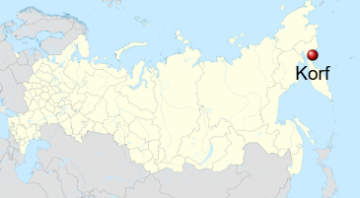
The EEF also produced an agreement between JSC Far East and Arctic Development Corporation and LLC VLT KORF on the implementation of the first phase of a project to construct a high-latitude logistics terminal in the Olyutorsky District of the Kamchatka Region, with an investment volume of ₽139.1 billion (US$1.6 billion). The terminal is intended for the transshipment of dry and bulk cargo from ice-class vessels to vessels that are not designed to operate in ice conditions. The project provides for the use of the non-freezing Korf Bay, which is strategically important for organizing maritime logistics in the eastern Arctic and the Russian Far East.
Petrochemicals
An agreement was also reached between JSC Far East and Arctic Development Corporation and MIC Innovative Technologies on the creation of a unified interregional industrial cluster for the deep processing of petrochemical raw materials across the Khabarovsk Territory, Primorye Territory and Amur Region. The cluster will bring together processors, raw-material suppliers and exporters in the three Far Eastern regions to establish an integrated ecosystem for the deep processing of polymers.
The project is planned for implementation from 2026 to 2032, with resident enterprises expected to have a combined processing capacity of more than 100,000 tonnes of polymer raw materials per year. The planned product range includes pipes and fittings; industrial, food, consumer and transport packaging; containers for solid municipal waste; cast products; and products for the agro-industrial complex. Production will be oriented toward both the domestic Russian market and export markets in Latin America, Africa and Southeast Asia. Land plots are being selected at three locations: Zapadny in Primorye Territory, Rivone in the Amur Region and Vector in the Khabarovsk Territory. The total investment volume is ₽100 billion (US$1.15 billion).
Potash
The EEF’s investment programme also included a major mineral-resource project in the Republic of Buryatia. The Republic of Buryatia, JSC Far East and Arctic Development Corporation and Baikal Nedra Geo LLC signed an agreement worth ₽85.9 billion (US$993 million) on cooperation in implementing an investment project to construct the Novohuoyan potash plant based on the Kalyumnoye deposit in the North Baikal District of the Republic of Buryatia.
The project envisages the creation of a full-cycle enterprise for the production and comprehensive processing of sonnyrite ore, a complex potassium-aluminosilicate mineral raw material. The ore reserves of the deposit are estimated at 2 billion tonnes, providing a resource base capable of supporting the production process for more than 100 years. The enterprise’s planned product portfolio will include three main groups: a potash group, comprising potassium sulphate, kalimagnesia and potassium hydroxide; a metallurgical group, including metallurgical alumina and iron-ore concentrate; and a silicon dioxide group. The projected annual production volume is approximately 1 million tonnes for the potash group and 0.7 million tonnes for the metals group. Phased production capacity is scheduled to be reached in 2030–2031.
The parties will coordinate their efforts during the pre-project stage, including the development of the project concept taking into account the needs and economic potential of the region, selection of land plots, development of infrastructure support, interaction with regional authorities and cooperation with development institutions. The implementation of the project is expected to create approximately 1,000 new jobs. The Far East and Arctic Development Corporation will provide comprehensive support for the project and assist in obtaining resident status in the Advanced Development Territory of Buryatia.
Investment Summary
Taken together, the collective agreed investments of ₽6.8 trillion demonstrate that the EEF’s investment agenda now extends across interconnected transport, energy, industrial, mining and logistics projects. The largest commitments are concentrated in the development of the Trans-Arctic Transport Corridor, Northern Sea Route, deep-water ports, railway infrastructure and Far Eastern industrial capacity, while projects such as the Mohe-Naiba corridor, the Arkhangelsk deep-water port, the Kamchatka logistics terminal, the interregional petrochemical cluster and the Buryatia potash plant add new capacity for trade, processing and resource development.
The geographical scope of the projects from Yakutia, Buryatia and the Amur Region to Primorye, Khabarovsk, Kamchatka and Arkhangelsk indicates an effort to integrate Russia’s Far East and Arctic territories into a wider transport, production and export network connecting the country more closely with China, the Asia-Pacific, Southeast Asia, Latin America and Africa.
However, due to the sensitive and confidential nature of some business dealings, as well as the potential risks associated with Western sanctions regimes, not all agreements, deals, or commercial engagements are publicly disclosed. We will continue to monitor developments closely and provide updates as reliable information becomes available. To make sure you receive this intelligence, a complimentary subscription, including our weekly email update, can be obtained here.
The Available Arctic Investment Fund Mechanism Reaches One Trillion Rubles
Another major agreement was signed by the Far East and Arctic Development Corporation, VIS Group and the Kristall Growth Fund to create an investment mechanism for the integrated development of the Arctic and the Trans-Arctic Transport Corridor. The declared investment volume is ₽1 trillion (US$11.5 billion). This mechanism is designed to combine capital sources, structure financing for large infrastructure projects and coordinate investors involved in transport, ports, logistics and other Arctic infrastructure.
This is particularly significant because the principal obstacle to Arctic development is not simply the absence of natural resources. Russia already has abundant Arctic resources. The constraint is infrastructure economics: enormous distances, severe climate conditions, seasonal navigation, high construction costs and the need to synchronize ports, icebreakers, railways, communications and energy systems. An investment mechanism capable of combining public support with private capital is therefore potentially more important than another individual port or railway project. The EEF was effectively trying to solve the financing architecture of Arctic development.
Rosatom and the Northern Sea Route
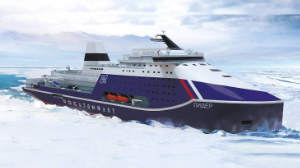
The agreement between Rosatom and the Far East and Arctic Development Corporation adds another layer. The two sides agreed to cooperate on Arctic transport infrastructure, the development of the Northern Sea Route and the creation of conditions for investment projects. The agreement also includes work around the icebreaker fleet model and the use of state-support instruments, with a declared investment volume of ₽724.3 billion (US$8.36 billion).
Putin’s broader remarks on the Trans-Arctic corridor show the intended direction. Russia is building new ice-class vessels and expanding the fleet for year-round northern navigation. By 2030, the domestic fleet is expected to receive three serial universal nuclear-powered Arktika-class icebreakers and the nuclear-powered Rossiya of the Leader project. Cargo and rescue vessels and satellite infrastructure are also being developed, while port logistics in the Baltic, Barents and Kara seas and the Pacific are being upgraded. This creates an important economic connection between the Arctic and Asia. If the Northern Sea Route is to become a commercially reliable transport system rather than merely a seasonal alternative, it needs cargo originating in Asia, Russian resource regions and domestic industrial centres. The Russian Far East provides precisely the Pacific-side interface required for such a system.
Arkhangelsk: The Western Anchor
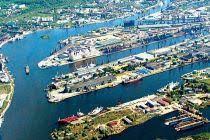
The proposed deepwater area of the Port of Arkhangelsk represents the western side of this emerging infrastructure chain. The Deepwater Port of Arkhangelsk and the Far East and Arctic Development Corporation signed an agreement for the project, with declared investment of ₽466.6 billion (US$5.4 billion). The objective is to expand Arkhangelsk’s logistics capacity and strengthen its position in northern cargo flows. The project has also been described as part of the wider Trans-Arctic Transport Corridor, with commissioning targeted around 2032. Taken together, the Arkhangelsk, Arctic, Yakutia and Pacific projects form a much larger economic proposition. The emerging corridor is not simply Vladivostok–Arctic shipping. It is a chain of ports, railways, industrial zones, energy systems, warehouses and border crossings connecting different Russian regions with Asian markets. This is why the forum’s infrastructure agreements should not be viewed individually. Their real value comes from their potential interoperability.
Kamchatka: An Arctic Logistics Terminal at Korf Bay
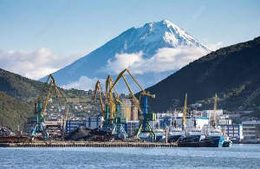
Another major agreement involves the first stage of a high-latitude logistics terminal in the Olyutorsky District of Kamchatka Krai. The Far East and Arctic Development Corporation and VLT KORF agreed to develop a terminal for transshipment of dry and bulk cargo between ice-class vessels and vessels not designed for ice conditions. The project will use the non-freezing Korf Bay and has declared investment of ₽139.1 billion (US$1.6 billion). The significance lies in the terminal’s location. Korf Bay can become a logistical interface between Arctic-capable shipping and conventional maritime transport. Such facilities are essential if Russia wants to develop a year-round northern shipping economy rather than simply increase the number of vessels travelling through Arctic waters.
Primorye’s Microelectronics Push

The resource economy was only one part of the forum’s investment agenda. An agreement involving the Ministry for the Development of the Far East and Arctic, the Ministry of Industry and Trade, the Primorye regional government and X Holding provides for a high-technology microelectronics cluster in Primorye with investments exceeding ₽35 billion (US$404 million) and the creation of two integrated electronics plants.
This is economically significant because Primorye is one of the few Russian regions where geography, ports, universities and proximity to Asian technology markets can combine. The longer-term opportunity is not necessarily to reproduce the entire semiconductor supply chain inside Russia. It is to develop targeted competencies in electronics, industrial automation, components, equipment and applied technologies that can be integrated into Asian and Russian manufacturing networks. That is consistent with the forum’s wider emphasis on technology sovereignty.
Russia-China: The Central Economic Relationship
China remained the central economic partner at the 2026 Eastern Economic Forum, with bilateral trade above US$200 billion for three consecutive years and a Russia-China investment portfolio of 65 current and 26 prospective projects worth about US$240 billion, including six new projects in 2026. Many important outcomes between China and Russia were achieved during the 2026 Eastern Economic Forum. These included President Putin’s meeting with Ding Xuexiang, the China-Russia Intergovernmental Commission meeting, the 8th China-Russia Energy Business Forum, and the 2nd Russian-Chinese Forum in Khabarovsk, held on September 4-6.
The Russian-Chinese Forum assessed new export markets for 21 Russian regions. Several agreements were signed, along with other significant outcomes reached during these events. The 13th Russia-China Intergovernmental Commission on Investment Cooperation signed a final protocol, advancing coordination on development strategies, Belt and Road-EAEU cooperation, and integration between the Russian Far East and northeastern China.
New agreements, including the RusHydro-Beijing Taiji peat-industry partnership, aim to build integrated supply chains combining Russian resources and technology with Chinese capital, equipment, logistics and market access. China was named the most promising Asia-Pacific investment partner by 73% of respondents, ahead of South Korea (26%), India (25%) and Japan (23%); meanwhile, 93% said foreign investment was needed for breakthrough development, while the expanding Khabarovsk forum and Greater Ussuri Island cooperation are strengthening regional China-Russia economic integration. We will publish a separate deep-dive of these developments and their implications tomorrow. To make sure you receive this intelligence, a complimentary subscription, including our weekly email update, can be obtained here.
The Eastern Operating Domain: The Physical Backbone
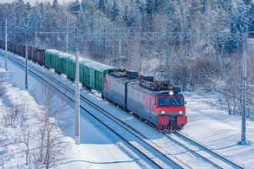
The EEF’s transport discussions have to be viewed against the modernization of the Eastern Operating Domain, comprising the Baikal-Amur Mainline and Trans-Siberian Railway. The modernization programme has been underway since 2013. Railway carrying capacity has increased by 84% and reached 180 million tonnes in 2025. The target is 210 million tonnes by the end of 2030 and 270 million tonnes by the end of 2032. This is one of the most important numbers in the entire Far Eastern economic story. A 270-million-tonne railway system cannot be understood as a domestic Russian infrastructure project alone. It is infrastructure for Eurasian trade. If Russia can expand port capacity at the Pacific coast at the same time, the country will have significantly more capacity to move Russian commodities and industrial products toward China, India, ASEAN and other Asia-Pacific markets.
India: Trade, Tourism and New Investment Channels

India was among the largest foreign delegations at EEF-2026, with the programme including a dedicated Russia-India Business Dialogue focused on expanding practical commercial and investment cooperation. Indian businesses explored opportunities in the Russian Far East, particularly tourism, investment projects and regional market access. Sammy Kotwani, President of the Indian Business Alliance, proposed tourism projects combining Indian culture with family recreation in Russia, alongside investment opportunities in projects such as the Bereg Baikal SEZ, Mountain Shoria SEZ and White Mountain ski resort. Russian institutions including VEB.RF and Tourism.RF presented financing and investment-support mechanisms available to foreign investors.
South Korea: Business Presence Despite Political Constraints

South Korea was also among the forum’s largest foreign delegations, demonstrating that South Korean business interest in Russia’s Far East has not disappeared despite the difficult political environment. Discussions across the forum centred on the Far East’s investment potential in tourism, fisheries and aquaculture, transport and logistics, aviation and shipbuilding, sectors especially relevant to Korean industrial capabilities. A forum survey ranked South Korea second only to China as a promising Asia-Pacific investment partner for the Far East, cited by 26% of respondents, ahead of India at 25% and Japan at 23%. At the same time, participants identified sanctions and political risks as the biggest investment constraint, cited by 39%, followed by infrastructure and logistics problems at 37%.
On September 1, Park Jongho, president of the Korean-Russian Business Council, said that South Korean business participation had increased significantly and that Korean companies were particularly interested in fishing, logistics, construction and Northern Sea Route projects in the Russian Far East. He argued that four years of sanctions had forced companies to develop workable mechanisms for continuing trade. South Korea has also been investing in and developing its own ports for handling future NSR routes and commodities processing.
Japan: Continued Commercial Interest in the Russian Far East

Japan also sent one of the largest delegations to Vladivostok, an important signal given the deterioration of official Russia-Japan relations in recent years. Japanese representatives participated in a forum where investment discussions concentrated heavily on tourism, fisheries, transport and logistics, aviation, shipbuilding and broader Far Eastern development, areas in which Japanese companies have long-standing technological and commercial expertise. In the forum’s investor survey, 23% of respondents identified Japan as a promising investment partner, behind China, South Korea and India. Its presence therefore suggested continued private-sector interest in Russia’s Pacific economy even while sanctions and political risks remain major barriers to larger investment commitments. Importantly, Japan’s significance at EEF-2026 lay primarily in maintaining business contacts and examining future opportunities.
ASEAN: Vietnam Pushes Far East-Vietnam-ASEAN Connectivity

At the Russia-ASEAN Business Dialogue on September 2, Vietnamese Finance Minister Ngo Van Tuan called for a more practical Russia-ASEAN economic partnership, noting that bilateral Russia-ASEAN trade had risen nearly 58% over the past decade to about US$21 billion in 2025, while Vietnam-Russia trade reached US$4.77 billion. Vietnam proposed studying a Far East-Vietnam-ASEAN logistics corridor linking Vladivostok and other Far Eastern ports with Vietnamese and Southeast Asian markets through maritime routes, railways, cold-storage facilities, distribution centres and production networks, particularly for fisheries, agriculture, food, raw materials and consumer goods.
Tuan also proposed deeper cooperation in AI, cybersecurity, fintech, digital healthcare, education, smart manufacturing, clean energy and offshore wind, as well as finance, tourism and air connectivity. The Vietnamese side stressed its role as a bridge between Russia and ASEAN, supported by its FTA network and its existing EAEU free-trade agreement, while calling for the Russia-ASEAN Action Plan for 2026-2030 to be translated into concrete projects with identified partners and measurable results. The forum material does not identify a new Vietnam-Russia bilateral deal signed at the EEF; instead, Vietnam’s main contribution was the proposal for new logistics, supply-chain and investment links connecting the Russian Far East with Vietnam and the wider ASEAN market.
Vietnam’s five priorities for Russia-ASEAN cooperation provide a useful summary of the forum’s emerging economic agenda. The first is new supply chains and joint investment. The second is transport and logistics, including maritime links between Vladivostok and Southeast Asia. The third is AI, digital transformation, cybersecurity, fintech, digital healthcare, education and smart manufacturing. The fourth is energy, renewable power, offshore wind, electricity infrastructure and green development. The fifth is finance, investment, tourism and people-to-people exchanges. ASEAN is a market of nearly 700 million people, with a young workforce and flexible production networks. Russia has energy, raw materials, agriculture, industrial capabilities and scientific capacity. The economic proposition is therefore not difficult to understand. The difficulty is implementation.
Vietnam: Concrete EEF Projects
Vietnam used EEF 2026 to move Russia-Vietnam economic cooperation from broad policy discussions toward concrete transport, logistics and investment projects. Finance Minister Ngo Van Tuan called for stronger Russia-ASEAN supply chains through Vietnam and proposed turning cooperation into projects with clear partners and measurable results, while discussions with Russia’s Far East authorities covered a “one-stop” investment-support mechanism and the need to resolve banking-payment bottlenecks.
On September 3, Vietnam Maritime Corporation (VIMC) and Russia’s FESCO signed a transport and logistics cooperation agreement, including a “twin port” relationship between Saigon Port and Vladivostok Port. Vietnam, FESCO and Rosatom also handed over an MoU to study a transport route linking Vietnam with the Northern Sea Route, involving VIMC and Vietnam Shipbuilding Industry Corporation in cargo development and shipbuilding. Separately, the Far Eastern and Arctic Development Corporation signed an agreement with Vietnamese-invested Zelenaya Aura to develop a high-purity coal briquette and activated-carbon plant in Primorye in 2027-2029. Vietnam also explored stronger economic links with Yakutia in minerals, diamonds, coal and energy, including greater enterprise connectivity and cooperation with Vietnamese localities.
Indonesia: The Guest Of Honor – and Fertilizers

Indonesia’s participation in the EEF produced a concrete industrial outcome alongside broader discussions on trade, connectivity and investment. On September 3, President Prabowo Subianto met Russian President Vladimir Putin in Vladivostok, with discussions covering agriculture, energy and natural resources, minerals, defence, investment and shipping. Indonesia wants trade with Russia to double during the first review period of its 2027 free trade pact with the Eurasian Economic Union. Putin highlighted agriculture, shipbuilding, information technology and energy, including nuclear power, as areas of existing Russia-Indonesia cooperation, while noting that bilateral trade had increased by more than 12% in 2025.
The most tangible result was in fertilizers. PT Pupuk Indonesia and JSC Ruschem signed an MoU for a joint study on the Nakhodka Fertilizer Plant Phase 2 (NFP-2) in Primorsky Krai on September 3 on the sidelines of the EEF. The project envisages large-scale ammonia and urea production using Russian natural gas, with the joint study covering feasibility, technical and economic parameters, feedstock supply, financing, project risks and regulatory requirements. The wider Nakhodka complex is planned around 1.8 million tonnes of methanol, 2 million tonnes of ammonia and 3.5 million tonnes of urea annually, with commercial operations targeted around 2030.
For Indonesia, the project is strategically important because Vladivostok’s Pacific location can provide access to Asian markets while diversifying fertilizer supply and strengthening the country’s industrial and food-security resilience. Indonesian Investment and Downstreaming Minister and Danantara CEO Rosan Roeslani described the Pupuk Indonesia initiative as a concrete follow-up to the Putin-Prabowo engagement. Prabowo also used the EEF to set a much larger trade target. Indonesia-Russia trade approached US$5 billion in 2025, up 21.7% from 2024, and he proposed doubling bilateral trade during the first review period of the Indonesia-EAEU FTA, which is expected to enter into force in 2027. The agreement covers 11,882 tariff lines, or more than 90% of traded goods. Indonesian business delegations at the forum were working on pilot shipments, buyers, logistics and payment arrangements ahead of implementation.
Connectivity was another major outcome area. Prabowo called for direct shipping between Vladivostok and Indonesia, with predictable schedules, transparent costs, reliable insurance and two-way cargo flows, as well as direct air links. He also proposed closer cooperation between Indonesia’s Danantara, which he said has US$1 trillion in assets under management, and the Russian Direct Investment Fund (RDIF) to move from identifying opportunities to financing bankable projects. The Indonesian side therefore left the EEF with more than a political commitment: the forum produced a signed fertilizer-sector MoU, a proposed doubling of bilateral trade, a push for direct maritime and air connectivity, and a framework for Danantara-RDIF cooperation. The fertilizer agreement is particularly significant because it connects the Russian Far East directly to Indonesia’s food-security and industrial strategy while giving Russia a potential long-term industrial partner and Pacific market channel.
Mongolia: Railways Remain The Economic Centre of Gravity

At Putin’s September 2 meeting with Mongolian Prime Minister Nyam-Osoryn Uchral, the focus was strongly on transport, trade and mining, with bilateral trade rising 4.5% in 2025 and 18.1% in the first half of 2026. The EAEU-Mongolia interim trade agreement, which entered into force in July, is expected to improve access for Mongolian exports to EAEU markets, while more than 70 Russian regions maintain ties with Mongolian partners. At the Russia-Mongolia Business Dialogue, participants highlighted underused transport capacity, non-tariff barriers, standards and certification, alongside growing Mongolian demand for Russian railway, fuel, storage and mining equipment. A planned railway project around Jinchok Station could involve about 415 km of track, with a contractor expected to be selected in the second half of 2027. The main outcome was mutual consensus on expanding transport and industrial cooperation around Mongolia’s mining economy.
Myanmar: Geography As A Logistics Asset

Myanmar used the EEF to present its geography as an economic advantage, highlighting its position between South Asia, Southeast Asia and China and its potential to connect the Indian Ocean with wider Eurasian markets. Vice President U Nyo Saw pointed to the 2,400-hectare Thilawa SEZ, where 126 companies from 22 countries had invested US$2.23 billion and created about 12,000 jobs by 2026. Particular attention went to the Dawei deepwater port and SEZ, which Myanmar is discussing with Russia as an integrated corridor combining port, industrial, energy, storage and logistics facilities. Russia and Myanmar also discussed cooperation in oil, gas, iron and steel, fertilizers and fuel supplies. The key outcome was advancing discussions on turning Myanmar’s location into a Russia-Asia logistics and industrial gateway.
Thailand: Business Dialogue Opens New Investment Channels

Thailand’s economic agenda at the Russia-Thailand Business Dialogue, built on the sidelines of SPIEF in June 2026, focused on moving bilateral ties beyond traditional trade toward investment, industrial cooperation and new business partnerships. Government officials, business associations and companies from both countries discussed new areas of cooperation and practical mechanisms for direct contacts between entrepreneurs. The dialogue highlighted opportunities in energy, agriculture and food security, transport, digital technologies, science and education, while Thailand’s role as a Southeast Asian logistics and business hub offered a platform for Russian companies to enter wider ASEAN markets.
Digital Trade: The Russian Far East As A Test Zone

Technology was a cross-cutting theme of the forum. The Territory of Innovations presented projects addressing logistics, harsh climate conditions, energy shortages, digitalisation and accelerated construction. The forum also discussed experimental legal regimes for unmanned aerial systems, autonomous dump trucks, automated vehicles, digital platforms and telemedicine. This is economically significant because remote geography makes automation unusually valuable in the Far East. A mine hundreds of kilometres from a major city faces labour and transport constraints that an industrial cluster in Moscow does not. Autonomous transport, drones, AI-based logistics, remote medicine and digital monitoring can therefore produce larger productivity gains in the Far East than in more densely populated regions. The forum’s digital-sovereignty discussions also proposed the Far East as a potential data-centre hub oriented toward China, India and ASEAN. Participants pointed to the concentration of approximately 70% of global AI computing capacity in Western-controlled systems and argued for greater sovereign digital capacity in BRICS and Global South economies.
The State Is Making Investment Administration Digital

A separate spatial-development agenda may appear less glamorous than AI, but it is arguably more important for investment. The National System of Spatial Data is intended to improve land transparency, speed urban planning and reduce the time required to register property and geodetic information. The Far East experience has already produced master plans for 25 cities with a combined population of 4.2 million. Those plans contain more than 1,000 projects worth over ₽3.6 trillion (US$41.5 billion). Of these, 233 facilities have been completed, 384 were under construction and 88 were at the design stage. Projects include a polyclinic in Ulan-Ude, a children’s technology park in Komsomolsk-on-Amur, Tribuna Hall in Blagoveshchensk, Mayak Park in Magadan and Bagulnik Park in Tynda, while airport construction in Kamchatka and Ulan-Ude has also been completed. This illustrates an important principle: infrastructure investment is increasingly being managed as a system rather than a collection of isolated projects.
Energy: The Coming Bottleneck
Electricity was one of the subjects raised directly in Putin’s meeting on Far Eastern development. The problem is straightforward. Industrial investment creates electricity demand. The Far East has enormous energy potential, but its geography and climatic conditions make transmission expensive. The forum therefore discussed new generation and transmission infrastructure, including the Lower Zeya hydropower project and additional power capacity. RosHydro and Chinese partners are also exploring new energy-related commercial opportunities. The forum itself was supplied with green electricity attributes generated from the Bureyskaya Hydropower Plant, the largest hydropower facility in the Far East. The symbolism is relevant to the industrial strategy. The Far East needs cheap, reliable electricity if it is to host petrochemical processing, mining, electronics, data centres and automated industrial facilities. Energy is therefore becoming a constraint that can determine whether investment agreements become actual production.
Tourism: From Niche To A Major Investment Sector

Tourism has become one of the strongest emerging investment categories in the Far East. Putin noted that one in every ten projects currently being implemented with state support in the Far East and Arctic is in tourism. More than 400 agreements have already been signed for ski resorts, hotels, holiday centres and glamping facilities. The Baikalskaya Gavan resort is being developed in Buryatia, a seaside resort in Primorye, the Three Volcanoes tourism park in Kamchatka, and the first year-round ski resort in the Far East is expected to open in Arsenyev. A participant survey reinforces the trend. Forty-nine percent of forum participants considered tourism and hospitality one of the areas where the Far East had changed most over the previous decade. Thirty-seven percent identified tourism and cruise tourism as one of the areas most capable of generating sustainable growth. Tourism was also the leading sector identified for future investment inflows, at 44%, followed by fisheries and aquaculture at 33%, transport and logistics at 32%, and aviation and shipbuilding at 24%. This is more than a leisure story. Tourism is a mechanism for monetising geography without extracting natural resources. It also creates demand for airports, roads, restaurants, hotels, digital services and local producers.
The Pacific Is Also Becoming A Tourism Market
Indonesia’s call for direct flights is particularly important in this context. Prabowo argued that direct air connectivity could increase Russian tourism to Indonesia while bringing Indonesian travellers to the Russian Far East. Vietnam also called for stronger air links and tourism cooperation. Vietnam received nearly 21.2 million international visitors in 2025, creating a large potential market for Russian tourism companies and Far Eastern destinations. The economic logic is clear. If Vladivostok is to become a genuine Pacific economic gateway, it cannot depend entirely on cargo. Passenger flows create another form of connectivity.
Fisheries: Geography As A Branded Economic Asset

The Far East’s fisheries sector also received attention. A VTsIOM study presented at the forum found that 77% of Russians pay attention to the region where fish was produced. That matters because the Far East is one of Russia’s major fishing regions. The next economic step is therefore not only increasing catches but improving processing, logistics, branding and cold-chain infrastructure. This connects directly with Vietnam’s proposed Far East-Vietnam-ASEAN logistics corridor, which specifically identified fisheries and food as potential value-chain sectors. The commercial opportunity is to move from bulk fish exports toward higher-value processed seafood.
Creative Industries: Economic Diversification Beyond Heavy Industry

The forum also revealed an increasingly deliberate effort to develop creative industries. The Amur Technopark has been launched in Khabarovsk, while an Anadyr creative cluster is under discussion. The proposed support ecosystem includes production facilities, financial instruments, foreign-partner channels and intercultural platforms such as Soul of Russia. The “Soul of Russia” pavilion at the forum brought together Fedoskino miniature painting, the Biraria cultural and tourism brand, ceramics, jewellery and indigenous cultural products from the Amur region and other Far Eastern traditions. Deputy Prime Minister Alexander Novak visited the pavilion on September 4. The underlying economic proposition is important: local culture is being treated as a potential source of brands, tourism products and regional business rather than simply as heritage. The creative economy is therefore becoming another tool for regional diversification.
Far Eastern Culture Goes International

The animated film “Captain Nevelskoy and the Lands of the Black Dragon,” produced by Mechtalet Animation Studio, became one example of this approach. The film is planned for screening in Singapore, Toronto, Tokyo and Dubai. Its story is based on Admiral Gennady Nevelskoy’s Amur expedition and the historical integration of the Amur region and Sakhalin into Russia. Commercially, such projects can function as soft infrastructure for tourism. A destination is easier to market internationally when it has stories, films, cultural products and recognizable regional brands.
Finance Remains The Weak Link
The EEF’s strongest investment numbers conceal a major challenge: not every announced project is fully financed. A survey among the Russian Union of Industrialists and Entrepreneurs showed that only 9% of respondents said their companies had sufficient resources to participate in a new investment cycle. Another 31% said they could participate only to a very limited extent. 38% said they could not participate, while 22% found it difficult to answer. This is the most important caution against reading the ₽6.8 trillion agreements as equivalent to immediate capital expenditure. An agreement is a pipeline indicator. A bankable project requires financing, permits, land, infrastructure, equipment, contractors, customers and often state support. The forum’s investment mechanisms are therefore as important as the headline agreements themselves. This is also why the Central Bank, banks, development corporations and payment mechanisms appeared repeatedly in discussions with Indonesia, Vietnam and China.
The Unified Preferential Regime

Putin supported the government’s proposals for a unified preferential regime covering the Far East and Arctic. The aim is for the unified advanced-development-territory regime to begin operating from January 1, 2027. The policy would consolidate investment incentives across the macro-region while retaining two specialised mechanisms: the International Territory of Advanced Development for investors from friendly countries and the Kuril regime. The government also plans experimental legal regimes allowing regional authorities to test unmanned systems, autonomous vehicles, digital platforms and telemedicine while maintaining security requirements. This could be a significant competitive advantage. Investors do not choose locations based solely on tax rates. They also look at how quickly land can be allocated, how permits are processed, whether infrastructure is available and whether regulations can accommodate new technologies.
Optimism and Realism

The participant survey published on September 4 provides an unusually clear picture of how the business community sees the Far East. 68% said large-scale changes had occurred in the region over the previous 10 years, while 34% saw smaller changes. Only 2% believed there had been no change. The most visible improvements were identified in tourism and hospitality at 49%, transport and infrastructure at 35%, international cooperation at 33% and digital technologies and AI at 29%.
But 70% of respondents also identified factors significantly constraining investment. Sanctions and political risks were cited by 39%, infrastructure and logistics problems by 37%, competition from neighbouring regions by 25%, service quality by 24% and weak interest or unfavourable location by another 24%. This is a useful reality check. The Russian Far East has changed, but its geographical disadvantages have not disappeared. The task for the next decade is to convert infrastructure investment into a reduction of those disadvantages.
Institutional and Legal Cooperation

Not every outcome was a billion-ruble investment project. On September 2 in Vladivostok, Russian Prosecutor General Alexander Gutsan and Thai Prosecutor General Itthiphon Keutthip signed a Russia-Thailand cooperation programme for 2027-2028. It covers crimes involving tax, financial and banking spheres, illegal circulation of digital currencies and cryptocurrencies and protection of entrepreneurs’ rights.
The programme builds on a 2012 inter-agency agreement and two previous programmes. Russia’s Prosecutor General also held meetings with counterparts from Myanmar and Cambodia, including discussions with Cambodia’s anti-corruption authorities on financial-investigation cooperation. For investors, this type of cooperation matters. Cross-border commerce requires not only tariffs and transport but legal predictability, enforcement and mechanisms for addressing financial crime.
Defense & Security
The forum was not primarily a defence exhibition, and the publicly identified outcomes in the available material do not include a major new bilateral defence contract comparable in scale with the infrastructure agreements. Nevertheless, security issues were embedded in the broader programme. Russia’s delegation to the Indonesia meeting included Deputy Defence Minister Vasily Osmakov, while the wider forum discussed maritime infrastructure, the Northern Sea Route, emergency rescue fleets, satellite systems and strategic transport infrastructure. The Thai-Russian prosecutor programme also addressed financial crime and cryptocurrency-related illegal activity. The economic significance is that the Far East’s development increasingly overlaps with strategic infrastructure. Ports, shipping lanes, border crossings, satellite communications, railways and energy systems are simultaneously commercial and strategic assets. That dual-use character will remain a defining feature of Far Eastern development.
Science and Human Capital As Economic Infrastructure

On September 4, an agreement was signed to create the “Pacific Scientific and Technological Valley of Muravyev-Amursky,” a world-class Academgorodok near Vladivostok for institutes of the Far Eastern Branch of the Russian Academy of Sciences. The planned site covers 200 hectares and requires at least ₽75 billion (US$866 million) of investment. It will integrate 11 existing Academy of Sciences institutes and create four new ones focused on the World Ocean, materials science, biomedicine and physics.
More than 6,000 researchers currently work in Far Eastern science, with more than one-third under the age of 40. This is important because the Far East’s next development cycle cannot rely indefinitely on extracting minerals and shipping raw materials. Biotechnology, biomedicine, pharmaceuticals, marine robotics, photonics and laser technologies offer the possibility of moving part of the value chain closer to the resource base. Urban planning is being redesigned around the same logic. Master plans have already been prepared for 25 cities with a combined population of 4.2 million people. They cover more than 1,000 projects worth over ₽3.6 trillion (US$41.6 billion). Of these, 233 facilities have been completed, 384 are under construction and 88 are at the design stage.
The New Russian Arctic: Generation A
The September 1 international conference “Crossroads of Civilizations: The Role of Transport Integration in the History of the Asia-Pacific Region” brought together experts from nine Asia-Pacific countries. Russian Historical Society Chairman Sergei Naryshkin emphasized the historical role of trade routes not only in moving goods but also in spreading knowledge and technology. Deputy Minister of Science and Higher Education Konstantin Mogilevsky pointed to the role of the Trans-Siberian and Ulaanbaatar railways in shaping Russia’s Asian relationships. More than 125,000 students are currently studying transport specialties at 22 Russian universities. This number matters because the next stage of infrastructure development will require engineers, logistics specialists, software developers, maritime professionals and construction workers. The Far East therefore needs not only capital mobility but labour mobility and human-capital development.
Infrastructure Is The New Trade Policy
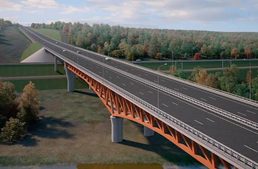
The EEF effectively showed off Russia’s own version of its Belt & Road Initiative – if you build the infrastructure, the business will come. This is the most important conclusion from the forum. For years, Russia’s Asian economic strategy was often discussed primarily in terms of exports: oil, gas, coal, metals, grain, fertilizers and other commodities. The 2026 EEF agenda indicates that the next phase is different. Russia increasingly needs infrastructure capable of supporting diversified trade.
That means railway capacity rising from 180 million tonnes toward 210 million tonnes by 2030 and 270 million tonnes by 2032. It means the 2,900-kilometre Mohe-Naiba railway concept.
It means the ₽1 trillion Arctic investment mechanism. It means the ₽724.3 billion Rosatom Arctic agreement. It means the ₽466.6 billion Arkhangelsk deepwater port. It means the ₽139.1 billion Korf logistics terminal. It means direct shipping with Indonesia. It means a proposed Far East–Vietnam–ASEAN logistics corridor. And it means modernized border crossings and electronic customs systems.
The common denominator is not geography. It is transaction cost. The less time and money required to move a tonne of cargo, a payment, a component, a tourist or a digital service across the region, the more economically valuable the Russian Far East becomes.
What The EEF Actually Changed
The easiest way to misunderstand the Vladivostok forum is to measure it only by 328 agreements and the mooted ₽6.8 trillion in investments. But the deeper result is institutional. Russia is building an economic architecture in which the Far East serves simultaneously as the eastern gateway for Russian exports, the western gateway for Asian capital and technology, the northern gateway through the Arctic and the testing ground for new digital and industrial models.
China is the anchor of this architecture, with almost US$240 billion in bilateral trade in 2025 and a US$240-billion Russian-Chinese investment project portfolio. ASEAN is the diversification layer, with Russia-ASEAN trade around US$21 billion and Vietnam already accounting for approximately one-quarter of it. Indonesia is attempting to use the EAEU FTA to double its roughly US$5-billion bilateral trade with Russia. Mongolia demonstrates the immediate value of eliminating logistics and non-tariff bottlenecks. Myanmar offers an Indian Ocean connection through Dawei.
At the same time, Russia is investing in the physical foundations required to make these ambitions workable: 70-million-tonne Arctic cargo targets, new Arc7 vessels, deepwater ports, railways, border checkpoints, gasification, electricity generation, hotels, tourism clusters, science cities and microelectronics. The strategic calculation is clear. If Russia can convert the Far East from a distant resource base into a dense network of processing facilities, logistics hubs, technology centres, tourist destinations and cross-border production chains, geography becomes an asset rather than a constraint.
The Real Test Begins Now

The EEF-2026 produced a substantial pipeline, but it also exposed the limits that Russia and its Asian partners must overcome. The first is financing, with questions still hanging over its availability. Sanctions remains a barrier.
The second is logistics. Mongolia’s unused rail capacity, Indonesia’s demand for predictable shipping, Vietnam’s call for a Far East-ASEAN corridor and the Northern Sea Route’s need for vessels and cargo bases all point to the same bottleneck: trade cannot grow faster than physical connectivity.
The third is regulation. Standards, certification, veterinary rules, insurance, customs, banking and payment finality can neutralise the advantages of tariff preferences. The Mongolia dialogue was especially explicit on this point.
The fourth is human capital. The Far East needs labour, engineers, scientists, digital specialists and entrepreneurs at the same time as Russia is trying to reduce migration outflows and improve demographic conditions. The EEF connected urban master planning with housing, schools, healthcare, transport, employment and family formation.
The fifth is execution. The more important numbers will be those that emerge later: projects financed, factories completed, cargo actually moved, tourists accommodated, exports delivered and jobs created.
Summary: Vladivostok’s Strategic Position In Russia’s Pivot To Asia
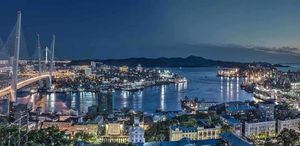
The strongest conclusion from EEF-2026 is that Russia’s Asian pivot is becoming less about replacing one market with another and more about rebuilding the architecture through which the economy connects to the world. The Far East provides the geography. China provides scale, investment, technology and demand. ASEAN provides market diversification and manufacturing networks. Indonesia offers a future FTA-driven expansion opportunity. Vietnam offers an established EAEU trade bridge. Mongolia provides continental connectivity. Myanmar offers an Indian Ocean route. The Arctic provides a northern logistics axis.
Of the EEF’s 78 participating countries, more than 1,050 companies represented in the business contingent, over 150 business events and 1,200 negotiations demonstrate the breadth of this network. The Far East is being treated as the place where Russia’s Asian trade policy, Arctic strategy, industrial policy, digital sovereignty, energy security and regional development policy meet.
That makes Vladivostok more than an annual economic forum. It is increasingly a planning mechanism for Russia’s eastern economic system. The ultimate measure of EEF-2026 will is not the number of signatures made under the lights of the forum. It is whether those signatures change the map of production and trade: whether a container moves from Vladivostok to Indonesia on a predictable schedule; whether Russian food reaches Vietnamese supermarket shelves; whether Chinese capital builds productive capacity rather than merely supplying equipment; whether Mongolia’s unused railway capacity becomes actual trade; whether the Northern Sea Route moves toward 70 million tonnes; whether Far Eastern gasification reaches 50%; whether the proposed scientific city creates commercially viable technologies; and whether tourism turns the region’s extraordinary geography into sustained local income.
If those outcomes materialise, EEF-2026 will be remembered not primarily for its ₽6.8 trillion of announced agreements, but as the moment when Russia’s Far East began functioning as an economic bridge between the Eurasian interior, the Pacific and the Arctic.
This deep-dive research based report was written by KP Majumdar, a geostrategic and geo-economics analyst based in South Asia whose work has been widely published by international news media and publications. He may be reached at info@russiaspivottoasia.com