Русский




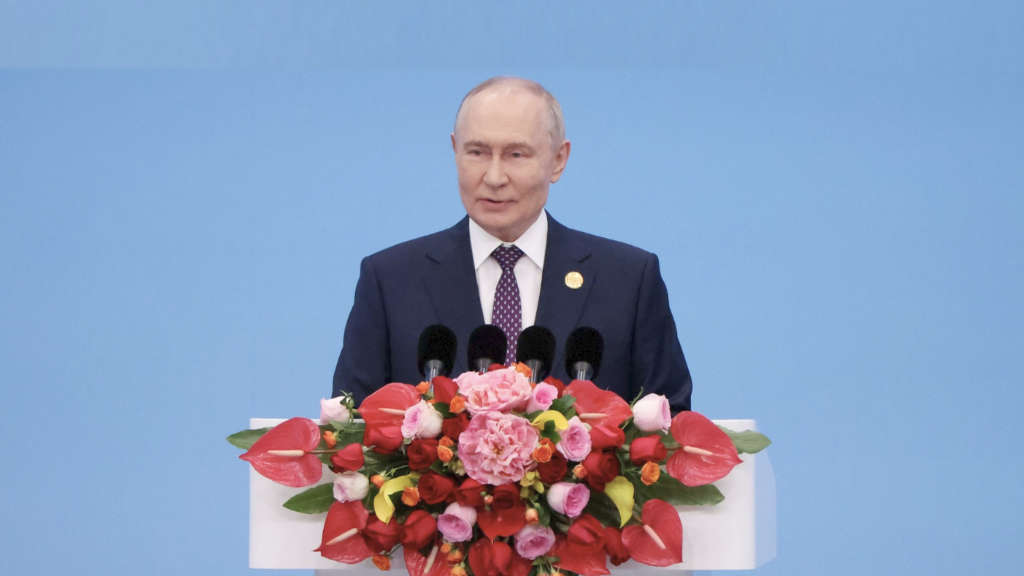

The Russian President, Vladimir Putin gave a speech to APEC on Wednesday (November 18) saying that the Asia-Pacific region has become the center of the global economy and its main industrial and technological hub – and the West, especially Europe, was losing ground due to outdated thinking and policies. This is what he had to say:
Asia-Pacific Dynamics
He said that “What has happened within APEC has been, without exaggeration, a tectonic shift. Today, the Asia-Pacific region has become the centre of the global economy and the leading industrial and technological hub on the planet. APEC economies account for over 60% of global GDP and 36% of the world’s population, 50% of global trade in goods and 35% of trade in services. Over 60% of global foreign direct investment is flowing into the region, which has high-capacity markets, and houses the headquarters of leading global companies and advanced research and educational clusters.
It is notable that these changes have largely been driven by developing Asian economies. They have made a giant leap forward. Once on the periphery of global economic activity, serving as the world’s factory where Western companies typically located their assembly operations, they have become leaders of global development and drivers of innovation. They are now setting the long-term direction of development in highly sophisticated fields such as mechanical engineering, robotics, digital technology and artificial intelligence.
Over the past 35 years, the share of developing countries and emerging economies in the global economy has nearly doubled, rising from 35% in 1990 to 61% in 2026. It was here, in the Asia-Pacific region, that the fundamental changes now spreading across the world like ripples began. The regional model clearly illustrates how a fairer, more democratic and more equitable world order is taking shape, as the former hierarchical and centralised system gives way to new, extensive networks of horizontal ties.”
Shenzhen
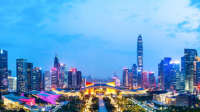
He also specifically mentioned Shenzhen, adding that “I would like to say that Shenzhen, which is hosting the APEC Summit, is truly impressive. It is one of the most advanced and dynamic megacities, which organically combines a high level of urbanisation, a comfortable urban environment and an innovative industrial base. It is one of the Asia-Pacific region’s key centres of investment, and an embodiment of the technological, economic and social transformation taking place in China and throughout Asia.”
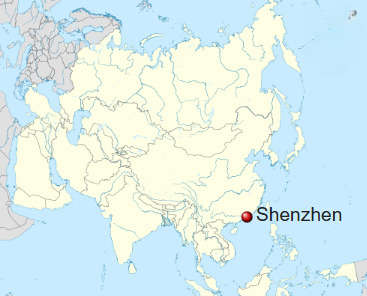
Shenzhen, where the APEC conference is taking place, is a good example. In 1992 it was a small-sized city and was ringed off from mainland China due to its experiment with capitalism and its status as a Special Economic Zone. Today it is a city of 18 million (larger than neighbouring Hong Kong), had a 2025 GDP of US$557 billion (more than Malaysia, Kazakhstan or Iran) and a per capita income in purchasing parity terms of about US$62,500. It has become an extraordinary development model for wealth creation and urban planning and based much of its infrastructure and mix of urban spaces with rural parks on the experiences of another successful APEC city – Singapore.
Challenges
Putin then warned of challenges and was critical of the West. He said that “These inevitable changes and the shift in the centre of gravity of the global economic balance are not always accepted. Instead of adapting to these new opportunities, the former hegemonic powers, acting contrary to the principles of fair competition and, frankly, sometimes even against their own interests, are seeking to hold back those who are achieving success and making progress. As a result, Asian-Pacific regional countries are showing an increasing interest in strengthening their strengthening their sovereignty at three key levels: the state, society and the socioeconomic sphere. Only by securing sovereignty at all these levels can they preserve their national identity and sovereignty on the global stage and independently determine their own futures and development models.”
He then mentioned sanctions and the use of tariffs to impose Western will on emerging economies, saying that “Experience has shown us that the old instruments of economic dominance and de facto coercion have outlived their usefulness and have, to a significant extent, lost their intimidating effect.” However, in a pragmatic acknowledgement, he said sanctions do still possess some economic growth deterrence, although they are no longer capable of halting economic growth, citing Russia as an example. He also highlighted Russia’s ability to withstand a sharp drop in its US dollar and euro-denominated transactions. Now, 91% of all Russia’s Foreign Trade – expected to be about US$769 billion for 2026 – is conducted in other currencies, including at least 50% of this being in the Russian ruble. Putin added that “I would like to emphasise that we did not turn our backs on the dollar or the euro – we were denied the opportunity to use these currencies. And, frankly, those who took this decision have only punished themselves.”
Instead of using economic instruments to hinder competition, Putin stated that “The current turbulent world demands unity rather than division, equality rather than hegemony, partnership rather than isolation, and dialogue rather than ultimatums. The APEC platform offers significant opportunities for constructive engagement at all levels.”
He then singled out the European Union (none of whose members are part of APEC) as a case study. He said that “The European Union, for example, has been unable to adapt to these measures, including its voluntary withdrawal from the Russian market and the disruption of cheap and reliable supplies of Russian energy resources that had underpinned its prosperity for decades. The EU is losing its industrial capacity and competitive edge, while the problem of budget deficits is becoming increasingly acute, and debt burdens and inflation are rising. All this places a heavy burden on European businesses and citizens, whose living standards are steadily declining – a particularly humiliating development for the Eurozone. The EU is now losing its industrial capacity and is losing its competitiveness.”
It should be noted that the euro has lost nearly 7% in value against the US dollar, its main trade partner, in 2026 alone.
The Russian Economy
Putin then compared the EU’s performance against Russia’s. He said “In contrast, external pressure has given Russia a powerful impetus. It has spurred us to strengthen our technological sovereignty, increase labour productivity, modernise production facilities, develop the capacity to manufacture advanced products and meet domestic demand with high-quality Russian-made goods. As a result, Russia’s GDP has grown by more than 10% over the past three years and continues to expand. We are firmly among the world’s largest economies and rank first in Europe. Unemployment remains low, at 2.3%. Inflation is under control, and Russia’s public debt stands at around 17% of GDP, one of the lowest levels in the world.
Thanks to the efforts of our banking and other institutions, we have created an alternative financial network that enables financial transactions to be carried out virtually anywhere in the world.
We have maintained and even expanded our presence in sustainable, profitable business niches, and managed to increase the presence of our reliable partners. The Russian economy is not merely growing; its structure is also undergoing qualitative change. Incidentally, this is reflected in the composition of the Russian business delegation at this CEO Summit. It includes not only the heads of major companies in the extractive industries, traditional energy and heavy industry – sectors whose potential we continue to focus considerable attention on developing – but also a significant representation from our high-tech, digital and financial sectors, the agro-industrial complex, and manufacturers of products with a high degree of processing.
The Asia-Pacific region is an important trade and economic destination for Russia. In 2014, the region’s share in our foreign trade amounted to over 25%, and we set ourselves the target of increasing this share to 40%. Today it accounts for 53% – of Russia’s international trade. In other words, we are advancing even more rapidly than we expected and planned, and we are ready to maintain this pace in the development of our mutually beneficial cooperation with the APEC economies, drawing on our long-standing traditions of friendship and our accumulated experience of multifaceted and fruitful cooperation.”
Infrastructure Development
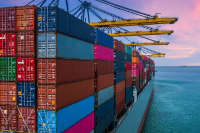
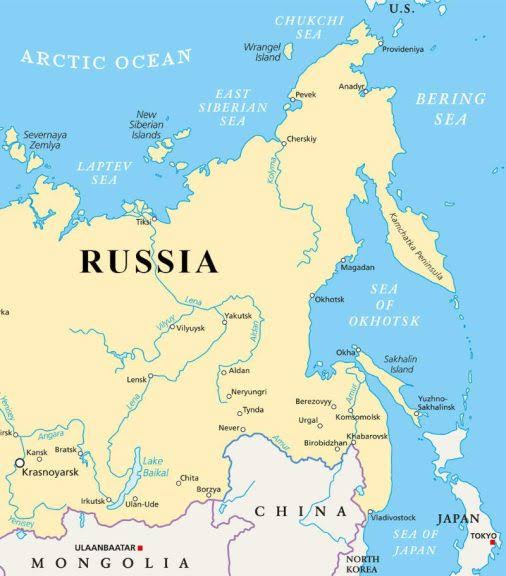
In terms of infrastructure development, it should be noted that Russia’s Pacific Ocean coastline stretches along the Russian Far East in Northeast Asia, encompassing the Bering Sea, the Sea of Okhotsk, the Sea of Japan and includes Vladivostok as a major Pacific coastal hub. This coastline is about 3,400 km long and is being developed as part of the Northern Sea Route, which not only provides access to and from Russia, but is also the most direct route between the Western American coastline, Asia and Europe.
Putin said that “We propose stepping up efforts within APEC to strengthen logistics connectivity and develop transport infrastructure that fully reflects the profound changes taking place in the global economy and the substantial growth in the export potential of Asia-Pacific countries. Russia can offer extensive opportunities for both land-based and maritime transit. To this end, we are modernising key railway routes in the eastern direction, such as Trans-Siberian Railway and the Baikal-Amur Mainline. We are expanding capacity at our commercial ports on the Pacific coast, and building up the throughput capacity of border checkpoints, many of which are already operating around the clock. We are creating new logistics hubs and consistently expanding infrastructure of the Trans-Arctic Transport Corridor, including its main artery – the Northern Sea Route, where cargo turnover is growing year on year.”
Digital Transformation

Putin said that “Russia is at the forefront of digital transformation. Our two flagship language models are among the best in the world. Russian urban service platforms operate in around 40 countries. The e-commerce market is growing dynamically, with Russian marketplaces ranking among the ten largest globally. Furthermore, our financial institutions and banks hold leading positions in terms of the quality and convenience of their services.
The overwhelming majority of public services in Russia are already provided electronically. On the whole, digital platforms and artificial intelligence are, without exaggeration, revolutionising Russian education, healthcare, science and public administration.
We are ready to share our expertise and to act as a reliable supplier of advanced solutions, be they platform technologies, digital services or satellite communications. In doing so, we will help strengthen the technological sovereignty of our partners, while guaranteeing confidentiality and the protection of sensitive information as well as national control over systems for the storage, processing and transmission of data. You will be able to learn more about our ideas and advanced developments at the Future Technologies Forum, which will be held in Russia in February 2027. We cordially invite you to attend.”
The Future Technologies Forum is Russia’s flagship discussion platform for science-intensive and high technologies. Attendees include Russian President Vladimir Putin alongside high-ranking government and science officials, with the 2027 Forum planned to focus on creating and integrating digital platforms across research, commerce, regional management, and healthcare.
Agriculture & Food Security
Putin said that “Russia is also one of the leaders in the global food market, exporting to more than 160 countries and ranking first in the world in terms of wheat and fertiliser export volumes. We are making and will continue to make a tangible contribution to ensuring both regional and global food security. We are ready to increase the volume and expand the geographical reach of supplies of foodstuffs, other essential agricultural produce and mineral fertilisers across the Asia-Pacific region.”
The Russian Far East
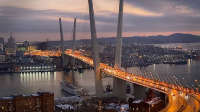
“I would like to focus in particular on the opportunities for partnership with the Russian Far East – our outpost in the Asia-Pacific region. Here, a special system of preferences has already proved its effectiveness and become attractive to domestic and foreign investors. It includes, among other things, priority development areas and the Free Port of Vladivostok. Thanks to these mechanisms, business activity and the investment potential of the Russian Far East have grown substantially, and modern production facilities and highly paid jobs have been created. “
Vladivostok has a special economic zone which offers low taxes and discounts on utilities plus other incentives such as the offsetting of VAT and provision of a customs free bonded zone.
New Russian Far East Incentives
Putin added that “A new stage in the development of that microregion will begin on January 1, 2027. We will launch a single preferential regime, unprecedented in scale and scope, throughout the Russian Far East and the Arctic. Its key goal is to implement a unified comprehensive approach to supporting investments. More importantly, a special legal status will be applied throughout the Far East and the Arctic. It provides for the fast and unimpeded testing of the latest technologies, including drones, industrial robots and artificial intelligence. I am confident that business communities and investors from the APEC economies will appreciate and take advantage of the new opportunities in the Russian market, including for testing their innovative solutions.”
The Eurasian Economic Union

“I would like to add that Russia is a member state of the Eurasian Economic Union, which effectively operates a common markets of goods, services, capital and workforce. This respected and attractive association is actively developing a network of preferential trade regimes throughout the world and is working to liberalise and lower tariffs in mutual trade.“
The Eurasian Economic Union includes Russia along with Armenia, Belarus, Kazakhstan and Kyrgyzstan. It fills the geographic space between eastern Europe and Western China.
“Over the past three years, the aggregate preferential market size of partners with whom we have signed free trade agreements has tripled from 185 million to nearly 570 million people.
Such agreements came into effect with Iran last year and with the United Arab Emirates and Mongolia this year. In the beginning of next year, such an agreement will become effective with Indonesia, one of the largest and most dynamically developing economies in Asia and throughout the world. We are conducting relevant talks with India, preparing to launch them with Tunisia, and considering the possibility of doing the same with Pakistan, Jordan, Egypt, South Africa and Zimbabwe.
We are paying special attention to shaping comprehensive and multifaceted trade and economic ties between the EAEU and the People’s Republic of China. The implementation of these ambitious plans will help increase Russia’s preferential market to around 4 billion people. I am confident that this economic integration, and the rapprochement of states and their associations, will become a major step in the implementation of Russia’s flagship project of the Greater Eurasian Partnership. We see its objective in a close alignment and mutual complementarity of leading regional integration initiatives, and the shaping of a more integrated economic and geopolitical space, where the principles of fair and open cooperation will prevail over state egotism.”
In today’s turbulent world, marked by the fragmentation of the global economy and growing military and political risks, there is an urgent need for unity, not division; equality, not hegemony; partnership, not isolation; and dialogue, not ultimatums. In this context, the APEC platform offers real scope for constructive engagement at every level – most notably among the leaders of major economies. It allows them to sit at the same table, exchange views, resolve differences between states – whether political, economic or security-related – by seeking compromise and balancing interests, and work collectively to strengthen the foundations of global sustainable development. For this reason, I also see substantial potential benefit in the upcoming trilateral meeting between the leaders of Russia, China and the United States, scheduled on the sidelines of the APEC summit.
I believe, too, that business diplomacy – your own work, friends – plays a pivotal role in fostering an atmosphere of understanding and trust within APEC. Direct contact between entrepreneurs and the implementation of multilateral projects help to bind – or, one might say, cement – the ties between nations. All of this is entirely consistent with the priorities China has set for its APEC chairmanship.
I would like to thank our Chinese colleagues for their hospitality and warm welcome, and for the excellent organisation of the summit and its substantive, highly relevant agenda.
I also wish to express my hope that Vietnam, which assumes the chairmanship next year, will preserve this continuity and give fresh momentum to APEC cooperation.”
Following his speech, Putin held a bilateral meeting with the Chinese President, Xi Jinping together with Russian and Chinese officials. Our report on that meeting will follow tomorrow (November 20).
Putin later visited the Shenzhen MSU-BIT University (SMBU), which was co-founded in 2016 by Lomonosov Moscow State University (MSU), the Beijing Institute of Technology (BIT), and the Shenzhen Municipal People’s Government.
Summary
The opening up of Russia’s Pacific coastline has usually been referred to in the context of the Northern Sea Route, most of which extends along the Arctic Ocean. However, the easternmost port of that, Vladivostok, is on the Pacific Ocean. By bringing this to the attention of APEC, Putin’s comments on this will have been noted by analysts on the Western seaboards of Canada, the United States, Mexico, Chile and Peru.
These are some of the distances between major ports in the Americas and Vladivostok:
- Vancouver-Vladivostok: 8,160km
- Oregon-Vladivostok: 8,150km
- Los Angeles-Vladivostok: 9,125km
- Manzanillo-Vladivostok: 12,400km
- San Antonio-Vladivostok: 10,451km
- Callao-Vladivostok: 15,588km
There are practical reasons, as Putin mentioned, why this may become attractive. Firstly, there is the return on investment potential for investing in the Russian Far East as it is becoming an attractive route in the fast growing Asia-Russia trade space. As we noted here, out of Russia’s total global trade, 71% of that is now with Asia and this continues to grow and expand – Russia-Asia trade grew by over 17% in 8M 2026. This is likely to continue as Russia is an increasingly important source for energy resources and food security. Investments made into shipping, ports, and logistics supporting this growth are likely to see a significant return.
Some APEC members are already doing this – South Korea for example is spending billions on upgrading its Yeosu-Gwangyang Port specifically to handle NSR cargo, while China has also been investing in Russia’s northern ports. Clearly, there are opportunities here.
Then there is the additional need for energy supplies, agriculture, and fertilizers, all of which are major parts of the Russian economy, which is exports worldwide. Apart from the security items, Putin also specifically mentioned opportunities to partner in new technologies, including in finance, IT and AI. As he put it – not doing so can contribute to a loss of sovereignty. As and when a sizeable shift from the Western America’s to East Asia will occur is hard to predict. But with Russian resources, an ability to share tech rather than impose it, and fast changing geopolitical dynamics, reconsidering Russia as a Pacific partner is beginning to appear more obviously on the development agenda.