Русский





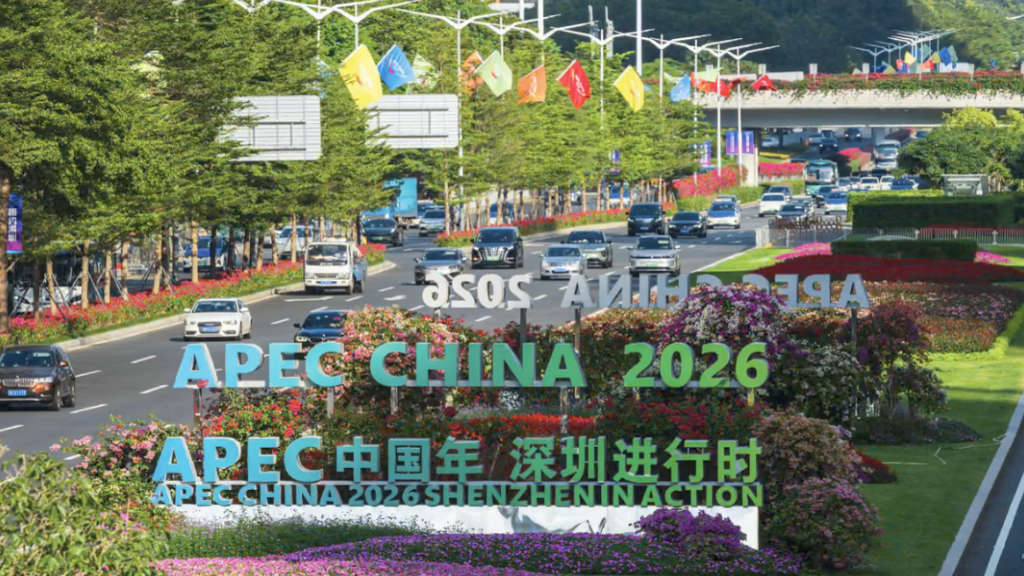
The 2026 Asia-Pacific Economic Cooperation (APEC) summit is taking place in Shenzhen, China on November 18 & 19, with leaders from 21 member economies attending, including Russian President Vladimir Putin, host Xi Jinping and the US President Donald Trump. WE discussed the issues surrounding their trilateral talks here, however in this article focus on Russia’s bilateral relations with each of the attending participants.
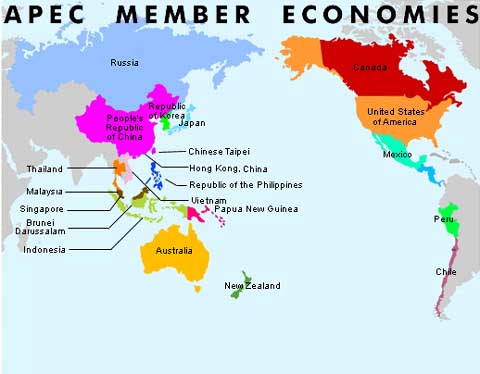
APEC itself is a key inter-governmental economic forum established in 1989 to promote free trade, regional economic integration, and sustainable growth across the Pacific Rim, and headquartered in Singapore. APEC member economies account for roughly 3 billion people, nearly half of global trade, and about 60% of the world’s GDP. This years’ conference is focusing on trade and regulatory priorities such as open markets, innovation, artificial intelligence, and regional connectivity. This is Russia’s overall position as regards bilateral relations with each of the members:
Australia

Bilateral trade between Australia and Russia has experienced a near-total collapse following Australia’s sweeping economic sanctions, export bans, and tariffs imposed in response to the Russian conflict with Ukraine. Inter-governmental contact has been minimal, while trade has always been marginal due to the extensive distance between the two countries. Australia-Russia trade is highly specialised – a small amount of beef and alcohol products serving expat Russians in the country, reaching just US$3.6 million in 2025. Australian officials will be avoiding any contact.
Brunei

Brunei is a member of ASEAN and maintains friendly relations with Moscow, mainly conducted in the energy sector while focusing on expanding trade and energy cooperation. Russian crude accounted for 17% of Brunei’s oil imports in 2025 with shipments delivered via the Northern Sea Route. Sultan Hassanal Bolkiah visited Russia to attend the ASEAN-Russia summit in Kazan in June this year.
Both countries are also advancing cooperation in Islamic finance, digital technologies, cybersecurity, education, culture and regional security, while exploring opportunities in agriculture, tourism and economic diversification under Brunei’s Wawasan 2035 strategy. The countries are developing a memorandum of cooperation between their central banks, exploring Islamic and partnership-finance instruments, and expanding opportunities in financial technology, electronic government, smart cities, cybersecurity and digital infrastructure; Russia-developed TARUS interbank transfer system was launched in Brunei in 2025. Current bilateral trade is about US$900 million, dominated by Russian crude exports, while Brunei’s exports to Russia include minor categories such as clothing.
Canada
Bilateral trade between Canada and Russia is extremely limited due to sweeping Canadian sanctions and trade restrictions following the Russia-Ukraine conflict. Current bilateral trade is about US$100 million, having dropped from US$2.8 billion in 2021. Currently, Russia exports small volumes of uranium and timber, and some Canadian small businesses exporting eggs, and other animal products. Canadian officials will be avoiding any unnecessary contact.
Chile

Bilateral trade relations between Russia and Chile encompass long-standing diplomatic ties and steady, though moderate, commercial exchanges. The Chile-Russia Intergovernmental Commission meets periodically to discuss cooperation in commerce, agriculture, science, and education, alongside market access agreements. The two countries agricultural sectors are collaborating on plant bio-engineering to improve yields, and are also involving in developing the fisheries sector including a better understanding of Russian import standards. Bilateral trade is heavily in Chile’s favour, with Chilean exports to Russia totalling US$455.64 million in 2025, mainly comprising agricultural and seafood products-including over US$285 million worth of salmon – alongside fruits like apples, table grapes, blueberry and increasing wine sales. Chilean imports from Russia reached just US$22.13 million in 2025 and were mainly comprised of fertilizers. Russian officials will be looking to better balance their bilateral trade flows.
China
China needs no introduction and is Russia’s largest trade partner in both imports and exports. Bilateral trade between Russia and China reached about US$240 billion in 2025, maintaining a massive economic scale well above the US$200 billion threshold for the third consecutive year. This has grown again during 2026 at rates of 31.5% for Russian exports and 33% for Chinese exports during 8M 2026.
These figures demonstrate that trade expansion is occurring in both directions rather than being driven exclusively by Russian commodity exports. The Russia-China growth rate of 32.1% exceeds the expansion of China’s overall international trade and its trade with the European Union and United States and reflects the growing importance of the two countries’ interconnected energy, industrial and transport supply chains.
For Russian exporters, China provides a major destination for petroleum, natural gas, coal, metals, chemical products and agricultural commodities. For Chinese manufacturers, the Russian market provides commercial opportunities in automobiles, industrial machinery, electrical equipment, electronics, construction machinery and consumer products.
Both sides are continuing to invest heavily in each other’s economies and this can be expected to increase. President’s Putin and Xi Jinping are also due to hold specific bilateral talks during APEC. For more detailed observations, our most recent report on Russia-China bilateral trade can be viewed here.
Hong Kong

Hong Kong has a specific trade and tax regulatory system separate to China’s, with lower taxes, no VAT and no import duties. For this reason it has long been a financial and trade gateway to China, and has a double tax treaty with Russia. However, as Hong Kong is also an international financial centre, its bank have been very reluctant to deal with Russian businesses for fear of attracting sanctions, making the finance and trade sectors essentially off-limits to Russian participants. That said, there have been innovative solutions – Hong Kong imported 139 tonnes of Russian gold worth US$14.7 billion in the first eight months of 2026, significantly exceeding the 92.1 tonnes it imported in 2025. About 80% of the Russian gold entering Hong Kong is then transferred to mainland China to settle Russian import payments of Chinese goods.
Mainland China-the world’s largest physical gold-consuming market-has absorbed massive volumes as central banks and private consumers seek hedges against currency and economic uncertainty, while Hong Kong is actively expanding its local storage vaults and settlement infrastructure to cement its status as a premier Asian commodities and precious metals trading centre.
Apart from the gold trade, Russia and Hong Kong’s bilateral trade also includes merchandise and other items, with 2025 non-gold trade estimated at being about US$4.4 billion, on a fairly balanced basis. A Russian trade house has been established in the city. Our latest report on Russia-Hong Kong trade is here.
Indonesia
Bilateral trade and economic cooperation between Indonesia and Russia are expanding rapidly, supported by high-level diplomatic visits and institutional agreements. Indonesia has a Free Trade Agreement with Russia via the Eurasian Economic Union and is also a member of BRICS.
The two sides collaborate at the highest levels, with Indonesian President Prabowo Subianto and Russian President Vladimir Putin holding strategic discussions in Vladivostok (September 2026) and follow-up ministerial talks in Bogor (October 2026). These focused on expanding collaboration into shipbuilding, aerospace/aviation, digital technology, nuclear and conventional energy, agriculture, and defense supply chains. Projects include fertilizer manufacturing cooperation (such as with Pupuk Indonesia), joint investment mechanisms via Danantara and the Russian Direct Investment Fund (RDIF), and direct shipping line expansions by FESCO connecting Indonesian ports directly to Russia. Rosatom have also recently signed a deal to build two floating nuclear power plants in Indonesia. Bilateral trade reached about US$5 billion in 2025, with a growth rate of 33% because of the EAEU FTA coming into effect. Indonesia exports Palm oil, coffee, cocoa, rubber, coconut products, textiles, furniture, and consumer goods to Russia, while Russia exports crude oil and refined energy products, fertilizers, wheat, coal, steel, metals, and minerals to Indonesia. Both governments have pledged to double trade by 2030. Our latest report on Russia-Indonesia trade can be found here.
Japan
Russia-Japan bilateral trade is recovering after dropping sharply following international sanctions related to the conflict in Ukraine. Despite ongoing Western-aligned sanctions and a tense political/territorial climate (including disputes over the Kuril Islands / Northern Territories), specific commodity needs-such as energy supplies, seafood, and industrial inputs-have caused select trade channels to tick upward throughout 2026.
In H1 2026, bilateral trade reached approximately US$4.1 billion, showing a 15% growth period-over-period after earlier declines. Russian exports to Japan are dominated by energy and natural resources. Liquefied natural gas (LNG) and petroleum gas make up the vast majority (about 60% of total exports), alongside seafood/crustaceans, platinum, and iron/steel products. Japan continues limited energy imports partly via specific joint venture project exemptions such as Sakhalin-2.
Japanese Exports to Russia are dominated by vehicles, cars, and auto parts (which account for nearly 70% of Japan’s outbound shipments to Russia), alongside machinery, medical supplies, and general manufactured goods. Our most recent update on Russia-Japan trade is here.
Malaysia
Malaysia is a member of ASEAN and a BRICS Partner, and has shown a willingness to develop Russian trade in recent years. Current Russia-Malaysia bilateral trade stands at over US$3.6 billion, having grown by roughly 13% in 2025.
Malaysian Prime Minister Anwar Ibrahim and Russian President Vladimir Putin have explored moving toward bilateral trade settlements using the Malaysian ringgit and Russian ruble to bypass the U.S. dollar. Malaysia’s economic alignment is further expanding through the BRICS bloc, opening direct pathways for non-FTA trade cooperation and exploring high-tech, aerospace, and nuclear energy partnerships.
The two countries are looking at developing joint investment zones, improving direct flight capabilities, as well as introducing visa free travel.
Malaysia exports to Russia include computers, ball bearings, electronics, rubber, palm oil, cocoa, and tropical agricultural products, while Russian exports to Malaysia include refined petroleum, coal, oil and gas, metals, chemical products, potassic and mixed chemical fertilizers, and agricultural goods such as wheat, sunflower oil, and meat. Our most recent report on Russia-Malaysia bilateral trade and investment is here.
Mexico
Bilateral trade and relations between Russia and Mexico are friendly, although wary of US ambitions on its southern neighbour. Mexico has declined to impose Western-style economic sanctions on Russia.
Russia’s exports to Mexico reached approximately US$541.86 million over the 12-month period ending March 2026, marking an upward shift in flows. Figures from mid-2026 indicated Mexican exports to Russia at roughly US$1.87 million against Russian imports of US$80.3 million for that month.
Russia’s exports to Mexico are primarily dominated by mixed mineral or chemical fertilizers, nitrogenous fertilizers, raw aluminium, steel, and wheat, although new product categories are now entering the market such as timber products and shellfish.
Mexico’s exports to Russia include hard liquor (such as tequila), agricultural goods like pepper, other fruits, and manufactured vehicle parts or phones. Our most recent update on Russia-Mexico bilateral trade is here.
New Zealand

Bilateral trade between New Zealand and Russia is minimal at less than US$1 million due to New Zealand’s sanctions and restrictions following Russia’s conflict with Ukraine. Bilateral trade has dropped significantly from historical levels (which once included major New Zealand dairy and meat exports and Russian oil/mineral imports) but have never been significant due to the distance. They were worth US$250 million in 2021. New Zealand officials will be avoiding contact with Russian officials at APEC.
Papua New Guinea

Russia-PNG relations are friendly but trade is restricted due to the distance and PNG’s low economic ranking. However, bilateral dialogue has highlighted areas of interest-such as Russian customs duty concessions for coffee imports, cooperation in mineral exploration, and potential oil and gas sector partnerships-though actual commercial integration remains constrained.
Bilateral trade between Russia and Papua New Guinea operates on a very small and fluctuating scale with no binding bilateral trade agreement. Bilateral trade is valued at about US$1.6 million in 2025, with Papua New Guinea exporting agricultural and raw commodities, led by coffee (over US$1.1 million in recent data), along with smaller amounts of cacao beans and sawn wood. Russian exports to Papua New Guinea include mixed mineral and chemical fertilizers, nitrogenous fertilizers, potassic fertilizers, chemicals, machinery and equipment, paper, and plastic goods.
Peru

Peruvian Foreign Minister Carlos Espa visited Moscow earlier this month for talks with Russian Foreign Minister Sergey Lavrov to discuss expanding economic, technical, and trade cooperation, as well as reactivating the Joint Russian-Peruvian Intergovernmental Commission. Prior to this, in September 2026, the Peruvian Senate established a friendship group with Russia, following regional cooperation agreements such as the 2025 pact between Russia’s Kamchatka Territory and Peru’s constitutional province of Callao.
Russia is looking to expand involvement in Peru’s mining sector, supply equipment and geological services, and maintain Peru’s fleet of over 100 Russian-made helicopters. Peru holds the Chair of three important trade blocs in 2027, all of which are of interest to Russia. These are CELAC, the Pacific Alliance and the Andean Community. This can provide Russia with increased access to LatAm markets with Moscow keen to develop relations.
Bilateral trade between Russia and Peru is growing, reaching approximately US$483 million in 2025 with projections toward US$580 million for 2026.
Russia exports mineral fertilizers, including nitrogen, compound, and potash, accounting for over 40% of the Peruvian market’s needs, in addition to industrial ammonium nitrate-based explosives for mining operations (holding roughly a 70% share of Peru’s ammonium nitrate imports). Peru exports fruits and nuts, coffee, tea, and spices to Russia.
The Philippines

Bilateral trade and economic cooperation between the Philippines and Russia are expanding, highlighted by the 50th anniversary of diplomatic relations in 2026. Presidents Ferdinand Marcos Jr. and Vladimir Putin met during the ASEAN-Russia Commemorative Summit in Kazan in June 2026 to push for deeper B2B joint ventures, while Foreign Affairs Secretary Maria Theresa P. Lazaro and Russian Foreign Minister Sergey Lavrov held further high-level bilateral talks in Manila in July 2026 and November 2026 on the sidelines of ASEAN meetings to translate these goals into concrete projects.
Bilateral trade stands at around US$500 million (as of mid-2026), representing a steady baseline with considerable room for growth. Following high-level discussions and waivers, the Philippines resumed imports of Russian crude oil, with shipments delivered to Petron Corporation, totaling over 2.4 million barrels earlier in the year. Both nations continue to discuss regional energy stability and fuel infrastructure cooperation. The Joint Russian-Philippine Commission on Trade and Economic Cooperation (JCTEC) held its 4th meeting in Moscow in September 2025 to prioritize energy, healthcare, agribusiness, digital tech, and banking links. Russian banks are involved in small-level finance projects in the Philippines, while there have been discussions concerning Russian auto manufacturing investments in the country.
Russia has grown into a leading exporter of pork and poultry to the Philippines, while the Philippines supplies high-value agricultural crops and seafood. Our most recent Russia-Philippines bilateral trade update is here.
Singapore
Russia and Singapore maintain a pragmatic relationship characterized by historical diplomatic ties, selective economic cooperation, and strategic coordination through multilateral frameworks like ASEAN. Singapore imposed unilateral financial sanctions and export controls on Russia, leading Moscow to designate Singapore as an “unfriendly country”. Despite these diplomatic and trade frictions, open communication channels and high-level dialogue have continued.
Singapore maintains active sub-national engagement with Russian regions, such as the Republic of Tatarstan, alongside ongoing dialogue regarding Russian participation in regional forums like the Eastern Economic Forum. An EAEU-Singapore free trade agreement framework exists to address economic and commercial exchanges.
Bilateral trade remains active, albeit heavily weighted toward Russian energy and resource exports. In 2025, Singapore imported refined petroleum and coal tar oil worth about US$4.2 billion, while exporting specialized goods like cocoa butter and optical fibers.
South Korea

Russia-South Korea bilateral relations have been strained since Russia’s 2022 invasion of Ukraine, though recent diplomatic signals point to cautious efforts at communication. Presidents Putin and Lee Jae Myung are scheduled to hold a bilateral meeting during APEC. Seoul has alsov been alarmed by expanding military ties between Russia and North Korea, particularly after the signing of a Comprehensive Strategic Partnership Treaty in 2024 and reports of North Korean troop deployments to support Russia. However, Russian officials have stated that Moscow would welcome practical steps by South Korea to restore relations, and discussions have taken place regarding the potential resumption of direct flights between Russian and South Korean aviation authorities. South Korean President Lee has also indicated that Seoul considers relations with Moscow to be important.
There have been other recent developments. South Korea is developing its Yeosu Gwangyang Port to target future involvement in Northern Sea Route maritime trade, while investments have been made in the animal feed, dairy and financial services sectors. A normalising of relations may be on the horizon.
Bilateral trade, which once peaked around US$26 billion prior to the Ukraine conflict, has faced considerable headwinds, with South Korean exports and imports dropping relative to pre-war highs. In 2025 bilateral trade reached US$10.9 billion with about 60% of this in Russia’s favor. South Korea imports mineral fuels, oils, and distillation products, aluminum, fish, crustaceans, and molluscs from Russia.
However, South Korean exports to Russia have recently included over 176,000 tonnes of petroleum products (including diesel and jet fuel) loaded at South Korean ports such as Ulsan and shipped toward Russia’s Far East in July and August this year. In August 2026 alone, Russia imported 368,000 tonnes of seaborne oil products, with South Korea supplying 112,000 tonnes (about 31% of the months total), making South Korea Russia’s second-largest seaborne fuel supplier after India.
Taiwan

Russia and Taiwan do not have formal diplomatic relations, as Moscow adheres to the “One China” policy and recognizes Taiwan as part of the People’s Republic of China. However, the two sides maintain limited, unofficial ties. Taiwan maintains the Taipei-Moscow Economic and Cultural Coordination Commission office in Moscow, while Russia operates the Moscow-Taipei Coordination Commission on Economic and Cultural Cooperation office in Taipei.
Taiwan has joined Western-led sanctions against Moscow. In response, Russia added Taiwan to its list of “unfriendly countries and territories”. Despite the political friction and public disapproval, hidden or pragmatic commercial exchanges persist. Taiwan has continued importing Russian oil products, iron, steel, and chemicals (becoming a top destination for Russian naphtha), while re-exporting precision manufacturing and electronic equipment.
Bilateral trade turnover between Russia and Taiwan reached US$4.63 billion in 2025. Taiwan has remained dependent on certain Russian imports-particularly fossil fuels, crude oil, iron, and steel-for national security and industrial needs, leading to sustained imports in specific energy sectors despite Taiwan’s public alignment with Western sanctions. For instance, in 2025, Taiwan’s imports of Russian crude oil rose 44%. Taiwan is also the world’s largest importer of Russian naphtha, a fossil fuel derivative used in the semiconductor industry.
Because Taiwan joined international sanctions and placed strict export controls on high-tech and dual-use goods, direct exports make up a small fraction of the overall bilateral trade balance, and mainly involve automotive components, and non-restricted electronics and IT such as basic electrical power accessories, office machine parts, and standard consumer hardware.
Thailand

Russia and Thailand are preparing to celebrate the 130th anniversary of diplomatic relations in 2027. Political dialogue remains active. In June 2026, Thai Prime Minister Anutin met with Russian President Vladimir Putin in Kazan during the ASEAN-Russia commemorative summit.
Thailand is a BRICS Partner Nation and works with Russia through APEC, ASEAN, and the Eurasian Economic Union (EAEU), while the 9th Session of the Thailand-Russia Joint Commission on Bilateral Cooperation took place in Moscow in August 2026 to coordinate policy and economic plans. Both countries are accelerating negotiations for a Thailand-EAEU Free Trade Agreement.
The 2nd Russia-Thailand Investment Forum took place in late October 2026 in Bangkok under the theme “A New Era of Economic Partnership and Trade Relations”. We covered that event, which revealed a significant US$4.5 billion bilateral investment development pipeline here. Russia is a major source of international visitors to Thailand, with approximately1 million Russian tourists visiting during the H1 2026, a major source of income for the country.
Bilateral trade reached US$1.72 billion in 2025 and grew by 26% year-on-year in Q1 2026. Russian exports to Thailand represent about 45% of this, with fertilizers standing as Russia’s top export, accounting for over a third of the total. Russia has also started supplying copper ores and concentrates, resumed wheat supplies and increased shipments of unwrought aluminum, fur, and raw hides. Russia’s Agroexport notes that Russian agricultural exports to Thailand (including grains, seafood, vegetable oils, and prepared foods) are targeted to reach at least US$200 million annually.
Russian imports from Thailand consist primarily of machinery, vehicles, electrical equipment, rubber products, and agricultural goods. Russian imports from Thailand increased by 20% in 8M 2026. Both Russia and Thailand have discussed expanding cooperation into crude oil, liquefied natural gas (LNG), and energy infrastructure partnerships involving Myanmar and significant billion-dollar investments.
The United States

The United States presence at APEC will be dominated by Trump’s trilateral meetings including Russian President Putin and China’s Xi Jinping. The United States has not always bothered to attend APEC, and Trump can sometimes be unpleasant about Asia. He is visiting Shenzhen via Manila, where his welcome has been erratic and he has been involved in ‘QUAD’ security discussions guaranteed to upset his Chinese host. This may not auger well for Shenzhen, and Xi is known not to be a fan of Trump – despite ‘the Donald’ proclaiming they are ‘great friends’. Putin however is beyond all that type of nonsense. He will want to get Trump onside both as a potential investor and as a security guarantee blanket for Europe. Much water has to pass under the bridge yet as regards these developments.
That said, there may be continuing Russia-US talks on trade and investment in a continuation of what occurred in Alaska and Putin’s suggestion last month that Russia and the United States could work together in the Arctic. Both Russia and the United States will have trade delegations present and will be quietly discussing these possibilities while the focus is elsewhere. We expect more trade dialogue to continue, which while it may not make headlines, will be occurring.
It is important to realise that the United States has serious economic problems, and it has failed to subjugate Russia either as a Federation or as the Soviet Union. That means a way out is to eventually do a deal. Putin will be waiting, and here we recommend the film “The Wizard Of The Kremlin” to understand the rationale.
Current Russia-US trade is minimal at US$5.9 billion in total goods and services, although it did increase by 14.4%. US imports from Russia remained heavily concentrated in strategic and agricultural inputs, led by fertilizers, inorganic chemicals and uranium. Russian imports from the United States are negligible.
Vietnam
Russia and Vietnam maintain a long-standing Comprehensive Strategic Partnership, characterized by active political dialogue, growing economic ties, energy cooperation, and expanding tourism.
Both maintain regular top-level meetings. General Secretary of the Communist Party of Vietnam and State President To Lam visited Russia in September 2026, building on Russian President Vladimir Putin’s state visit to Vietnam in June 2024. In November 2026, Valentina Matviyenko, Chairwoman of the Russian Federation Council, visited Vietnam to further deepen parliamentary and bilateral cooperation.
Traditional joint ventures like Vietsovpetro in Vietnam and Petrovietnam’s operations in Russia remain core pillars of energy cooperation, having extracted hundreds of millions of tonnes of oil over the decades. Bilateral frameworks include cooperation on constructing the Russian-designed Thuan-1 nuclear power plant and developing a center for nuclear science and technology.
Direct air connectivity has expanded rapidly, with non-stop flights connecting multiple Russian cities to Vietnamese destinations such as Hanoi, Ho Chi Minh City, Nha Trang, and Phu Quoc Island. Russian tourist arrivals to Vietnam have increased by 85%. A visa-free regime is in place.
Bilateral trade between Russia and Vietnam exceeded US$6 billion in 2025, marking an approximate 6% increase compared to the previous year. Russia exported record volumes of fertilizers and meat to Vietnam, alongside traditional energy and agricultural exports.
Vietnamese exports to Russia are valued around US$2.26 billion and include woven apparel and clothing, footwear, coffee, tea, spices and seafood. This continues to be supported by the Free Trade Agreement between Vietnam and the Eurasian Economic Union (EAEU), which took effect in 2016. Both nations are currently pushing to update and expand this framework with the goal of scaling bilateral trade up to US$15 billion by 2030. Bilateral transactions have increasingly utilized national currencies and channels like the Vietnam-Russia Joint Bank to bypass logistical and financial bottlenecks.
Summary
While the Trilateral summit between Trump, Putin and Xi will take all the attention during APEC, a great deal will be achieved during the actual event, which is being held under the remit of opening trade. This means that behind the scenes, trade officials will be meeting and holding on-going discussions concerning mutual trade developments, maintaining contacts and discussing problems, opportunities and other related developments.
What may also occur is that Australia, Canada, and New Zealand may find themselves pushed to one side in the rush to meet Russia – the US delegation will be supportive of their President albeit not especially willing to share context, while outliers such as Japan and South Korea are starting to warm their respective ties with Moscow.
Everyone else is most certainly in Russia’s orbit – with regional big hitters such as China, Indonesia, Malaysia, the Philippines, Thailand and Vietnam all fast developing their Russian ties. Smaller LatAm economies such as Chile, Mexico and Peru are also improving relations and want to increase trade, agricultural and energy security. Far from being ‘isolated’, it is the Canadian North Americans and Antipodeans who are more likely to feel excluded. Those reports will be going back to their respective governments. APEC 2026 may in itself not make many headlines. But when examining the participants – as this unique report has done – it appears obvious where the trade flows are heading – isolationism is over and re-engagement is the new trend.