
 Русский







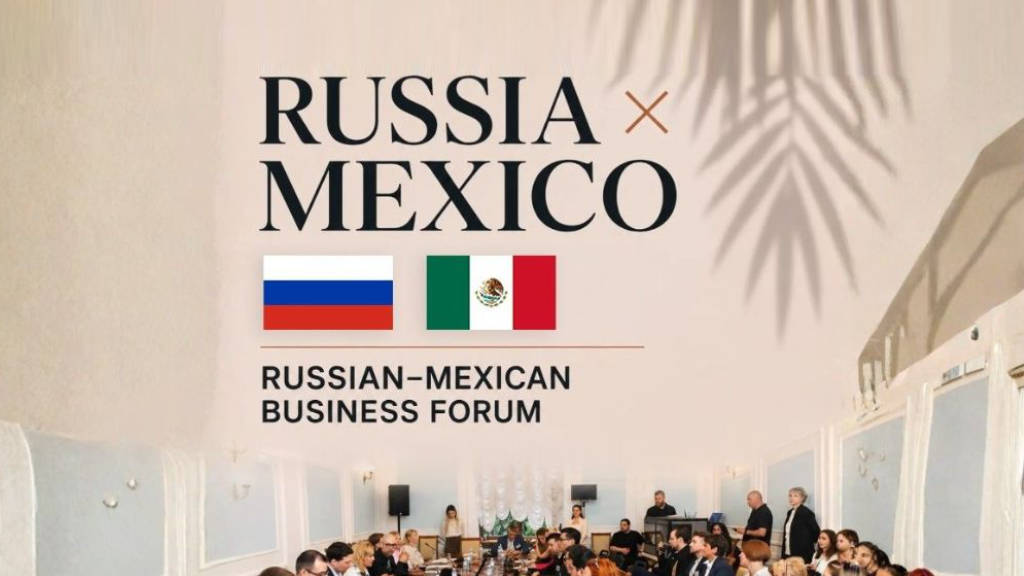

On July 30, Moscow hosted what appeared at first glance to be a tourism promotion event. Organized by Business Russia with the participation of the Mexican Embassy, thebrought together more than 50 tour operators, hotel groups and tourism companies from both countries to discuss expanding bilateral tourist flows. Yet the significance of the meeting extends far beyond tourism. It reflects a broader transformation underway in Russia-Mexico economic relations, where tourism has become the entry point for deeper cooperation in agriculture, logistics, technology, healthcare, investment, digitalization and financial infrastructure.
For both countries, geography is no longer the principal obstacle. The real challenge lies in creating institutional mechanisms capable of overcoming payment restrictions, transport bottlenecks and geopolitical uncertainty. The forum demonstrated that both Moscow and Mexico City increasingly recognize that strengthening business connectivity today is less about signing ambitious political declarations and more about solving practical commercial problems.
The discussion led by Business Russia Deputy Chairwoman Nonna Kagramanyan, Mexican Ambassador Eduardo Villegas Mejias, and representatives of the Tourism Promotion Council of Quintana Roo therefore represented something larger than tourism diplomacy. It illustrated how Russia and Mexico are attempting to construct an economic relationship based on resilience, diversification and complementary markets despite operating in an increasingly fragmented global economy.
Tourism As An Economic Multiplier

Kagramanyan described tourism as an integrated economic sector encompassing investment, infrastructure, logistics, digital services and international marketing rather than simply leisure travel. That observation accurately reflects Mexico’s own economic structure. Tourism contributes approximately 9% of Mexico’s GDP and supports roughly one in every ten jobs nationwide. According to Mexican data presented during the forum, the country welcomed 48 million foreign tourists in 2025, a 6% increase from the previous year, generating more than US$35 billion in tourism revenue. Mexico’s tourism infrastructure has continued expanding. Hotel occupancy exceeded 54% during 2026, representing around 90.1 million hotel guests nationwide. Cancun International Airport remained the country’s largest international gateway, handling almost 10 million international passengers in 2025, considerably exceeding Mexico City’s international arrivals.
The 2026 FIFA World Cup provided another major economic stimulus. Preliminary figures from Mexico’s Ministry of Tourism estimate that approximately 7.8 million domestic and international visitors traveled to the tournament’s host cities, Mexico City, Guadalajara and Monterrey, creating around 130,900 jobs while generating approximately US$3.7 billion in tourism-related spending.
Against these impressive figures, however, Russian participation remains remarkably limited. Only 27,000 Russian tourists visited Mexico in 2025, while approximately 2,800-3,000 Mexican tourists traveled to Russia. The imbalance highlights enormous untapped market potential.
Direct Flights Matter More Than Marketing

Participants at the Moscow forum agreed that weak tourism demand is not driven by declining interest but by logistics. Before the suspension of direct Moscow-Cancun flights, Mexico had established itself as one of Russia’s leading long-haul holiday destinations. Today most Russian travelers must transit through Istanbul or other third countries, significantly increasing travel costs and reducing demand. Business Russia announced its readiness to work with relevant ministries and Russian airlines to explore restoring direct air connections. The Mexican delegation likewise proposed practical mechanisms for simplifying cross-border payments and strengthening cooperation between Russian and Mexican tour operators. These discussions are economically significant because tourism frequently acts as the first stage of broader business expansion. Every direct flight reduces transport costs not only for passengers but also for business delegations, investment missions and commercial exchanges. For Russia, rebuilding direct aviation links with Mexico would represent infrastructure investment supporting bilateral trade rather than merely restoring holiday travel.
According to an August 4 report by Izvestia, Russia and Mexico are discussing the resumption of direct charter flights, which have been suspended since February 2022, with the Mexican Embassy in Russia, airlines, tour operators, and tourism authorities exploring options to restore connectivity and support growing tourism and educational exchanges.
Despite continued demand, around 5,000 Russian visitors per month compared with more than 65,000 in 2021, progress is constrained by longer flight routes, higher operating costs, aircraft leasing issues, and the need for commercial viability and regulatory approvals. The initiative also faces significant geopolitical challenges, including Western sanctions, blocked Russian banking services, SWIFT restrictions, the risk of secondary sanctions on Mexican airlines using Boeing and Airbus fleets, and broader U.S. pressure on regional cooperation with Russia. Nevertheless, Mexico continues to express political support for expanding bilateral ties through tourism, academic exchanges with leading Russian universities, and broader economic cooperation, while maintaining dialogue on restoring direct air links despite the complex international environment.
Trade Remains Small but Its Structure Is Rapidly Diversifying
Measured purely by trade volume, Russia and Mexico remain modest partners. According to Mexico’s National Institute of Statistics and Geography, bilateral trade reached approximately US$988 million during January-September 2025. Compared with Mexico’s US$870 billion annual trade with the United States, Russia represents only a small share of Mexican commerce. Yet this comparison obscures an important structural trend. Rather than concentrating on a single commodity, Russia and Mexico are gradually expanding cooperation across multiple sectors simultaneously. Russian exports currently include: Grain, chemical fertilizers, rubber and metals Mexican exports include: coffee, pepper, pharmaceuticals and food products. This diversification reduces dependence on any single market and creates a more resilient commercial relationship.
Russia’s Exports To Mexico
Russia’s exports to Mexico reached US$541.86 million in the latest twelve-month (LTM) period from April 2025 to March 2026, representing a 19.76% increase compared with the previous LTM period. Over the longer term, imports increased from US$384.76 million in 2020 to US$434.33 million in 2025, reflecting a compound annual growth rate (CAGR) of 2.45% between 2020 and 2025.
A particularly strong expansion occurred in 2021, when imports surged by 81.73% year on year to US$699.24 million. Fertilizers remained the foundation of bilateral trade, led by Urea (HS 310210) with imports of US$212.73 million, followed by Diammonium Phosphate (DAP) (HS 310530) at US$134.81 million and Fertilizers Containing Nitrates and Phosphates (HS 310551) at US$62.66 million during the LTM period. Russian suppliers accounted for 98.65% of Mexico’s imports of HS 310551 products, 69.00% of Fertilizers with Nitrogen, Phosphorus and Potash (HS 310520), and 67.20% of the DAP market. Among the fastest-growing product categories, Monoammonium Phosphate (MAP) and Mixtures (HS 310540) expanded by 482.27% to US$26.82 million, while Insulated Wire, Cable and Optical Fibre Cables (HS 8544) and Other Articles of Vulcanised Rubber (HS 4016) each recorded growth exceeding 1,000% over the same period.
Russia also strengthened its market position in several sectors, with market share for HS 310540 increasing by 256.47%, Unwrought Aluminium Alloys (HS 760120) by 124.35%, and HS 310520 by 52.22%. Russia’s fertilizer industry is led by globally recognized producers including PhosAgro, EuroChem Group, Uralchem, Acron Group, and KuibyshevAzot, all of which manufacture products such as urea, diammonium phosphate (DAP), monoammonium phosphate (MAP), and complex NPK fertilizers that are widely exported to international markets. While the available customs data does not identify the individual Russian exporters involved in shipments to Mexico, these companies are among Russia’s principal suppliers of the fertilizer products that dominate bilateral trade. The sustained growth in fertilizer imports, together with rising purchases of industrial goods, underscores the continued expansion and diversification of Russia–Mexico trade and highlights the strategic importance of Russian agricultural and industrial products in the Mexican market.
Mexico’s Exports To Russia
Mexico exported goods worth US$14.59 million to Russia during the period March 2025 to February 2026, supported by 1,070 shipments from 52 Mexican exporters to 58 Russian buyers. Exports were led by Chapter 8 – Edible Fruits and Nuts, which accounted for 27.83% of total export value, followed by Chapter 9 – Coffee, Tea and Spices (26.25%), Chapter 90 – Optical and Medical Instruments (15.66%), Chapter 22 – Beverages and Spirits (10.36%), and Chapter 29 – Organic Chemicals (6.94%). Monthly exports peaked in April 2025 (US$2.06 million), followed by March 2025 (US$1.94 million), June 2025 (US$1.46 million), July 2025 (US$920,640), and May 2025 (US$752,190).
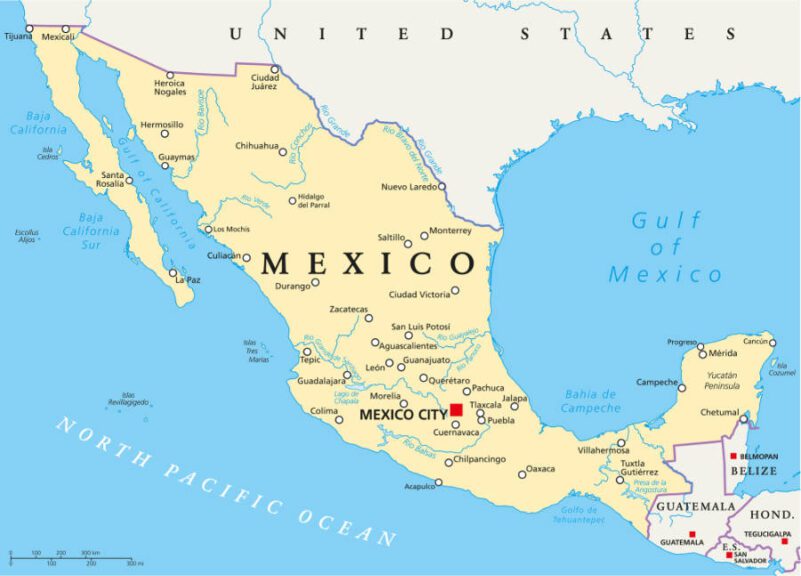
The principal export gateways were Veracruz, handling US$5.18 million (35.64%) of shipments, Altamira, Tamaulipas with US$3.48 million (23.92%), Mexico City International Airport with US$2.85 million (19.59%), Aeropuerto Internacional de la Ciudad Mexico with US$1.17 million (8.02%), and Manzanillo, Colima with US$971,680 (6.68%).
Leading Mexican exporters included Humphrey Pecan SA de CV (US$1.59 million; 19.14%), Distribuidora La Nogalera SA de CV (US$753,430; 9.09%), Tequilas del Señor SA de CV (US$639,840; 7.72%), Fermic SA de CV (US$575,080; 6.94%), Asociaciones Agroindustriales Serranas SA de CV (US$568,760; 6.86%), SDS de Mexico SA de CV, Internacional Farmacéutica SA de CV, Dioica International SA de CV, Interquim SA de CV, and Truper Herramientas SA de CV.
Recent shipment records also show exports by companies including Interquim SA de CV to Chemo AG Lugano Branch, Tequilera Punto Azul SA de CV to Kaluga Distillery Crystal LLC, Compañía Tequilera de Arandas SA de CV to Region 50 LLC, H52 Mexico SA de CV to Special Fruit N.V., and Trans CE Cargo S. de R.L. de C.V. to JSN NASC, highlighting continued trade in organic chemicals, tequila, fresh fruit, and logistics-related shipments.
Agriculture Is The Foundation of Economic Expansion

Agriculture has emerged as perhaps the strongest growth driver. Mexico continues experiencing recurring droughts that have constrained domestic grain production, increasing dependence on imports. Russian diplomats confirmed in early 2026 that Moscow remains ready to expand wheat exports whenever commercial conditions permit. By the end of 2024, Mexico had purchased more than 700,000 tonnes of Russian wheat. Earlier, Russia exported 947,000 tonnes in 2023, making it Mexico’s third-largest wheat supplier after the United States and Canada.
Although exports declined during 2025, with only 58,000 tonnes shipped from Kaliningrad by early November, Russian officials attribute the slowdown primarily to market competition rather than declining Mexican demand. The opportunity remains substantial. Mexico imports roughly 5-6 million tonnes of grain annually, while Russia continues searching for markets beyond the Middle East. Recognizing this opportunity, the Union of Grain Exporters and Producers announced during the All-Russian Grain Forum in Sochi that Mexico and Nigeria will become priority destinations for business missions during the 2026-2027 agricultural season.
New Agricultural Trade Is Emerging in Both Directions

The relationship is no longer one-sided. Russia conducted its first-ever export of frozen crabs to Mexico during January-May 2026, shipping 3.5 tonnes valued at approximately US$200,000. Additional Russian agricultural exports included: Instant coffee exceeding US$1.7 million, active yeast worth more than US$530,000 and beer and other processed food products. Meanwhile Mexico has expanded agricultural exports to Russia. In July 2026, producers from Veracruz shipped 21.4 tonnes of Persian lemons to Moscow as part of a 40.4-tonne export operation, with the remaining 19 tonnes destined for McAllen, Texas. The shipment originated from 183 cooperative members participating in Mexico’s Sembrando Vida programme. Around 10,000 producers across 42 municipalities now participate in export-oriented production networks. By eliminating intermediaries, farmers reportedly increased their earnings by 40-50%, demonstrating how international trade directly improves rural incomes.
Russia and Mexico Are Expanding Strategic Economic Cooperation In Energy And Investment
Russia and Mexico are strengthening bilateral economic ties with growing cooperation in energy, digitalization, tourism, transport and logistics, and machinery and vehicle manufacturing, according to Aleksey Valkov, Director of the St. Petersburg International Economic Forum and Deputy Director of the Roscongress Foundation. He stated that “We see enormous potential in energy, digitalization and tourism. At the event, the governments of Moscow and Mexico City signed a digitalization agreement for the management of the city. Mexico is also interested in the development of transport and logistics, as well as the manufacture of machines and vehicles,”
For long-term capital investment projects, Russian companies injected US$430 million into Mexican foreign direct investments between January and September last year, 12 times more than the US$37 million that they placed during the same period of 2024. This highlights the growing momentum of bilateral trade and investment relations. Of the total invested, US$140 million went to the fuels, oils and lubricating grease retail trade, according to figures published by the Mexican Ministry of Economy. From Aleksey Valkov’s point of view, the potential of Mexican participation in the forums is significant and there is a great interest in working with each other.
Automotive sector: Valkov added that “The auto industry in Russia developed very quickly and we believe that Mexican companies would be interested in collaborating with Russian producers.” AvtoVAZ is the most important automotive company in Russia and is the manufacturer of the iconic Lada brand, which presents new ideas, projects and models in the editions of the St. Petersburg forum.
Technology Is Moving to the Center of Bilateral Cooperation

Trade in commodities is increasingly accompanied by technological cooperation. The Moscow Export Center has identified Mexico as one of Latin America’s most promising destinations for Russian technology exports, particularly in pharmaceuticals, medical equipment and digital healthcare solutions. Russian companies already receive support in market analysis, legal compliance, certification, logistics, promotion and financing before entering Mexico.
Healthcare represents one of the fastest-growing areas. Russian medical technologies already satisfy European certification standards, while Moscow has become an important center for pharmaceutical development and digital medicine. Mexico’s healthcare modernization programme offers substantial opportunities for cooperation beyond traditional merchandise trade. Space technology has also entered the agenda. In February 2026, Mexico’s Secretariat of Infrastructure, Communications and Transport (SICT) together with the Mexican Space Agency announced a cooperation strategy with Russia covering aerospace manufacturing, scientific exchange and technological capability development. Although still at an early stage, such projects indicate that bilateral relations increasingly extend into high-value industries.
Business Diplomacy Is Becoming Permanent
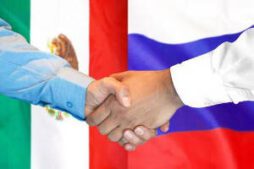
Institutionally, bilateral cooperation has accelerated considerably. The first Russia-Mexico Business Forum held in Mexico City in April 2025 generated more than 150 direct business negotiations. Roscongress, CANACINTRA, Business Russia and the Russian Trade Mission subsequently expanded institutional dialogue.
Russian authorities have already confirmed preparations for the Second Russia-Mexico Business Forum, expected during the second half of 2026, focusing on pharmaceuticals, agriculture and information technology. The July tourism forum therefore forms part of an expanding sequence of sector-specific business platforms rather than an isolated initiative.
The Moscow Export Center supports Russian companies entering the Mexican market through government-backed assistance in market entry, regulatory compliance, training, promotion, business matchmaking, logistics, financing, and local production, while leveraging Mexico’s position as Latin America’s second-largest economy to strengthen bilateral trade.
The Center has identified pharmaceuticals, medical devices, and healthcare IT as the most promising sectors for cooperation, highlighting Moscow’s strong export capabilities, internationally certified medical products, advanced digital health solutions, and Russia’s position among the world’s leading countries in medical innovation. Looking ahead, the Center expects deeper Russia-Mexico economic cooperation through joint technology projects, stronger business partnerships, and improved trade facilitation, with the aim of reducing barriers related to logistics, certification, and market access while promoting Moscow as a global hub for innovation and advanced technologies.
Financial Infrastructure Remains the Missing Link

Despite growing commercial interest, financial mechanisms remain the weakest component. Russian banks’ exclusion from SWIFT, combined with Mexican financial institutions’ dependence on the US dollar system, continues complicating settlements. Officials are therefore discussing alternatives including Russia’s SPFS, transactions denominated in Chinese yuan or UAE dirhams, and eventually wider acceptance of Russia’s Mir payment system in Mexican tourist destinations. These initiatives remain preliminary. However, without alternative payment mechanisms, expanding bilateral trade beyond current levels will remain difficult regardless of commercial demand.
Geography Is No Longer the Main Constraint

Russia and Mexico are separated by more than 10,000 kilometres. Yet the greatest barriers today are institutional rather than geographical. The July 2026 Business Russia forum demonstrated that businesses on both sides increasingly understand where solutions must be found: restoring direct aviation, simplifying payments, expanding logistics, strengthening business missions and creating permanent commercial dialogue. Tourism simply provides the most visible starting point. Behind discussions of hotels, beaches and tour operators lies a broader economic strategy linking grain exports, food security, pharmaceuticals, healthcare technologies, digitalization, logistics, investment and financial cooperation. For Russia, Mexico represents access to Latin America’s second-largest economy and an important gateway into regional markets.
For Mexico, Russia offers diversified supplies of agricultural products, fertilizers, advanced medical technologies, industrial expertise and investment opportunities that complement rather than replace existing North American economic ties. The significance of the Moscow forum therefore lies not in the number of tourists it may generate next year, but in what it signals about the future architecture of Russia-Mexico relations. What was once a limited bilateral relationship centered on diplomatic goodwill is gradually evolving into a practical, sector-driven economic partnership. If both sides can resolve the persistent constraints surrounding transport connectivity and cross-border finance, the current trade volume of less than US$1 billion could become only the starting point of a much broader Eurasia-Latin America economic corridor.
This article was written by KP Majumdar, a geostrategic and geo-economics analyst based in South Asia whose work has been widely published by prestigious international news organizations and publications. He may be reached at info@russiaspivottoasia.com