

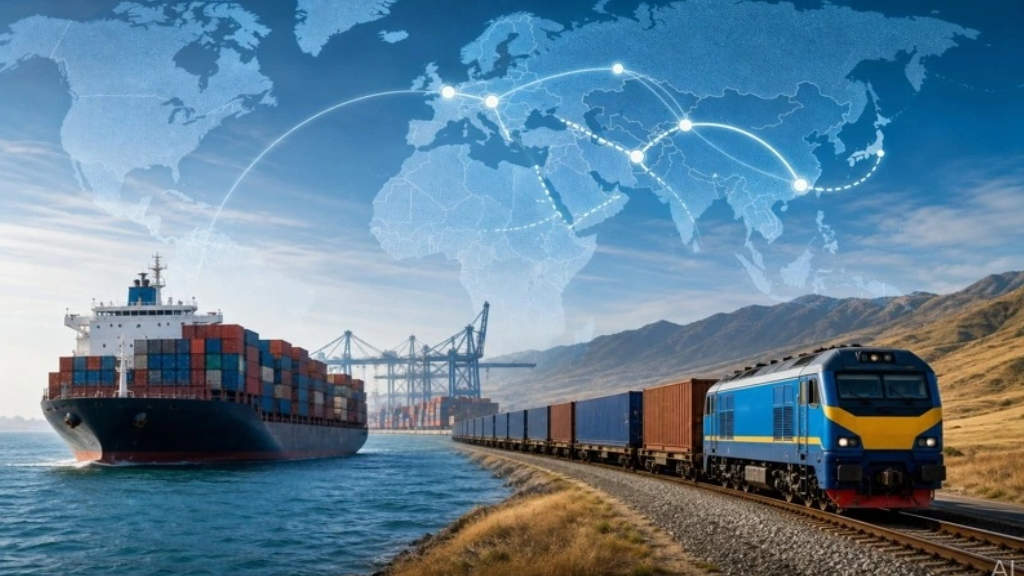
The Transcaspian Corridor Becomes a New Global Logistics Link
The Trans-Caspian corridor is developing fast and is expected to achieve record freight tonnage during 2026. We examine the route and show where the growth development segments are.
Russia imported about US$240 billion worth of goods in 2025, ranging from selected agricultural products, cars, machinery, electronics, and high-tech goods. The Russian consumer market is also changing in light of new preferences and tastes created by its move into new markets in Asia, Africa, the Middle East, and Latin America.
Master market entry into Russia. Get practical guides on import regulations, customs clearance, and distribution channels. Essential for international businesses targeting the Russian market.
The Trans-Caspian corridor is developing fast and is expected to achieve record freight tonnage during 2026. We examine the route and show where the growth development segments are.
Roman Chekushov, the Russian Deputy Industry and Trade Minister, has been meeting with Mohamed Farid, the Egyptian Industry Minister, Khaled Hashem, the Investment and Foreign Trade Minister, Deputy Foreign Minister Wael Hamed and the chairman of the Federation of Egyptian Industries, Mohamed El-Sewedy in Cairo to discuss trade developments. Bilateral trade is up 15.6% in 2026.
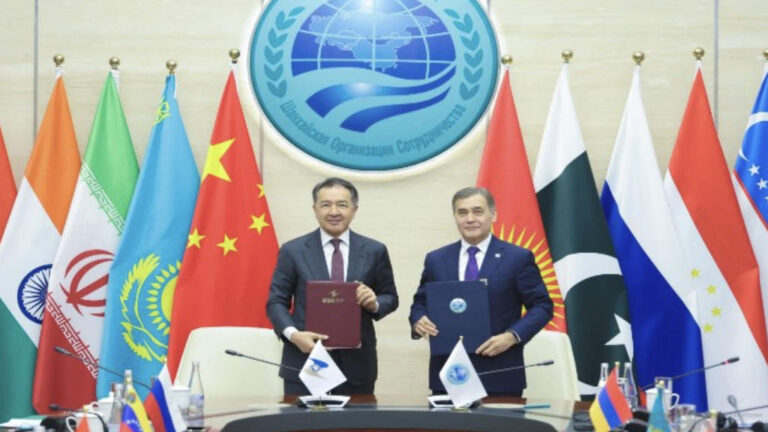
The Eurasian Economic Union and the Shanghai Cooperation Organisation have agreed a Joint Action Plan to cover the period 2027-2030. This covers important trade development areas including digitalization, information and communication technologies, customs regulation, agro-industry, food security, sanitary and phytosanitary measures, consumer protection, green-economy issues and information exchange. We deep dive the contents to explain exactly what this means and the impact on EAEU and SCO members.
Russia’s trade with the Global South and ‘friendly’ countries now accounts for 85% of its total, reaching about US$299 billion in H1 2026. The West provides just 15% of Russia’s economic trade and continues to decline. We examine the main Global South trade partners in all regions, and provide the latest H1 2026 trade data. There are some surprising results for those who assume Russia only trades oil with China and India. The non-energy sector on a worldwide basis is increasingly dominant as Global South trade volumes continue a Russian growth trajectory.
Hong Kong has just hosted a Russian business mission, with both local and Russian companies interacting to explore potential for local market and Greater Bay Area penetration for Russian products. Hong Kong is also well positioned to assist Russia exporters access markets in ASEAN. Current Russia-Hong Kong trade hit US$2 billion in H1 2026, while the SAR also providing non-cash financial services to Russian companies trading with China – Hong Kong has handled over 100 tonnes of Russian gold bullion destined for China this year.
Subscribe to receive exclusive insights and analysis on Imports.
Kyrgyzstan is looking for more cooperation with Russian investors in food processing in order to add value rather than just import and export raw products. The Kyrgyz Deputy Prime Minister, Erlist Akunbekov, and Russian Deputy Prime Minister Dmitry Patrushev have also agreed to work out roadmaps for joint fisheries projects.
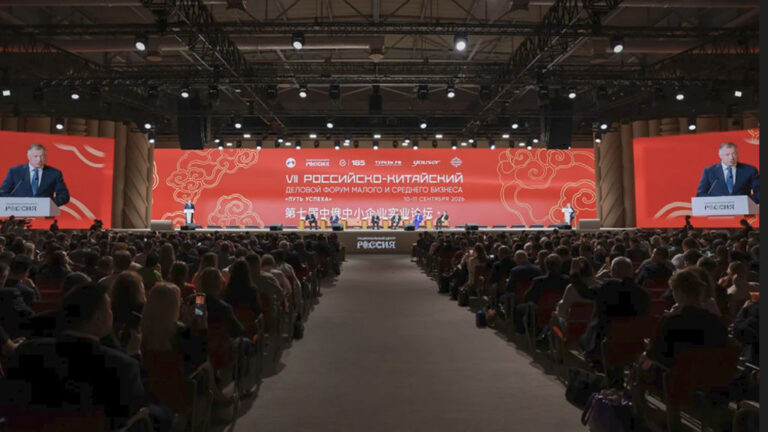
The 7th Russia-China SME Forum has just taken place in Moscow, with over 1,600 attendees and 800 Russian and Chinese businesses talking part. The even marks a positive shift in the importance of SME’s in the bilateral dynamic. Russia provided nearly US$11.6 billion worth of support to its own SME’s last year, while numerous Chinese SME’s have recently morphed into Unicorns. We examine this important business sector and what it means for developing Russia-China investments in the years to come.
Iran is hoping to quadruple its fish exports to Russia. The country has a free trade agreement with Russia and is a major exporter of prawns and rainbow trout. Iran exports fish and seafood to 67 countries worldwide despite sanctions, with Russia the third largest importer after Iraq and China.
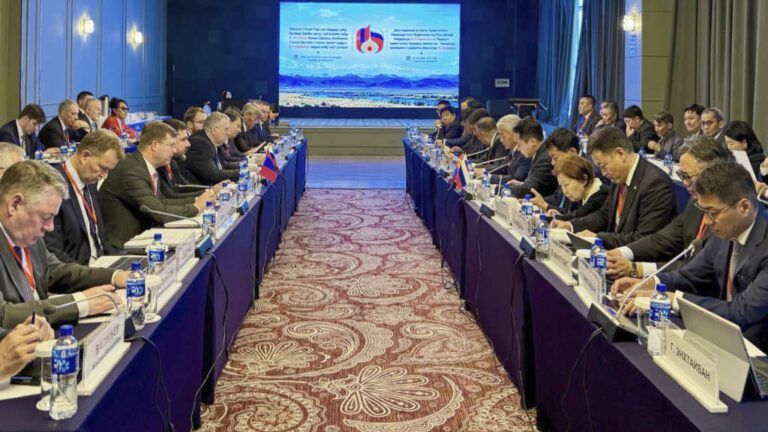
The second Russia-Mongolian Regional Forum has just taken place in Ulaanbaatar. With the Mongolia-Eurasian Economic Union trade agreement kicking in and bilateral trade growing at 18% this year, we examine what occurred at the event, the Russian and Mongolian regional pairing, and investments and trade agreements being reached. This article is of primary importance to anyone involved in Mongolian trade.
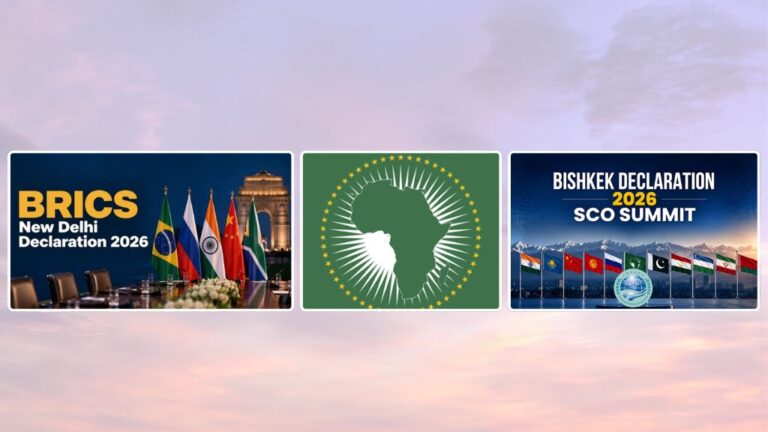
Africa’s development potential loomed large over both the recent BRICS and SCO summits, with MoU being signed to better integrate economic development, trade and investment. We examine the increasing links between Africa and Eurasia in a detailed and wide-ranging analysis. This report will be of interest to anyone involved in African development.
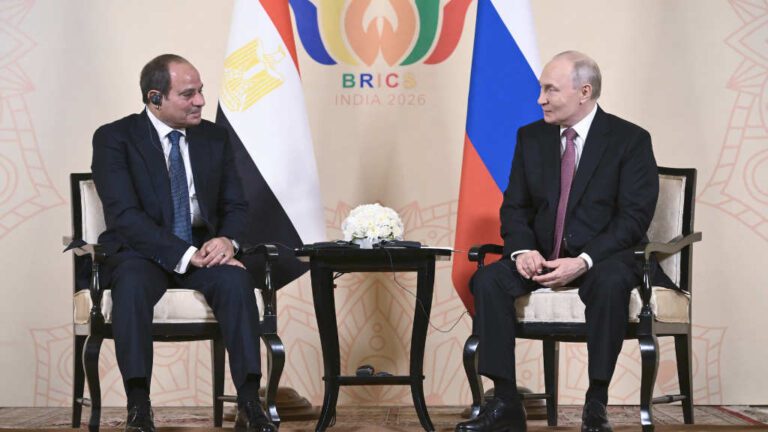
The Russian and Egyptian Presidents have met in New Delhi on the sidelines of the BRICS Summit. Both had large trade delegations, discussing bilateral development in nuclear energy, industrial cooperation for the wide African market, agriculture, security and tourism. Current bilateral trade is growing at abot 15% per annum. We examine the trade details and developments.