 Русский





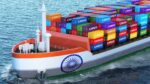
India is planning to send its first cargo ship on the Arctic route running along Russia’s Northern Sea Route (NSR) next year, as it looks to expand trade with Russia outside of Western sanctions and without disruptions via the Suez Canal.
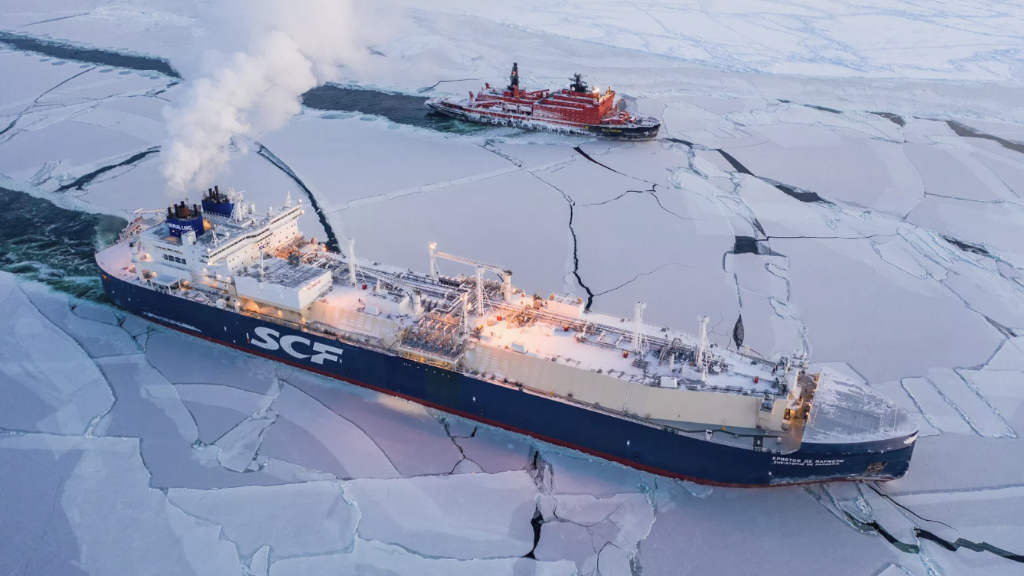
The 5,600 km Arctic route, or Northern Sea Route (NSR), runs along Russia’s Arctic coastline and is the shortest shipping route between East Asia and Europe. Climate change and receding sea ice open up the route seasonally – but conditions are harsh, requiring specialized icebreakers to keep channels open.
Shri Venkatesapathy, the Indian Shipping Ministry joint secretary, said that “In 2027, we are planning to have the first pilot vessel running through the Northern Sea Route. We are seeing huge possibilities, not only for the Eastern Maritime Corridor (Ed: EMC, from Vladivostok to Chennai) but also for the NSR.” He was speaking at the Arctic-Regions Forum in Arkhangelsk on Thursday (August 13).
On August 12, Russian President Vladimir Putin said New Delhi was showing active interest in the NSR. He said Moscow is seeing “growing interest from countries” about the Arctic route, with India and China among those talking to Moscow.
Venkatesapathy, who is leading the Indian delegation to the two-day forum, said the Chennai-Vladivostok corridor – also known as the Eastern Maritime Corridor (EMC) – has seen a 70% jump in cargo movement, and there is a “humongous possibility” to extend this success to the NSR.
He also spoke of India’s interest in the multi-modal Trans-Arctic Transport Corridor (TATC), adding two MOUs were signed last year for the development of the routes. He said India found the routes appealing because of their shorter distances, safety, and commercial viability.
India and Russia have set a bilateral trade target of US$100 billion by 2030, with Russian oil now making up more than half of New Delhi’s imports – making the Arctic route a key trade link for the two countries. India’s economy is booming at annual growth rates of 7.7% and has a 1.48 billion population to cater for. Access to Russian energy is vital for its economic stability and development.
The NSR also provides economic benefits. For India, the Arctic route can save up to 40% in distance and about two weeks in travel time to most European ports, compared to the traditional route through the Suez Canal. The Suez route has become dangerous for commercial shipping due to conflicts in the Middle East.
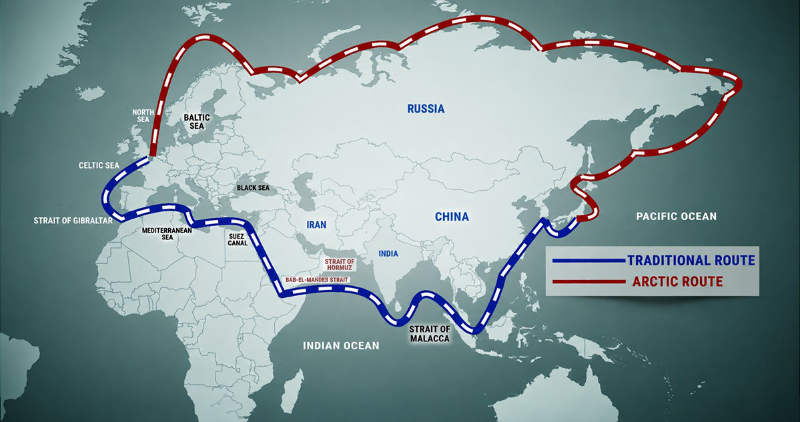
Russia has invested heavily in developing the NSR’s infrastructure. In 2023, Moscow struck a deal with Dubai-based DP World to develop container shipping along the Arctic route. Container traffic has risen as Chinese companies have seized the opportunity offered by the NSR. While 23 voyages were completed last year, 30 are planned for 2026.
Azamat Khochuev, the director of the Department for the Development of the Northern Sea Route and the Arctic at Rosatom, said that cargo movement between Russia and China through the NSR has already exceeded 5 million tons this year. Rosatom, with its fleet of nuclear-powered icebreakers, is Russia’s designated operator and coordinator of the NSR, China’s Sea Legend Shipping will launch its first regular service to Europe this month via the NSR. Sea Legend will sail seven vessels along the route from August to October.
South Korea is also working on developing cargo traffic through the NSR – with Seoul treating it as a strategic state priority.
Further Reading By 2030, the cargo flow between Russia and China via the Northern Sea Route (NSR) is planned to reach 20 million tons per year. At the same time, the target figures for the entire route are estimated at approximately 100–110 million tons per year.