 Русский




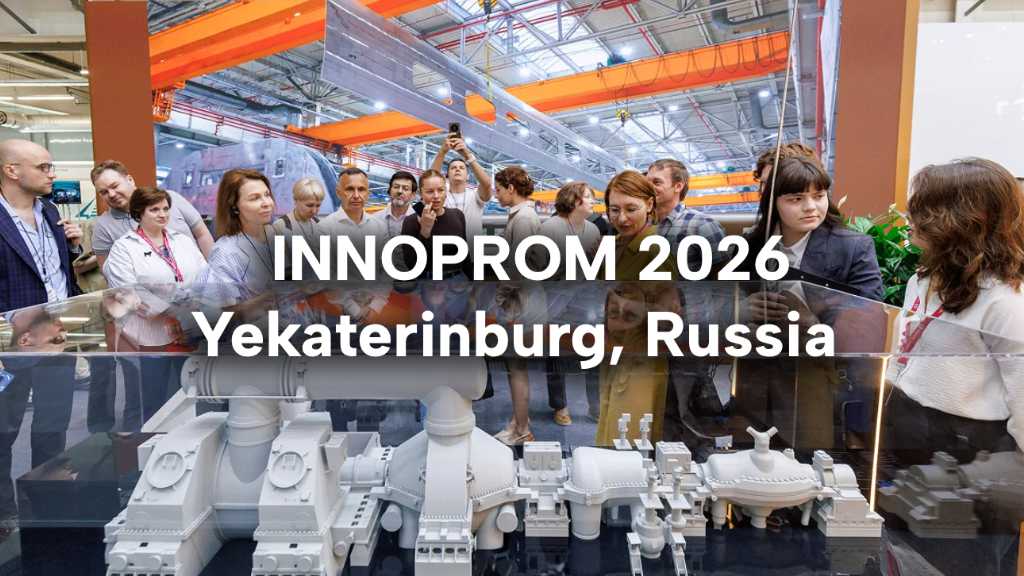

Industrial exhibitions often showcase new products. INNOPROM has evolved into something much larger. The 16th International Industrial Trade Fair, held in Yekaterinburg from July 6-9, 2026, demonstrated how Russia is transforming industrial diplomacy into one of the principal instruments of its Pivot to Asia. Rather than functioning solely as an exhibition of machinery and technology, INNOPROM has become the central marketplace where investment, manufacturing partnerships, technological cooperation and geopolitical strategy increasingly converge.
This year’s exhibition reflected the scale of that transformation. Around 900 companies occupied more than 50,000 square meters of exhibition space, while representatives from 69 regions and over 50 countries attended the event. The business programs included 15 thematic tracks and more than 100 business events, covering robotics, artificial intelligence, industrial software, energy technologies, transportation, advanced materials, digital manufacturing and international industrial cooperation.
Indonesia served as the official partner country, highlighting Moscow’s growing emphasis on Southeast Asia as an essential pillar of its external economic strategy. More than 50 Indonesian companies showcased developments in information technology, robotics, unmanned technologies, electronics, mechanical engineering, industrial equipment, metallurgy, the chemical industry, agriculture, furniture manufacturing, and light industry.
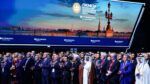
Unlike many international exhibitions that remain largely commercial, INNOPROM has increasingly become an extension of Russian economic diplomacy. Prime Minister Mikhail Mishustin was joined by the prime ministers of Armenia, Belarus, Kazakhstan and Kyrgyzstan, while ministers, governors, industrial corporations, financial institutions and foreign delegations held parallel negotiations throughout the four-day exhibition. The concentration of high-level political engagement underscored that industrial policy has become one of Russia’s primary foreign policy tools.
Russia’s Industrial Recovery As The Foundation Of Its External Strategy
The significance of INNOPROM 2026 cannot be understood without examining Russia’s manufacturing performance since 2022. Western sanctions were originally designed to weaken Russian industrial capacity by restricting technology imports, financial access and supply chains. Instead, Moscow responded with an unprecedented industrial mobilisation programme combining state investment, import substitution, localisation policies and technological development.
According to Prime Minister Mishustin, Russia invested approximately ₽24 trillion ($313 blllion) in fixed capital over the past five years, with nearly one-third invested in 2025 alone, illustrating the scale of industrial modernisation underway. These investments have produced measurable results. Manufacturing output expanded by almost 23% during the past three years, while mechanical engineering recorded nearly 8% growth during the first five months of 2026, even as broader industrial production moderated amid tighter monetary conditions. The government still expects manufacturing growth of around 1% this year despite elevated interest rates and external restrictions. These figures are particularly noteworthy because manufacturing, not hydrocarbons, is increasingly driving Russian industrial expansion. This represents one of the most important structural shifts in Russia’s economy over the past decade.
Industrial Sovereignty As Russia’s New Economic Doctrine
One recurring theme throughout INNOPROM 2026 was “technological sovereignty.” Rather than seeking complete self-sufficiency, Russia is attempting to reduce dependence on critical foreign technologies while building resilient supply chains with friendly economies across Eurasia, Asia, China, India, the Middle East and Africa. The exhibition highlighted this strategy across multiple sectors. Russia has launched nine national technological leadership projects covering key manufacturing industries. Technological cooperation maps are being updated to coordinate research institutes, industrial enterprises and regional manufacturers around specific critical technologies. The country’s industrial robotics programme illustrates the scale of ambition. Seven regional robotics centres have already been established, with 23 additional centres planned, bringing the nationwide total to 30 specialised robotics hubs.
Meanwhile, additive manufacturing continues expanding rapidly. Russian enterprises recently produced the country’s largest steam turbine component using electric arc layer-by-layer additive technology, while 3D printing is increasingly supporting aviation, power engineering and heavy industry. Microelectronics also received considerable attention.Russia recently completed testing of its first domestically developed 350-nanometre projection lithography system, produced jointly with Belarus. Although not yet comparable to leading global semiconductor technologies, it marks a significant milestone in rebuilding domestic chip manufacturing capabilities. The government also announced reimbursement covering up to 50% of industrial software implementation costs to accelerate digital transformation across manufacturing. These initiatives demonstrate that Russia’s industrial strategy increasingly focuses on building complete manufacturing ecosystems rather than isolated factories.
Indonesia Signals Russia’s Deepening Industrial Pivot To ASEAN
Indonesia’s selection as the official partner country represented one of the exhibition’s most significant geopolitical messages. With a population exceeding 284 million and a GDP of roughly US$1.45 trillion, Indonesia has become Southeast Asia’s largest economy and one of the world’s fastest-growing industrial markets. Its participation signals Moscow’s intention to move beyond commodity exports toward industrial partnerships with ASEAN members. Bilateral trade already reflects this trend. Russia-Indonesia trade reached approximately $4.85 billion in 2025, representing 21.7% annual growth. Russian exports totalled $2.97 billion, while imports from Indonesia reached $1.88 billion.
However, the strategic importance extends beyond current trade volumes. Indonesia’s participation showcased more than 50 industrial companies covering machinery, petrochemicals, information technology, construction materials, agro-industrial production and advanced manufacturing. Business forums examined aluminium supply chains, semiconductors, telematics, industrial digitalisation, infrastructure development and investment cooperation. Indonesia, the partner country of the exhibition, signed 13 memorandums of cooperation covering a broad range of sectors, from manufacturing and shipbuilding to the chemical industry, energy technologies, and renewable energy, according to Tri Supondy, Director General for Industrial Resilience, Regional Development and International Industrial Access at Indonesia’s Ministry of Industry.
For Moscow, Indonesia provides access to ASEAN production networks, expanding opportunities for Russian non-resource exports while strengthening industrial integration with Southeast Asia. Indonesia transformed from guest country into strategic industrial partner. Rather than emphasizing commodity trade, Indonesia’s programme focused on industrial collaboration. Dedicated business forums examined aluminium production, semiconductor manufacturing, telematics, industrial digitalization, smart cities, logistics, shipbuilding and infrastructure modernization. Both governments also discussed creating sustainable cross-border industrial supply chains capable of serving both ASEAN and EAEU markets.
This represents a significant evolution in Russia-Indonesia relations. Instead of exporting raw materials and importing manufactured goods, both countries are exploring joint industrial production, technological exchange and localization of manufacturing. Such cooperation aligns with Indonesia’s own industrial modernization strategy while supporting Russia’s objective of expanding non-resource exports
INNOPROM: Russia’s Industrial Version Of SPIEF
The St. Petersburg International Economic Forum (SPIEF) remains Russia’s premier investment forum. INNOPROM serves a different but increasingly complementary function. SPIEF focuses primarily on macroeconomic policy, investment and international finance. INNOPROM concentrates on manufacturing, industrial cooperation, technology transfer and production partnerships. This distinction is becoming increasingly important as Russia reorients its economy toward manufacturing-led growth.
The exhibition now brings together state corporations including Rostec, Rosatom, Gazprombank, Sber, EVRAZ, Sinara, Inter RAO Engineering, Novikom and numerous regional industrial clusters. Their objective is not simply to exhibit products but to establish long-term production partnerships, localisation agreements, export contracts and technological cooperation with foreign partners. The event also illustrates the growing importance of Russia’s regions in industrial diplomacy. Sverdlovsk Region, Tatarstan, Moscow, Chelyabinsk and other industrial centres used INNOPROM to promote regional manufacturing ecosystems, attract investment and integrate local enterprises into international supply chains. This decentralized approach aligns with President Vladimir Putin’s broader emphasis on empowering Russian regions to become engines of industrial growth, technological innovation and export expansion.
A Shift In Russia’s Economic Diplomacy
The most important conclusion from INNOPROM 2026 is that Russia’s Pivot to Asia is no longer driven solely by energy exports. The exhibition demonstrated a broader transition toward exporting industrial capabilities, engineering expertise, advanced manufacturing solutions and technology partnerships. Machinery, digital systems, industrial software, robotics, transport engineering and infrastructure are becoming increasingly central to Moscow’s external economic strategy.
Rather than replacing traditional energy cooperation, these sectors are expanding the foundation of Russia’s engagement with Asia, the Middle East, Africa and the wider Global South. The true significance of INNOPROM therefore lies not only in the technologies displayed inside the exhibition halls, but in the industrial architecture Russia is steadily constructing beyond them. The true measure of an industrial exhibition is not the number of visitors or exhibition stands. It is whether discussions translate into factories, investments, production lines and long-term industrial partnerships. Judging by this standard, INNOPROM 2026 demonstrated that it has evolved beyond a conventional trade fair into Russia’s principal platform for industrial deal-making and manufacturing diplomacy.
Unlike global exhibitions that primarily focus on product promotion, INNOPROM increasingly serves as a venue where governments, state corporations, financial institutions and manufacturers simultaneously negotiate investment agreements, production localization, technology transfer and regional industrial cooperation. The exhibition effectively compresses months of diplomatic engagement into four intensive days of government meetings, corporate negotiations and business forums. This transformation reflects Russia’s broader economic strategy. As Moscow accelerates its Pivot to Asia, industrial cooperation—not merely commodity exports—is becoming the backbone of long-term economic partnerships.
Moscow’s Diplomacy Is Increasingly Centred On Industrial Cooperation
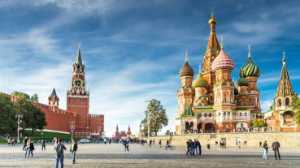
One of the defining characteristics of INNOPROM 2026 was the unprecedented concentration of high-level political engagement. Prime Minister Mikhail Mishustin held separate bilateral meetings with Armenian Prime Minister Nikol Pashinyan, Belarusian Prime Minister Alexander Turchin, Kazakhstan’s Prime Minister Olzhas Bektenov, and Kyrgyz Prime Minister Adylbek Kasymaliev, while all five leaders jointly participated in the exhibition and the strategic plenary session “Industry 360: Manufacturing Unlimited.”
This diplomatic format is significant. Rather than treating industrial cooperation as a secondary topic within broader political dialogue, manufacturing has become the central agenda item itself. Industrial policy is increasingly shaping bilateral relations across the Eurasian Economic Union (EAEU), reflecting a transition from traditional trade integration toward coordinated production networks. The presence of multiple heads of government at a manufacturing exhibition sends a clear message: industrial competitiveness has become a strategic priority comparable to energy security or financial cooperation.
Russia & Armenia Move Towards Industrial Integration

The meeting between Mishustin and Pashinyan illustrated this new approach. Despite geopolitical differences that have periodically complicated bilateral relations, both governments emphasized industrial cooperation as the foundation for future engagement. Russia remains Armenia’s largest trading partner and leading foreign investor, with Russian companies active across mining, transport engineering, digital technologies, energy and peaceful nuclear cooperation. Mishustin said that “Importantly, we would like to see the Armenian Government continue to provide the most favourable possible environment for Russian investors and ensure the protection of their rights and legitimate interests. All practical issues of our cooperation remain continuously overseen by the intergovernmental commission co-chaired by Deputy Prime Minister Overchuk.”
Unreported in Europe, both sides stressed expanding joint manufacturing projects involving small and medium-sized enterprises rather than relying exclusively on large state corporations. This reflects a broader trend within the EAEU. Instead of simply increasing merchandise trade, member states are attempting to create integrated manufacturing value chains where components produced in one country are assembled in another before entering regional and international markets. For Armenia, participation offers access to Russia’s expanding industrial modernization programme. For Russia, Armenian manufacturers provide additional production capacity, engineering talent and regional connectivity linking the EAEU with Middle Eastern markets. If the tensions between Armenia and Russia over the EAEU versus the EU are resolved, this industrial cooperation could expand significantly. More analysis is here.
Belarus Remains Russia’s Closest Industrial Partner

If Armenia represents diversification, Belarus continues to represent industrial integration at its deepest level. During discussions with Prime Minister Alexander Turchin, both governments emphasized expanding cooperation across automotive manufacturing, machinery production, hydrocarbons, financial services and industrial technology. Mishustin specifically highlighted joint ventures involving wheeled vehicles, heavy equipment and advanced manufacturing technologies. Delegations signed nearly 10 strategic agreements, primarily focusing on agricultural machinery, mining equipment, and expanding joint production of transport (such as trolleybuses and loaders) in both Minsk and Russia’s Sverdlovsk Oblast.
This partnership has acquired additional strategic importance since 2022. As Western companies exited Russia, Belarusian manufacturers became critical suppliers of industrial equipment, heavy machinery and engineering products. At the same time, Russian investment has helped modernize Belarusian production facilities while integrating them into wider Eurasian supply chains. Equally important was Mishustin’s announcement that industrial cooperation would continue at Belarus’s own industrial exhibition later this year, illustrating how Russia and Belarus increasingly coordinate multiple industrial platforms rather than relying on isolated events. The result is the gradual emergence of what could be described as a common industrial ecosystem rather than merely close bilateral trade.
Central Asia: Russia’s Next Manufacturing Frontier
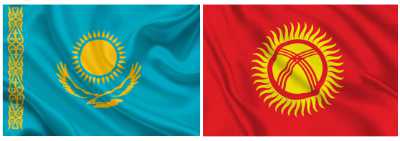
The most strategically important meetings occurred with Kyrgyzstan and Kazakhstan. Russia and Kyrgyzstan agreed to deepen cooperation in manufacturing, transport infrastructure, digital technologies, renewable energy and nuclear power development. Russian investment in the Kyrgyz economy continues to increase, while both governments pledged to create more favourable conditions for joint enterprises operating across both markets. Kyrgyz investors sealed several memorandums for supply contracts (including electric tricycles) and established long-term digital production cooperation with partners in Uzbekistan and Russia.
Energy remains central to this relationship. Russia is supporting Kyrgyzstan’s long-term energy security through renewable energy projects, including a solar power plant in the Issyk-Kul Region, while discussions continue regarding future nuclear energy cooperation.
Beyond individual projects, the two governments announced preparations for the Kyrgyz-Russian Economic Forum and the Eurasian Intergovernmental Council meeting scheduled for August in Cholpon-Ata, demonstrating that INNOPROM functions as one stage within a continuous calendar of Eurasian industrial diplomacy.
Kazakhstan, meanwhile, remains indispensable to Russia’s industrial logistics. As Eurasia’s largest transit economy, Kazakhstan connects Russian manufacturers with Central Asia and western China. Joint participation in INNOPROM reinforces broader cooperation under the EAEU while facilitating industrial projects that increasingly involve cross-border production rather than simple exports.
Russia’s Increasingly Diversified Industrial Base

INNOPROM also highlighted how Russia’s manufacturing sector has diversified beyond traditional heavy industry. Rostec and AvtoVAZ presented the Lada Iskra alongside the pre-production Lada Azimut crossover, with commercial production scheduled to begin in September 2026. The exhibition also featured the Moskvich M70 crossover; the Atom electric vehicle; Evolute’s I-SKY electric crossover; the Evolute I-Space SUV; the Tenet T9 crossover from AGR Holding and the Haval H7, manufactured at Great Wall Motor’s production facilities in Russia. The diversity of manufacturers illustrates an important structural change. Russia’s automotive sector is increasingly characterized by domestic production, localization partnerships with Asian manufacturers and the emergence of electric mobility rather than dependence on European brands.
When Western auto brands exited the Russian market in 2022/23, they possessed 70% of the domestic market. Today, that has dwindled to just 12% with their exit strategy leading to a resurgence in the Russian automotive industry and its component manufacturing sector.
This shift extends beyond automobiles. Leading industrial corporations including Rosatom, Rostec, Sber, EVRAZ, Sinara, Gazprombank, VTB, Inter RAO Engineering, Novikom, Atlas, AZ Ural and numerous regional manufacturers used INNOPROM to demonstrate technologies spanning nuclear engineering, industrial software, robotics, metallurgy, transport systems, digital finance and advanced manufacturing. The breadth of participating industries underscores Moscow’s ambition to position itself as a comprehensive industrial partner rather than merely an exporter of energy and raw materials.
INNOPROM’s Influential Deals
The most important outcome of INNOPROM 2026 cannot be measured by the number of contracts signed. Its greatest achievement is institutional. The exhibition has become a permanent mechanism linking governments, regional authorities, industrial corporations, financial institutions, research organizations and foreign investors within a single decision-making ecosystem. Instead of negotiating isolated projects, participants increasingly develop long-term industrial partnerships covering investment, financing, localization, workforce development, research cooperation and export promotion simultaneously. This integrated approach explains why INNOPROM has become one of the most influential industrial platforms across the Eurasian continent. As Russia deepens its Pivot to Asia, the exhibition is no longer simply displaying the future of Russian manufacturing but it is helping construct the industrial architecture through which that future will be built.
At INNOPROM-2026 in Yekaterinburg, around 80 agreements were signed by the Sverdlovsk Region with major holdings, while hundreds of deals across the exhibition amounted to tens of billions of rubles. The Chelyabinsk Region concluded more than 40 agreements covering investment, science, education, robotics, microelectronics, industrial expansion, service robot production, and digital transformation, including partnerships between the Ministry of Education and Science, the Union of Mechanical Engineers, Ural Automobile Plant, and Robotics Corporation JSC to strengthen workforce development, industrial robotics, and unmanned vehicle technologies. VTB Bank signed multi-billion-ruble agreements with Sima-Land Group, Agro-Holding Maysky JSC, BauInvestGroup, and other companies, supporting logistics, industrial infrastructure, and a ₽6 billion ($78 million) livestock modernization project. Krasnodar Krai signed investment agreements worth ₽3.65 billion, creating 336 jobs, including UAV infrastructure, heat-exchanger manufacturing, ₽1.3 billion aluminum structure production, a ₽1 billion glass-processing plant, and packaging industry expansions worth 500 million and 385 million rubles. The Perm Krai delegation signed agreements on pharmaceutical manufacturing, logistics, energy infrastructure, industrial technology, and import substitution, including a ₽26 million preferential loan for Galileosky controller production, a ₽4.5 billion logistics complex, a ₽900 million industrial technopark, over ₽9 billion in planned power-grid investment by Rosseti Ural, and a new dialysis solutions plant by Pharmasyntez. Other highlights included the presentation of the autonomous “Bogatyr” tram, plans to extend the Yekaterinburg Metro and build a medical campus, while 25 engineers and scientists received the Cherepanov Prize for industrial innovation. The Cherepanovs prize is awarded for engineers, scientists, and technicians for active participation in solving the pressing problems of technological development.
Russia’s New Emphasize On Technology Instead Of Commodities

One of the most notable shifts visible at INNOPROM concerns the changing nature of industrial agreements. Previous editions focused heavily on traditional manufacturing investments. The 2026 exhibition increasingly emphasized high-value technological cooperation. The agenda included industrial robotics, digital manufacturing platforms, artificial intelligence, semiconductor supply chains, cybersecurity, industrial software, additive manufacturing, smart logistics and advanced materials. This evolution reflects changing global competition.
Countries are no longer competing solely through lower production costs. Instead, competitiveness increasingly depends on integrating digital technologies into manufacturing ecosystems. Russia is positioning itself within this transition by combining engineering expertise, scientific research and industrial production with partnerships across Asia, the Middle East and Eurasia.
Russia’s Regions As International Investment Recipients
Another major outcome of INNOPROM 2026 is the increasing internationalization of Russian regional economies. Unlike previous decades, when foreign investors primarily focused on Moscow or St. Petersburg, the exhibition highlighted industrial clusters across Sverdlovsk, Tatarstan, Bashkortostan, Primorye, Samara, Nizhny Novgorod, Chelyabinsk, Kaluga, Lipetsk and other regions. Sverdlovsk Region Governor Denis Pasler said the region signed about 80 agreements, including deals to build a new hangar for Russian aircraft at Koltsovo Airport, the allocation of more than ₽6 billion ($78.7 million) for social and infrastructure programs in the region through 2033 by Polymetal, and the construction of a logistics hub with a distribution center on the M-12 highway for autonomous freight transport, among others.
This regional strategy offers several advantages. It distributes industrial investment more evenly across Russia. It strengthens regional export capacity. It reduces logistical bottlenecks. It encourages competition among regions to attract domestic and foreign investment. Most importantly, it transforms Russia’s industrial geography from a centralized system into a network of specialized manufacturing clusters connected through domestic and international supply chains.
Why INNOPROM Has Become A Strategic Engine Of Russia’s Pivot to Asia
Viewed in isolation, INNOPROM 2026 appears to be another successful industrial exhibition. Viewed within the broader context of Russia’s economic transformation, however, it represents something far more significant. It illustrates how Moscow is redefining the foundations of its international economic engagement, not by abandoning its traditional strengths in energy and commodities, but by adding a second pillar centred on manufacturing, technology, industrial services and production partnerships.
The exhibition demonstrated that Russia’s Pivot to Asia is entering a new phase. During the first phase, following the geopolitical realignment of 2022, Russia concentrated on redirecting trade flows, energy exports and logistics towards Asia. The second phase is fundamentally different. It focuses on embedding Russian industries into the manufacturing ecosystems of Eurasia, ASEAN, the Middle East and the wider Global South. This shift has profound implications for Russia’s long-term economic resilience.
Russia Is Exporting Industrial Capability Instead Of Industrial Products
For decades, Russia’s international economic profile was largely associated with hydrocarbons, metals, fertilizers and defence exports. Those sectors remain essential, but INNOPROM 2026 revealed a broader ambition. Russia increasingly seeks to export complete industrial solutions.
These include engineering services, industrial software, nuclear technologies, railway systems, robotics, digital manufacturing, industrial automation, machine tools, aviation technologies and infrastructure development. Prime Minister Mikhail Mishustin’s keynote address reflected precisely this transition. Rather than focusing on sanctions or external pressures, his speech highlighted manufacturing modernization, technological sovereignty, industrial robotics, semiconductor development, additive manufacturing, aviation, shipbuilding, pharmaceuticals and artificial intelligence as the principal drivers of future growth.
This represents an important change in Russia’s external economic model. Countries purchasing Russian industrial systems become long-term partners requiring maintenance, spare parts, software upgrades, technical training and engineering cooperation. Unlike commodity exports, industrial partnerships generate decades of economic interaction.
Technology Sovereignty Evolving Into Export Sovereignty

One of the strongest themes emerging from INNOPROM was technological sovereignty. Western observers often interpret Russia’s import substitution policies solely through the lens of sanctions resilience. The exhibition suggested a broader objective. Russia is attempting to convert domestic technological independence into international competitiveness. Examples presented throughout the exhibition illustrate this strategy. Domestic production of the Tu-214, Il-114, engine, Ansat and Ka-226T helicopters, new LNG carriers built in Primorye, industrial robotics centres, additive manufacturing technologies, industrial software platforms and semiconductor equipment all form part of an integrated industrial ecosystem.
The objective extends beyond replacing imported technologies. Once domestic production reaches commercial scale, these technologies become export products for friendly markets seeking affordable alternatives to Western suppliers. For many developing economies, particularly across Asia and Africa, Russian industrial technologies may offer competitive pricing, fewer political conditions and greater willingness to establish localized production.
The EAEU’s Evolving From A Customs Union To a Manufacturing Union

Another important message emerging from INNOPROM concerns Eurasian integration. It advances EAEU industrial cooperation under the theme “production without borders.” Meetings involving Armenia, Belarus, Kazakhstan and Kyrgyzstan consistently emphasized joint production, industrial cooperation, technology transfer, investment and manufacturing rather than tariff policy alone. This reflects the gradual evolution of the Eurasian Economic Union. Initially established primarily to facilitate trade, the EAEU increasingly seeks to coordinate industrial specialization among member states. Belarus contributes heavy machinery and engineering. Kazakhstan strengthens logistics and metallurgy. Armenia offers advanced engineering capabilities and digital technologies. Kyrgyzstan provides growing manufacturing capacity and regional connectivity. Russia functions as the principal industrial and technological hub. Such specialization resembles successful industrial models previously developed in East Asia, where production networks distribute different stages of manufacturing across multiple economies.
Mishustin highlighted Indonesia as the partner country, noting its 2025 EAEU free trade agreement, Russia-Indonesia trade had more than doubled in five years, ₽24 trillion ($313 billion) in fixed-asset investment, 23% manufacturing growth over three years, and progress in shipbuilding, metallurgy, pharmaceuticals, digital technologies, energy, machine tools, microelectronics, and aviation, including certification of the Tu-214 and testing of the Il-114.
Armenia’s Pashinyan reported 13% industrial growth in the first four months of 2026 and a doubling of manufacturing over nine years, prioritizing microelectronics, biopharmaceuticals, robotics, and EAEU-backed industrial cooperation. Belarusian Prime Minister Alexander Turchin emphasized sanctions resilience through flexible production, digitalization, AI, robotics, microelectronics, machine tools, and innovations at BELAZ and Horizon. Kazakh Prime Minister Olzhas Bektenov outlined EAEU priorities of AI, logistics hubs, industrial and agricultural digitalization, barrier-free trade, and global partnerships, citing 177 Russia-Kazakhstan industrial projects worth $53 billion, including 122 completed projects worth $22.4 billion, digital adoption rising from 13% (2022) to 21% (2025), and initiatives such as Altyn-Visa and Smart Cargo.
Kyrgyz Prime Minister Adylbek Kassymaliyev noted that over one-third of Kyrgyzstan’s foreign trade is with EAEU members, 2025 EAEU trade reached $6 billion (+7.7%), and identified investment opportunities in hydropower, solar energy, geology, rare-earth processing, textiles, agro-industry, pharmaceuticals, machinery, industrial parks, free economic zones, and digital public services. The exhibition also reflects the growing economic weight of the Global South. This geographic composition reflects broader changes in the international economy. According to IMF projections, emerging and developing economies now account for approximately 60% of global GDP measured by purchasing power parity, while Asia contributes the overwhelming majority of global manufacturing growth. Russia’s industrial diplomacy is increasingly aligned with these structural shifts. Rather than attempting to restore pre-2022 economic relationships, Moscow is investing in markets where industrial demand continues expanding rapidly.
But Challenges Remain
INNOPROM also highlighted the obstacles confronting Russia’s industrial ambitions. The country continues facing restricted access to advanced Western semiconductor equipment, industrial software and certain specialized technologies. Labour shortages remain acute across manufacturing industries. The government estimates that priority industrial sectors will require approximately 100,000 highly skilled specialists every year over the coming period. To address this challenge, more than 500 educational clusters have already been established across colleges and vocational schools, while 50 advanced engineering schools operate within Russian universities.
Maintaining investment momentum will also require sustained financing. Since 2022, more than 240 new serial production facilities have entered operation through reverse engineering initiatives, while around 100 additional facilities remain under development. Meanwhile, approximately 1,100 subsidized industrial mortgage loans worth over ₽116 billion ($1.5 billion) have supported around 5 million square metres of industrial space. The challenge now lies in ensuring these investments translate into globally competitive production rather than temporary import substitution.
Summary: The Next Stage of Russia’s Pivot to Asia Will Be Industrial
The broader significance of INNOPROM extends well beyond the exhibition halls of Yekaterinburg. The event demonstrates that Russia is building an alternative model of globalization centered on industrial cooperation among emerging economies. Unlike globalization driven primarily by multinational corporations and financial markets, this model emphasizes sovereign industrial development, localized production, technology partnerships and long-term manufacturing investment. Its participants are increasingly drawn from BRICS, the Eurasian Economic Union, the Shanghai Cooperation Organization, ASEAN and other countries across the Global South. For these economies, Russia offers more than commodities. It offers nuclear technology, railway engineering, industrial machinery, digital solutions, energy infrastructure, robotics, artificial intelligence, industrial software, advanced materials, professional education, engineering expertise, manufacturing partnerships. Collectively, these sectors represent the foundation of a new industrial diplomacy.
INNOPROM 2026 confirmed that Russia’s industrial transformation is no longer solely a domestic modernization program. It has become a central instrument of the country’s foreign economic strategy. The exhibition showcased hundreds of companies, thousands of technologies and dozens of investment opportunities. More importantly, it demonstrated how manufacturing has become one of Moscow’s principal diplomatic languages. As global supply chains become increasingly fragmented and technological competition intensifies, countries are searching for reliable industrial partners capable of delivering not only products but also production capacity, engineering expertise and long-term technological cooperation. INNOPROM suggests that Russia intends to occupy precisely that role.
The exhibition therefore should not be viewed simply as Russia’s largest industrial trade fair. It is increasingly becoming the institutional platform through which Moscow is building the next phase of its Pivot to Asia—one driven less by pipelines and commodities, and more by factories, technology, industrial investment and shared manufacturing ecosystems stretching from the Urals to Southeast Asia. If the first phase of Russia’s eastward reorientation was defined by the redirection of trade, the second is being defined by the construction of a new Eurasian industrial architecture. Judging by the scale, participation and strategic outcomes of INNOPROM 2026, that architecture is already taking shape.
The article was written by Ms. Begum, an analyst for Russia’s Pivot To Asia. She may be reached at info@russiaspviottoasia.com