
 Русский






For much of the past four years, Western reports and commentaries have interpreted Russia’s eastward economic reorientation primarily as a reaction to Western sanctions, claiming that they would lead to Russia’s economic collapse and place the country on the verge of both economic and foreign trade collapse. The latest foreign trade statistics released by Russia’s Federal Customs Service (FCS) suggest that this interpretation is significantly incorrect.
Instead of ‘economic collapse’, what was initially an emergency adaptation has evolved into a durable economic architecture centered on Asia, supported by expanding Global South partnerships and reinforced by new transport corridors, payment mechanisms and diplomatic platforms.
The numbers are becoming increasingly difficult to ignore. During January-May 2026, Russia’s foreign trade turnover reached US$295.7 billion, an increase of 8.3% compared with the same period last year. Russian exports climbed 8.5% to US$177.4 billion, while imports rose 8.1% to US$118.3 billion. As a result, Russia’s foreign trade surplus expanded by 9.4%, reaching US$59.1 billion, compared with US$54 billion during the first five months of 2025.
Using the Central Bank’s balance-of-payments methodology, the picture is equally strong. Merchandise exports reached US$182.6 billion, imports totaled US$130.4 billion, producing a surplus of US$52.3 billion, representing annual growth of 13.6%. Total merchandise turnover reached US$313 billion, an increase of 11.5% year-on-year. These figures represent far more than a temporary improvement in commodity markets. They demonstrate that Russia has largely completed the first phase of its trade redirection. The country’s commercial geography has changed fundamentally, and increasingly that transformation appears self-reinforcing.
Asia Has Become Russia’s Economic Center of Gravity
The most important statistic released by the Federal Customs Service is not the overall trade surplus but the geographical distribution of Russia’s commerce. During the first five months of 2026, 74.8% of Russia’s entire foreign trade was conducted with Asian countries, while trade with Asia expanded 12.4% year-on-year. In absolute terms, Russia’s trade with Asian economies reached US$221.1 billion, including US$141.5 billion in exports, up 14.5%, and US$79.6 billion in imports, an increase of 8.8%. By comparison, Europe now accounts for only 18% of Russia’s foreign trade. Trade with the Americas represents merely 3.7%, while Africa accounts for 3.4%.
The contrast with Europe is particularly revealing. Russian exports to European markets declined 8.4%, falling from US$25.1 billion to US$23 billion during January-May. According to Eurostat, trade between Russia and the European Union contracted another 16.5% during the first four months of the year. Russian exports to the EU declined by more than 30%, largely reflecting Europe’s continuing efforts to reduce purchases of Russian energy and fertilizers.
The direction of change is unmistakable. Europe is gradually becoming a secondary market for Russian exports, while Asia has become the principal engine of Russia’s external trade. This shift is no longer cyclical. It is structural.
China Is Increasingly Acting as Russia’s Principal Economic Partner
Within Asia, one country increasingly shapes Russia’s external economic landscape. According to Chinese customs statistics, bilateral trade between Russia and China reached US$109.5 billion during January-May 2026, representing remarkable annual growth of 22.9%. Russian exports to China increased 20.2% to US$60.4 billion, while Chinese exports to Russia surged 26.4%, reaching US$49.2 billion. When these figures are compared with Russia’s Federal Customs Service statistics, China’s role becomes even more significant. China now absorbs approximately 43% of Russia’s exports to Asia, while providing 62% of Russia’s imports from the region. This level of integration extends well beyond energy trade.
Chinese manufacturers are increasingly supplying machinery, industrial equipment, automobiles, electronics and production technologies needed by Russian industry. Meanwhile, Russia continues expanding exports of energy resources, agricultural commodities, metals, fertilizers and raw materials to China’s manufacturing economy. Rather than replacing one dominant trading partner with another, Russia appears to be embedding itself within Asia’s broader industrial ecosystem, where China functions as the principal hub connecting regional supply chains.
Examples of the new “Russian Belt & Road” can be seen in multiple examples. These include: Rail Connectivity and Doubling Freight Capacity, Digital Highways, Truck Fueling Stations, New Highways, New and Enhanced Border Crossings (here, here, here, here and here) New Aviation Routes (here, here and here ) as well as new and increased port capacity (here, here, here, here and here). There are many other examples.
Commodity Structure Reveals Both Strengths and Remaining Challenges
Russia’s export composition continues to be dominated by natural resources, although important diversification trends are becoming visible. Mineral products accounted for 54.2% of total Russian exports during January-May. Exports of mineral products reached US$96.1 billion, representing annual growth of 4.3%. At first glance, this increase appears modest. However, the underlying trend is considerably stronger.
During January and February, exports of mineral products were actually declining by more than 23% year-on-year. The reversal occurred during spring, largely driven by disruptions in global energy markets following tensions around the Strait of Hormuz, where supply concerns pushed international oil prices significantly higher. Several Russian economists argue that higher commodity prices became one of the principal drivers behind the improvement in Russia’s trade balance. Vladimir Salnikov of the Center for Macroeconomic Analysis and Short-Term Forecasting noted that higher export prices resulting from Middle Eastern geopolitical tensions substantially improved Russia’s export earnings. He also pointed to secondary effects, including the easing of restrictions affecting exports of Russian petroleum products.
Yet energy alone does not explain the latest trade performance. The strongest export growth came from agriculture. Exports of food and agricultural raw materials increased 20.3%, reaching US$18.4 billion. According to Agroexport, Russia exported more than 33 million tonnes of agricultural products during January-May, representing annual growth of 26%.
Grain exports, vegetable oils, oilseed products, fish, seafood and other agricultural commodities all contributed to the expansion. This matters because agriculture increasingly demonstrates characteristics fundamentally different from hydrocarbon exports. Agricultural exports create wider regional economic benefits, generate employment throughout Russia’s provinces, stimulate logistics investments and reduce dependence on volatile energy markets.
Meanwhile, exports of metals and metal products surged 26%, reaching US$33.2 billion, reflecting strong industrial demand across Asian markets. Chemical exports increased 6% to US$14.1 billion, while textile exports expanded an impressive 27.8%, albeit from a relatively smaller base. Not every sector recorded gains. Exports of machinery, equipment and transport vehicles declined 8.5%, falling to US$9.8 billion, while exports of wood and paper products slipped 6.4% to US$4 billion. These figures highlight one of Russia’s continuing structural challenges. While the country has successfully redirected commodity exports toward Asia, expanding exports of higher value-added manufactured goods remains a longer-term objective. That challenge, however, also explains why Russia’s growing engagement with Asian economies extends beyond trade alone. Increasing cooperation in industrial investment, technology partnerships, logistics development and manufacturing integration has become central to Moscow’s broader Pivot to Asia strategy.
Technology Imports Reflect Industrial Modernization Rather Than Structural Weakness
One of the more revealing aspects of Russia’s latest trade statistics lies not in exports but in the composition of imports. Far from indicating excessive dependence on foreign suppliers, the data suggest that Russia is using external trade to modernize domestic production while simultaneously redirecting supply chains toward Asia. During January-May 2026, imports reached US$118.3 billion, an increase of 8.1% year-on-year. More importantly, machinery, equipment and transport vehicles accounted for 48.6% of total imports, underscoring that investment goods, not consumer products, remain the dominant component of Russia’s external purchases.
Imports of machinery, equipment and vehicles increased 9.3%, reaching US$57.5 billion, accounting for more than half of the overall increase in imports. According to Andrey Gnidchenko of the Center for Macroeconomic Analysis and Short-Term Forecasting (CMASF), much of this growth was driven by increased purchases from China following the exceptionally weak import base of 2025, when higher utilization fees sharply reduced imports of automobiles and construction machinery. As those distortions eased, imports gradually recovered.
Chemical imports rose 6.8% to US$23.7 billion, while food imports increased 5.4% to US$18 billion. Imports of textiles, clothing and footwear climbed 11.3%, reaching US$8 billion, reflecting stronger consumer demand as domestic economic activity improved. Several economists also point to macroeconomic conditions supporting import growth. The relatively strong ruble during the first half of 2026 reduced the cost of imported equipment, while gradual monetary easing helped revive investment and household spending. Rosstat data showing stronger consumer activity during the second quarter further support this trend.
This import profile carries an important strategic implication. Russia’s Pivot to Asia is not solely about exporting more hydrocarbons eastward. It is equally about integrating Russian industry into Asian manufacturing ecosystems capable of supplying advanced machinery, industrial equipment, electronics and production technologies that previously originated largely in Europe.
Trade Geography Shows the Emergence of a New Eurasian Commercial Map
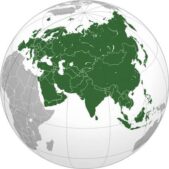
The redistribution of Russia’s trade flows over the past several years has fundamentally altered the country’s economic geography. While Europe still accounted for US$30.3 billion in Russian imports during January-May, an increase of 8%, its role has become increasingly concentrated in sectors that remain outside most sanctions regimes, particularly pharmaceuticals and selected industrial products. Meanwhile, imports from Asia expanded to US$79.6 billion, representing nearly two-thirds of Russia’s total imports. Imports from the Americas rose modestly to US$6.5 billion, while imports from Africa declined 7.1% to US$1.9 billion, partly reflecting lower international prices for coffee, cocoa and bauxite.
The changing export geography is even more striking. Russian exports to Asia reached US$141.5 billion, compared with only US$23 billion to Europe, US$8.3 billion to Africa and US$4.5 billion to the Americas. In practical terms, Asia now purchases more than six times as many Russian goods as Europe. That ratio would have appeared almost unimaginable only a few years ago. This transformation is also increasingly self-reinforcing. Growing trade volumes encourage investment in logistics, customs modernization, transport corridors, digital payment systems and industrial cooperation. Improved connectivity, in turn, lowers transaction costs and creates further incentives for businesses to expand commercial relations. In economics, trade flows rarely remain static. Once infrastructure, financing mechanisms and business networks become established, they tend to generate their own momentum. Russia’s Pivot to Asia appears to have entered precisely this phase.
Economic Diplomacy Is Becoming a Trade Multiplier
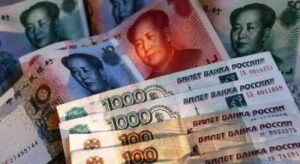
Trade expansion does not occur in isolation. It increasingly follows diplomatic architecture, institutional cooperation and business connectivity. This explains why Russia has invested considerable political capital in creating a series of international economic platforms that increasingly complement one another rather than operate independently.
The St. Petersburg International Economic Forum (SPIEF) 2026 demonstrated this evolution most clearly. The forum concluded with 1,084 agreements worth approximately US$85 billion, bringing together delegations from more than 180 countries and territories. Increasingly, SPIEF functions less as a European investment conference and more as a marketplace connecting Russia with Asia, the Middle East, Africa and Latin America.
Equally important is the Russia-Islamic World: KazanForum, which has become Moscow’s principal gateway to Muslim-majority economies. The forum increasingly links Russia with Gulf Cooperation Council members, Türkiye, Central Asia, Iran, Pakistan, Southeast Asia and North Africa. These economies collectively represent rapidly growing consumer markets, sovereign investment funds and expanding demand for food, energy, halal products, infrastructure and logistics cooperation.
The Russia-ASEAN Business Forum has become another strategic pillar. ASEAN represents one of the world’s fastest-growing economic regions, with a combined population exceeding 680 million and a GDP approaching US$4 trillion. Russia’s engagement with ASEAN is gradually expanding beyond traditional energy cooperation toward digital technologies, transport connectivity, civil nuclear energy, fertilizers, food security and financial cooperation.
The Eastern Economic Forum (EEF) in Vladivostok performs a complementary function. Located on Russia’s Pacific coast, the forum connects the Russian Far East directly with Northeast Asia and the broader Indo-Pacific. Investments in ports, railways, Arctic shipping routes, liquefied natural gas, mining, fisheries and advanced manufacturing all strengthen Russia’s long-term economic integration with Asia-Pacific markets.
Similarly, the Russia-Africa Summit seeks to deepen commercial relations with African economies in agriculture, mining, fertilizers, energy, infrastructure and education. While Africa currently accounts for only 3.4% of Russia’s foreign trade, its demographic growth and rapid urbanization suggest significant long-term potential. Viewed together, these forums are not isolated diplomatic events. They function as complementary components of a broader economic strategy aimed at institutionalizing Russia’s engagement with the Global South.
From Commodity Exporter to Eurasian Economic Connector
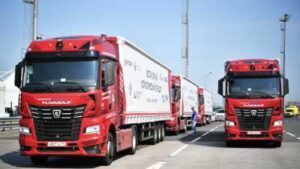
Another notable feature of Russia’s trade transformation is the gradual emergence of logistics as a strategic asset. Russia occupies a unique geographic position linking Europe, East Asia, Central Asia, the Arctic and the Middle East. As geopolitical uncertainty continues affecting maritime trade routes including disruptions around the Strait of Hormuz and ongoing concerns surrounding other strategic chokepoints—the importance of diversified overland and multimodal transport corridors continues to grow. This creates opportunities extending well beyond commodity exports. The expansion of the International North-South Transport Corridor, greater utilization of the Northern Sea Route, improved rail connectivity across Eurasia and growing cooperation with China under the Belt and Road Initiative all strengthen Russia’s position as a transit economy. Trade increasingly follows infrastructure. As these transport corridors mature, they reduce delivery times, diversify supply chains and attract new investment into logistics, warehousing and manufacturing.
The Next Stage Requires Diversification

Despite encouraging trends, Russia’s trade structure still faces important long-term challenges. Mineral products continue to account for 54.2% of exports, leaving external earnings exposed to commodity price fluctuations. The improvement in 2026 was partly supported by temporary increases in oil prices following tensions in the Strait of Hormuz. Such geopolitical factors cannot provide a permanent foundation for export growth.
Future expansion will therefore depend increasingly on sectors capable of generating higher value-added exports. Agriculture already offers one example. Export earnings of US$18.4 billion and shipments exceeding 33 million tonnes demonstrate that Russia has become one of the world’s leading food suppliers. Continued investment in food processing, logistics, cold-chain infrastructure and agricultural technology could significantly increase export value.
Likewise, metallurgy, chemicals, fertilizers, civil nuclear technologies, information technology, pharmaceuticals, aerospace engineering and transport equipment all represent sectors capable of complementing Russia’s traditional energy strengths. Equally important will be expanding settlements in national currencies, developing independent financial infrastructure and strengthening digital payment systems across BRICS, the Eurasian Economic Union, ASEAN and other Global South partners. Reducing transaction costs and currency risks will make trade relationships more resilient against external shocks.
Summary: A Structural Shift That Is Still Gaining Momentum
Russia’s latest foreign trade figures tell a story that extends well beyond one year’s statistical improvement. They illustrate the consolidation of an economic strategy that has gradually reshaped the country’s external orientation over several years. An 8.3% increase in trade turnover, US$177.4 billion in exports, US$118.3 billion in imports and a US$59.1 billion trade surplus certainly reflect favorable commodity markets and resilient external demand. Yet the deeper significance lies elsewhere. Nearly 75% of Russia’s foreign trade is now conducted with Asia. Trade with China continues to expand at more than 20% annually. Agricultural exports are rising rapidly alongside metals and industrial commodities. Machinery imports increasingly originate from Asian production networks. International economic forums are institutionalizing partnerships across the Global South, while new transport corridors are reshaping Eurasian commerce.
Taken together, these developments suggest that Russia’s Pivot to Asia has moved beyond emergency adjustment. It is evolving into a long-term economic architecture supported by expanding diplomatic engagement, infrastructure investment, industrial cooperation and diversified trade partnerships. The transition is not yet complete, and challenges remain—not least the need to diversify exports beyond natural resources and strengthen domestic technological capabilities. Nevertheless, the trajectory has become increasingly clear. Russia is no longer merely redirecting trade flows. It is repositioning itself within a rapidly changing Eurasian economic landscape where Asia has become not simply an alternative market, but the principal engine of Russia’s external economic future.
This article was written by Ms. Khatun, an expert in Russia-Asian affairs. She may be reached at info@russiaspivottoasia.com