The Transcaspian Corridor Becomes a New Global Logistics Link
The Trans-Caspian corridor is developing fast and is expected to achieve record freight tonnage during 2026. We examine the route and show where the growth development segments are.
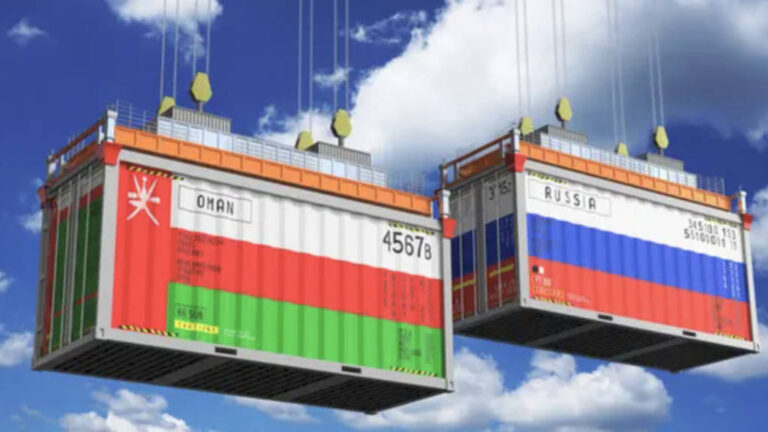
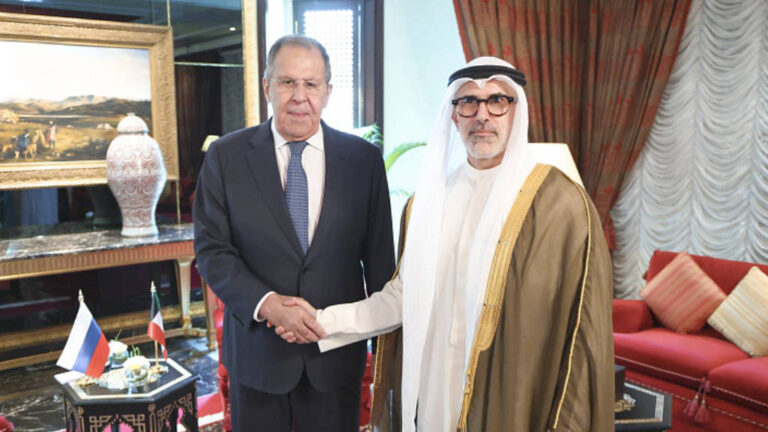
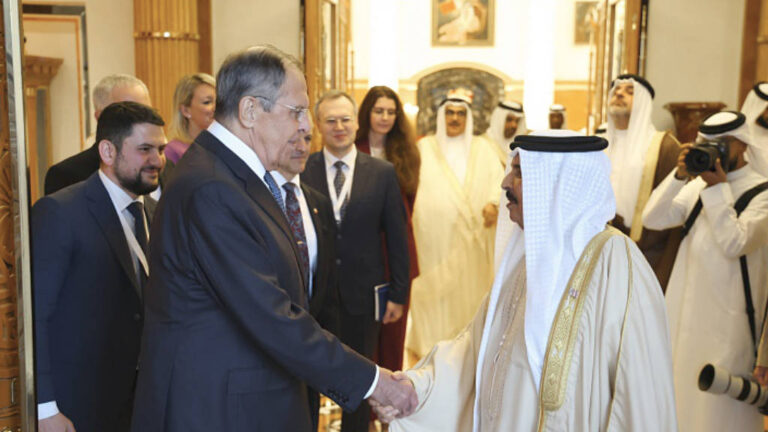
Russia’s trade and investment into the Middle East is rapidly developing, with relations both through the Gulf Cooperation Council and the Arab League all helping boost bilateral trade by 25% during 2025. Partially driven by the developments along the INSTC, and new regional free trade agreements, we provide analysis of the growing Russia-Middle East economic partnership. Discover trade statistics, investment flows from the GCC, and business opportunities for companies in both regions.
The Trans-Caspian corridor is developing fast and is expected to achieve record freight tonnage during 2026. We examine the route and show where the growth development segments are.
The 2026 Africa Aerospace And Defense Exhibition has taken place in South Africa, while Egypt has hosted the El Alamein International Airshow. We examine Russia’s significant participation in both these events and what it means for Russia’s military and defence sector exports.
The Russian Foreign Minister, Sergey Lavrov has held 50 meetings while attending the United Nations in New York. We examine each of these, including important discussions with the United States, and Germany and look at the significance of Russia’s expanding international diplomacy and what this means in terms of foreign policy developments and potential outcomes.
Roman Chekushov, the Russian Deputy Industry and Trade Minister, has been meeting with Mohamed Farid, the Egyptian Industry Minister, Khaled Hashem, the Investment and Foreign Trade Minister, Deputy Foreign Minister Wael Hamed and the chairman of the Federation of Egyptian Industries, Mohamed El-Sewedy in Cairo to discuss trade developments. Bilateral trade is up 15.6% in 2026.
Russia’s exports of beef to Turkiye have reached 400 tonnes in H1 2026, in the first data since Russia was permitted to export the meat last year. The next step is to allow Russian exporters direct market access. Beef is used in numerous Turkish dishes including kebabs as well as stews. Per capita consumption is about 20kg per annum.
Subscribe to receive exclusive insights and analysis on Middle East.
The annual TNF Energy forum has concluded in Tyumen, featuring significant energy participation involving China, ASEAN, Central Asia, the Middle East and Africa. The event laid out Russia’s energy dynamics, exports and infrastructure build with oil and gas companies, equipment manufacturers, oilfield-service providers, technology developers, universities, government institutions and foreign energy partners. We assess the likely impact and global energy flows. This article is essential reading for anyone interested in Russia’s global energy development.
The Eurasian Economic Union and the Shanghai Cooperation Organisation have agreed a Joint Action Plan to cover the period 2027-2030. This covers important trade development areas including digitalization, information and communication technologies, customs regulation, agro-industry, food security, sanitary and phytosanitary measures, consumer protection, green-economy issues and information exchange. We deep dive the contents to explain exactly what this means and the impact on EAEU and SCO members.
Russia’s trade with the Global South and ‘friendly’ countries now accounts for 85% of its total, reaching about US$299 billion in H1 2026. The West provides just 15% of Russia’s economic trade and continues to decline. We examine the main Global South trade partners in all regions, and provide the latest H1 2026 trade data. There are some surprising results for those who assume Russia only trades oil with China and India. The non-energy sector on a worldwide basis is increasingly dominant as Global South trade volumes continue a Russian growth trajectory.
Saudi Arabia has increased the number of approved Russian milk producers to 26 following increasing demand for quality dairy products. The Saudi dairy market is growing as consumers look for healthy lifestyles and has an expected CAGR annual growth rate of 4% between 2026 and 2034. Russia is the world’s fourth largest producer of dairy products.
The WorldFood and Russian Sea Food Expos have been taking place in Moscow and St. Petersburg with significant trade delegations attending from China, India, ASEAN, Brazil, Egypt and the Middle East as well as most of the Global South nations. We discuss in considerable detail how Russia’s agricultural trade is interacting with these international markets in both exports and imports, within an industrial sector whose output is measured in the trillions of dollars.
Iran is hoping to quadruple its fish exports to Russia. The country has a free trade agreement with Russia and is a major exporter of prawns and rainbow trout. Iran exports fish and seafood to 67 countries worldwide despite sanctions, with Russia the third largest importer after Iraq and China.