 Русский




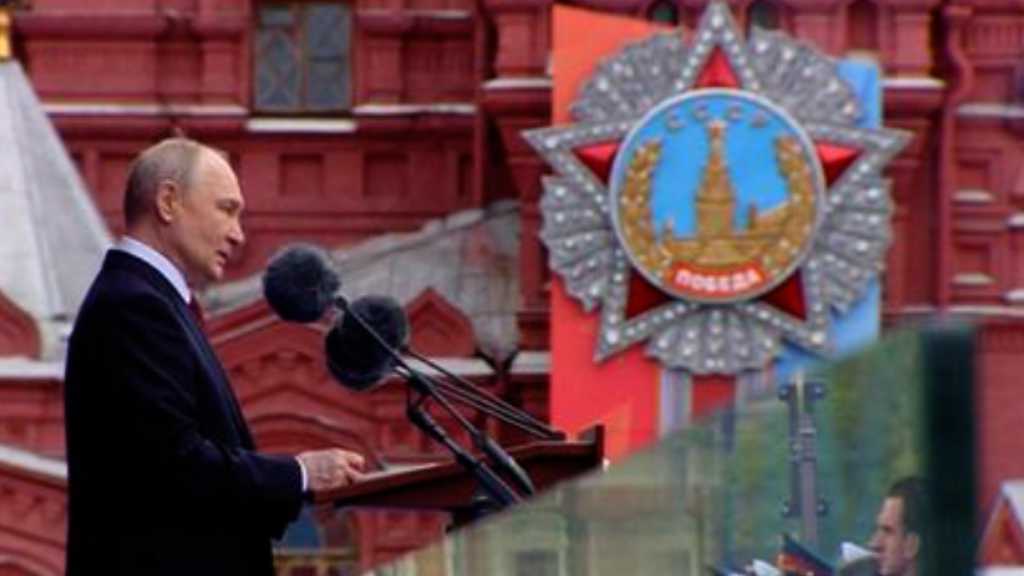

President Vladimir Putin’s press conference and meetings with several global leaders took place on May 8-9 on the sidelines of events commemorating the 81st anniversary of Victory Day. Putin used his May 9 press conference and meetings with several Global South Leaders not merely to commemorate the Soviet victory over Nazism, but to articulate something much larger: the geopolitical consolidation of a Eurasian-centered international system increasingly resistant to Western pressure and increasingly integrated through trade, energy, diplomacy, logistics, and civilizational alignment across Asia and the Global South.
Western analysts continue to interpret Russia’s “Pivot to Asia” as a tactical reaction to sanctions following the Russia-Ukraine conflict. That interpretation is now obsolete. What emerged from Putin’s remarks and his extraordinary marathon of bilateral meetings with numerous senior foreign officials in Moscow on May 8-9 was evidence that Russia’s eastern and southern reorientation has evolved into a long-term structural doctrine designed to reshape the economic geography of Eurasia and the political balance of the international system itself. The symbolism of the Victory Day celebrations mattered. But the substance mattered far more.
The attendance of government leaders and senior officials from Malaysia, Laos, Kazakhstan, Uzbekistan, Belarus, Slovakia, South Ossetia, Abkhazia, Bosnia and Herzegovina-linked Republika Srpska, and others demonstrated that Moscow is not isolated. In fact, the diplomatic traffic flowing through the Kremlin increasingly resembles the early institutional formation of a post-Western connectivity bloc stretching from Eastern Europe to Southeast Asia.
Recent examples of this are numerous, as can be seen with our past 4 months 2026 reports on high level meetings with senior officials from Armenia, Turkiye, Iran, the UAE, Kazakhstan, Indonesia, Vietnam and China.
The adage that Russia is isolated is not true. Moscow has had more meetings with senior officials from countries representing the global community this year than either Brussels or Washington.
Despite most Western media portraying the 2026 Victory Day celebrations as “low-profile” due to the limited display of military equipment and the absence of several foreign leaders, Putin stated that the format was a deliberate decision taken for security reasons and to ensure focus on Russia’s ongoing military objectives, while still maintaining the symbolic importance of the event through the participation of visiting foreign delegations who attended the Moscow celebrations. It also serves as evidence of continued global engagement with Russia despite Western criticism.
What made Putin’s press conference and his bilateral diplomacy particularly significant was not his comments on Ukraine, the United States or the West in general. In signs that Russia is thinking ahead of these immediate issues, it was Putin’s his repeated emphasis on economic integration, energy corridors, technological diversification, sovereign development, and strategic stability with China and the Global South. His comments reflected that while Russia is pursuing a strategic “Pivot to the East,” it continues to maintain a balanced foreign policy and has not fully abandoned efforts to normalize relations with Washington or Europe. Putin also signaled openness to peace negotiations with Ukraine to end the conflict and broader stabilization with the West. However, his remarks underscored that even if relations with Washington and Europe improve, Russia will not retreat from its long-term, fruitful and strategic pivot toward Asia and the Global South.
Here, we focus on Russia’s ties with the Global South and directional trends emerging from Putin’s press conference, as well as his high-stakes diplomatic engagements with Global South/Asian leaders.
Putin on China
Putin’s statement that “interaction between Russia and China is the most important factor in stabilizing international relations” was not rhetorical exaggeration. It was the clearest public acknowledgment yet that Moscow views the Sino-Russian partnership as the central balancing mechanism against Western geopolitical dominance. The numbers explain why. According to China’s General Administration of Customs, China-Russia trade reached US$85.24 billion in the first four months of 2026 alone, representing a 19.7% year-on-year increase. Chinese exports to Russia rose 23.1% during the same period. At this trajectory, bilateral trade could exceed US$260 billion this year, significantly above the already record-breaking US$240 billion achieved in 2024.
After the trade volume declined to US$228.105 billion in 2025, there appears to have been a significant rebound in growth. Putin noted that China is Russia’s largest trade and economic partner, adding that bilateral trade diversification continues through high-tech industries, which is very important. Putin also said that Russia and China have reached a high level of agreement to “take a serious step forward” in oil and gas cooperation.
More importantly, the composition of trade is changing. Putin specifically emphasized diversification into high-technology industries. These matter because the West’s sanctions strategy was designed around the assumption that Russia would become technologically isolated. Instead, Eurasian supply chains are increasingly adapting outside the Western-controlled system.
High-tech cooperation is driven by state strategy and high-level diplomacy rather than market forces. China and Russia are expanding cooperation in AI, advanced materials, new energy and the green economy, helping Russia address innovation gaps and reflecting the depth of their comprehensive strategic partnership, with no third-party targeting involved. The Chinese automotive sector now dominates the Russian market – although the vehicles themselves are produced in Russia rather than directly imported. Joint semiconductor cooperation is expanding. Payment settlements in national currencies continue to accelerate. Russian energy exports are increasingly denominated in rubles and yuan. Russia has already experimented with digital asset-based commodity settlements, and China’s digital yuan pilot program is the most advanced CBDC project in the world.
The most revealing line in Putin’s remarks may have been his statement that Russia and China are close to taking “a serious, very significant step forward” in oil and gas cooperation. That sentence likely refers to the long-discussed Power of Siberia-2 pipeline and broader hydrocarbon integration architecture connecting Russian Arctic and Siberian energy production directly to Asian markets. The Power of Siberia 2 pipeline will redirect billions of cubic meters of Russian gas eastward, reshaping global energy flows and crypto-adjacent commodity markets. This stretches roughly 2,600 kilometers from Russia’s Yamal Peninsula, transiting through Mongolia, and terminating in northern China. It’s designed to carry up to 50 billion cubic meters (bcm) of natural gas per year over a 30-year period, with initial deliveries targeted for 2030. Post-2030, estimates suggest Russia could supply more than 100 bcm per year to China. That would account for over 20% of China’s projected gas demand by this target date. This is not simply about energy sales. It is about redirecting the center of gravity of Eurasian industrial development.
Putin & South Asia
Europe once consumed the majority of Russian pipeline gas. Before the Ukraine conflict, Russia supplied approximately 40% of EU gas imports. That system is collapsing. But rather than destroying Russian energy leverage, sanctions accelerated the eastward redirection of Russian commodity flows. India’s imports of Russian crude increased from near-zero before 2022 to over 1.8 million barrels per day in 2025. China remains Russia’s largest energy buyer. Southeast Asian states increasingly view Russian energy as a stabilizing alternative amid Middle Eastern instability.
This is where Putin’s meetings with Malaysia and Laos become strategically important. Western media largely dismissed Malaysian King Sultan Ibrahim’s participation in Moscow’s Victory Day events as ceremonial diplomacy. In reality, it is likely to prove economically consequential. Malaysia faces severe energy vulnerability due to instability around the Strait of Hormuz, with nearly 40% of Malaysia’s crude requirements passing through the waterway. Rising shipping costs, insurance premiums, and supply disruptions linked to the Iran conflict are placing enormous pressure on Kuala Lumpur’s fuel subsidy system. Prime Minister Anwar Ibrahim has already publicly confirmed that Petronas is negotiating with Russia for crude oil purchases. That is geopolitically significant because Malaysia is not an isolated case. Indonesia, Thailand, Vietnam, Sri Lanka, Bangladesh, Singapore and the Philippines are also increasing interest in Russian energy. This reflects one of the most underestimated consequences of the Ukraine conflict: sanctions unintentionally transformed Russia into a central energy stabilizer for large parts of Asia.
The Global South increasingly sees Russian commodities not through the ideological lens of Brussels or Washington, but through the practical lens of inflation control, energy security, and sovereign economic resilience. This explains why Putin’s meetings with ASEAN-linked leaders carried disproportionate significance. His discussion with Laos President Thongloun Sisoulith highlighted growing Russian interest in Southeast Asia not only as a diplomatic arena, but as an emerging logistics and energy frontier. Russia is already considering its first fuel cargo deliveries to Laos. Bilateral trade reportedly doubled compared with 2024 levels. Laos currently maintains a total trade volume of over US$90 million with Russia across sectors including agriculture, natural resources, light and heavy manufacturing, nuclear-related energy cooperation, aerospace, and transport equipment. The emergence of new ‘oil trade’ initiatives is expected to significantly enhance bilateral trade volume and deepen economic cooperation between the two countries. These are small numbers today. But geopolitics often changes incrementally before it changes dramatically.
Russia’s broader ASEAN strategy is becoming clearer. Moscow is positioning itself as a strategic supplier of energy, fertilizers, grain, defense systems, nuclear technology, and infrastructure investment for states seeking diversification away from overdependence on either China or the West. This is where the “Pivot to Asia” intersects with the rise of the Global South. Putin repeatedly emphasized sovereign equality and mutually beneficial cooperation. This language resonates across Asia, Africa, and Latin America because many developing states increasingly reject Western conditionality attached to finance, trade, sanctions compliance, and political alignment.
The Ukraine conflict accelerated this process psychologically. Many Global South governments observed that Western sanctions froze Russian reserves, weaponized SWIFT, restricted technology access, and politicized global trade mechanisms. Regardless of their position on Ukraine itself, many countries concluded that overdependence on Western-controlled financial systems creates strategic vulnerability. As a result, de-dollarization and alternative payment infrastructure are accelerating across Eurasia. BRICS expansion reflects this dynamic. So does growing interest in local currency settlements. This motivates the rise of alternative logistics corridors connecting Russia, Central Asia, China, the Persian Gulf, India, and Southeast Asia.
Putin & Central Asia
Putin’s bilateral meetings with Kazakhstan President Kassym-Jomart Tokayev and Uzbekistan President Shavkat Mirziyoyev revealed how far Central Asia has become to this strategy. Kazakhstan expects bilateral trade with Russia to exceed US$30 billion this year, while Russia remains one of Kazakhstan’s largest investors. Tourism flows from Russia to Kazakhstan reached record levels in 2025. The leaders welcomed the continued growth in bilateral trade and highlighted ongoing cooperation projects in sectors including industry, energy and metallurgy.
Over the past 20 years, Russia and Uzbekistan have developed 177 industrial cooperation projects, with 122 of them successfully completed in the last five years alone. Both Russian and Kazakh leaders stressed the importance of coordinated measures aimed at maintaining trade growth momentum, accelerating cooperation projects in priority industries and continuing active engagement between regional administrations. Rail corridors linking China to Europe increasingly pass-through Kazakhstan and Russia. Putin may pay a state visit to Kazakhstan within the next few weeks to discuss broader regional cooperation and bilateral strategic ties.
Trade between Uzbekistan and Russia is rapidly expanding, with 2025 turnover reaching US$13 billion and accelerating further in early 2026, aimed at a US$30 billion goal by 2030. Russia is a top trade partner, supplying machinery, oil, and chemicals while importing textiles, agricultural products, and minerals. Uzbekistan reported a 33% increase in trade turnover with Russia during the first quarter of 2026 alone compared to the same period last year. The successful high-level organisation of the INNOPROM industrial exhibition in Uzbekistan highlighted the growing participation of Russian companies in the country’s industrial, investment, and economic sectors, with senior Russian officials, six governors, and 500 companies taking part.
This illustrates that Central Asia is no longer merely a post-Soviet buffer zone. It is rapidly becoming the connective tissue of Eurasian integration. Russia plans to increase deliveries of oil and natural gas to Uzbekistan, according to Russian Prime Minister Mikhail Mishustin, speaking at the sixth session of the intergovernmental commission at the level of the two countries’ prime ministers in Moscow, said that “Agreements have been reached to continue supplies of Russian oil and natural gas and to increase their volumes” noting that energy remains a key area of cooperation between Moscow and Tashkent. He added that Russian specialists are also involved in drilling new wells and modernizing refining and gas transportation infrastructure in Uzbekistan.
Beyond energy, the two sides highlighted expanding investment and industrial cooperation. Around 150 joint projects worth more than four trillion rubles are currently being implemented, while Uzbekistan hosts over 3,200 enterprises with Russian capital. Projects span sectors including mining, chemicals, textiles, pharmaceuticals, logistics, and digital technologies. Digital payment systems are evolving across the Eurasian Economic Union. Industrial cooperation is expanding in manufacturing, agriculture, logistics, and energy infrastructure.
Putin & The Caucasus
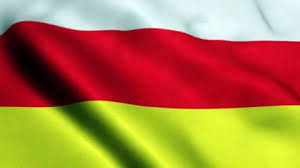
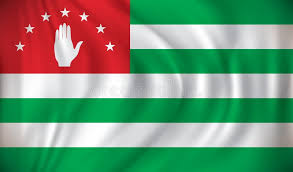
Putin held separate high-level meetings with President Alan Gagloev and President Badra Gunba, underscoring Russia’s continued economic and strategic engagement with South Ossetia and Abkhazia. During the meeting with Gagloev, Russia and South Ossetia vowed on deepening allied cooperation focused on trade, economic integration, investment, and socioeconomic development. Gagloev stated that South Ossetia had completed its earlier investment and development programmes and was launching new initiatives in coordination with the Russian government and presidential administration. Discussions also covered Russian-backed humanitarian programmes, education and cultural cooperation, and funding for the renovation of war memorials and museums. Putin noted that bilateral trade turnover between Russia and South Ossetia increased by more than 14% over the past year and emphasized that the new treaty framework would further strengthen economic cooperation and social support mechanisms.
In his meeting with Badra Gunba, Putin focused on expanding economic cooperation, tourism, transport connectivity, and healthcare support. Putin said bilateral trade turnover with Abkhazia rose by 16% over the past year. Gunba highlighted the reopening and growing operations of Sukhum airport, which handled more than 120,000 passengers in 2025 and expanded flights connecting Abkhazia with several Russian cities. He also thanked Moscow for deploying Russian medical personnel during the tourist season and for transferring sanitary-epidemiological laboratories to Abkhazia. Additional border facilitation measures for children travelling to Abkhazia were presented as steps to increase tourism flows and economic activity. The May 9 meetings reflected Moscow’s broader strategy of consolidating long-term regional partnerships through trade, infrastructure, humanitarian cooperation, investment, and institutional integration.
Putin addressed the issue of Armenia’s political orientation, noting that any move toward European integration should be carefully weighed against its existing economic ties with Russia and its participation in Eurasian frameworks. He stated that such a strategic decision could, in principle, be clarified through a referendum to reflect the will of the Armenian people, while also considering the practical economic consequences of any shift. Putin stressed that Moscow continues to support outcomes that benefit the Armenian people and remains committed to maintaining pragmatic, stable relations based on long-standing historical and regional ties.
Putin & Europe
Western sanctions inadvertently accelerated the regionalization of Eurasian trade. Meanwhile, Europe faces mounting structural economic pressure. One of the most revealing aspects of Putin’s press conference was his confidence regarding Europe’s long-term trajectory. He openly mocked what he described as the failure of Western expectations that Russia’s economy would collapse within months. Instead, Russia recorded one of the lowest unemployment rates among G20 economies – approximately 2.2% according to Putin. Russian GDP growth outperformed several major European economies in 2025. Industrial adaptation accelerated. Military-industrial production expanded. Energy exports redirected eastward. Europe, meanwhile, continues facing deindustrialization pressures linked to high energy costs.
German chemical production remains below pre-2022 levels. Manufacturing competitiveness across parts of Europe has weakened under elevated electricity prices. LNG imports from the United States remain structurally more expensive than pre-crisis Russian pipeline gas. This does not mean Russia “won” economically. But it does mean the Western assumption of Russian isolation failed. Instead, the world is fragmenting into competing macro-regional systems.
Putin & The Middle East
Putin’s comments on Iran also revealed Russia’s growing role as a diplomatic intermediary across the Global South. Post-war relations with Iran and the Gulf countries are expected to become more solid, and trade and connectivity may receive a strong boost through reconstruction strategies. Russia maintains relations simultaneously with Iran, the Gulf monarchies, China, India, and increasingly Southeast Asia. This multi-vector diplomacy gives Moscow leverage as a balancing actor in an increasingly multipolar environment. Putin’s detailed explanation regarding uranium export proposals for Iran demonstrated that Moscow seeks to position itself not only as an energy power, but also as a security guarantor and technical mediator in strategic disputes.
Summary
Today, the Global South increasingly values foreign governmental relationships capable of balancing multiple poles simultaneously rather than demanding exclusive alignment. The United States itself also appears to recognize this evolving reality. Putin repeatedly referenced communication with US President Donald Trump and acknowledged ongoing American interest in settlement mechanisms regarding Ukraine and broader international stability. Most importantly, Putin explicitly welcomed continued US-China engagement, arguing that stable relations between Washington and Beijing benefit the global economy. This is not the language of Cold War bipolarity.
Instead, it reflects a transition toward competitive multipolarity, a world where major powers compete intensely but also recognize mutual constraints. Russia’s Pivot to Asia must therefore be understood not as an abandonment of Europe, but as a strategic hedge against Western unpredictability and a recognition that the world economy’s future increasingly lies in Asia.
Emerging Asia already accounts for roughly 60% of global GDP growth. ASEAN alone is projected to become the world’s fourth-largest economy by 2030. China remains the largest industrial economy globally in purchasing power parity terms. India is among the fastest-growing major economies. Central Asia is emerging as a critical logistics hub. Russia is repositioning itself inside this transformation.
The Kremlin increasingly sees Eurasia not as a geopolitical concept, but as an integrated civilizational-economic space stretching from Minsk to Shanghai and from Murmansk to Kuala Lumpur. This explains why Putin devoted so much attention to trade, logistics, technology, energy, and historical memory simultaneously. For Moscow, historical legitimacy and economic integration are interconnected instruments of geopolitical resilience.
Victory Day itself served as a symbolic framework for this broader message. The presence of leaders from Asia and the Global South at Red Square was intended to demonstrate that Russia retains international partnerships despite unprecedented Western sanctions pressure. But beneath the symbolism lies a more profound structural shift. The international system is no longer unipolar. And Russia’s Pivot to Asia is no longer merely a pivot. It is becoming one of the organizing principles of the emerging Eurasian century.
This article was written by KP Majumdar, a geostrategic and geo-economics analyst whose work has been widely published by prestigious international news organizations and publications. He may be reached at info@russiaspivottoasia.com