 Русский





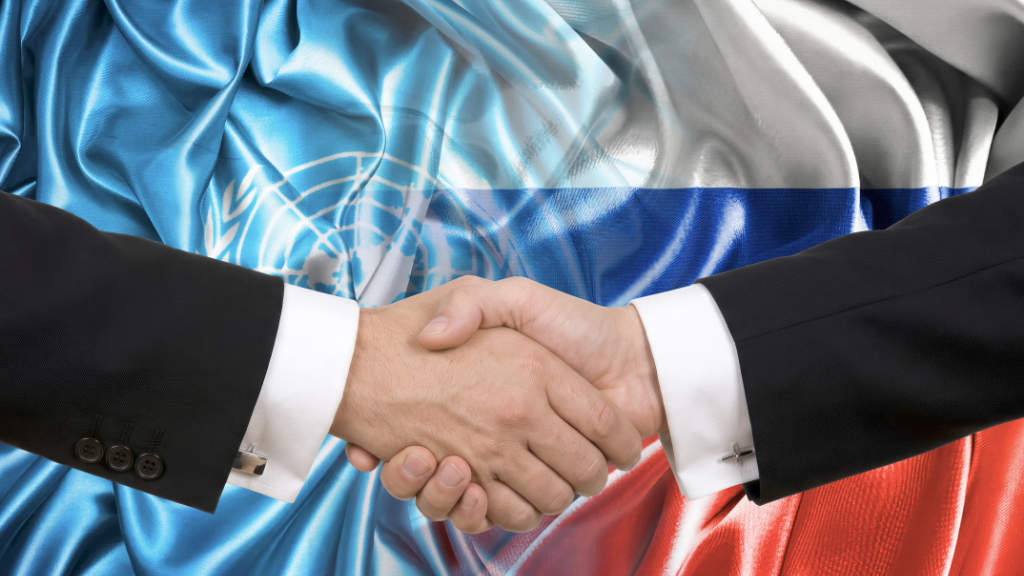

The extent of Sergey Lavrov’s diplomacy during the 81st UN General Assembly was larger than the headline meetings with the United States and Germany suggest, and have been woefully underreported in Western media. Lavrov said at his September 26 press conference that the Russian delegation had just completed “practically fifty” meetings. Lavrov’s week involved more than 30 bilateral meetings and interactive sessions, with the overall number approaching 50 once multilateral formats are included. The Russian Foreign Ministry described an extensive itinerary involving Algeria, Brazil, Brunei, Venezuela, Guyana, Guatemala, the Dominican Republic, Egypt, India, Jordan, Iraq, Iran, Yemen, Cuba, Kuwait, Lebanon, Mali, the Maldives, Morocco, Mexico, Nicaragua, the UAE, Panama, Senegal, Serbia, Syria, Sudan, Trinidad and Tobago and Uruguay, alongside the Pacific island states, Arab League, Alliance of Sahel States, OSCE, IAEA and UN leadership.
Since 2022, a consistent wave of Western political narrative and media commentary have claimed that Russia is completely isolated from the rest of the world. The scale of Russia’s diplomatic marathon in New York, directly challenges that narrative. Russia is not isolated; rather, its diplomatic engagement has increasingly shifted toward a broader and more diversified network of partners across the Global South, Asia, the Middle East, Africa and beyond, while maintaining selective dialogue with Western countries.
In this article, we take a deeper look at Russia’s engagements on the sidelines of the UN General Assembly, examining what the meetings reveal about Moscow’s evolving foreign-policy priorities, economic partnerships, trade links and broader strategy of international connectivity. In this article, we focus only on the most important takeaways from those nearly 50 meetings and engagements, rather than providing a detailed deep dive into Russia’s relations with each individual country. We focus specifically on what was discussed during these meetings and why those discussions are significant for Russia’s foreign policy, trade and economic engagement.
Day One: Washington, The UN System & The Global South Network
The first day in New York established the structure of the entire visit. Lavrov met UN General Assembly President Khalilur Rahman, US Secretary of State Marco Rubio, representatives of Cuba, Syria, Egypt, Lebanon, Trinidad and Tobago, Algeria, Brazil and the UAE, as well as the OSCE, Arab League and Switzerland. He also chaired the CSTO foreign-minister meeting and addressed the UN Security Council on Ukraine. Russian diplomatic reporting described the schedule as an exceptionally intensive programme.
Khalilur Rahman, President of the 81st UN General Assembly
Lavrov and Rahman discussed the UNGA agenda and the working environment of the 81st session. Russia stressed that the General Assembly remains the central and most representative forum for interstate dialogue and called for a less politicised atmosphere and more mutually respectful discussion. The significance was institutional: Moscow used the new Assembly presidency as an early channel for advancing its argument that the UN must remain the central platform of a changing international system.
Marco Rubio, United States

The Lavrov-Rubio meeting lasted just under an hour and was the fifth meeting between the two foreign ministers since 2025. The discussions covered Ukraine, bilateral relations, the Middle East, the South Caucasus, Latin America and the Caribbean, multilateral institutions and the G20. Russia also raised practical bilateral issues including economic cooperation, humanitarian and cultural contacts, travel restrictions and diplomatic property. Its significance is greater than the length of the meeting. Lavrov said Washington and Moscow now maintain regular communication in several formats, while simultaneously accusing Washington of continuing economic pressure on Russia. The result is a dual-track relationship: political communication is being preserved even while economic restrictions remain. Lavrov specifically pointed to continuing sanctions and pressure on Russian energy companies.
Bruno Rodríguez Parrilla, Cuba
The Cuba meeting continued a long-standing Russian-Cuban political channel. The Russian MFA confirmed the September 23 meeting, while the wider New York agenda placed Cuba within discussions of Latin American developments and growing pressure on Havana. The significance is both political and economic. Cuba remains one of Russia’s principal Caribbean partners, and maintaining ministerial contact allows Moscow to preserve a political, humanitarian and economic channel in a region where Russia is attempting to prevent its international relations from becoming geographically concentrated in Eurasia. Our most recent update on Russia-Cuba ties is here.
Asaad al-Shaibani, Syria
Lavrov’s discussion with Syrian Foreign Minister Asaad al-Shaibani focused on regional security, bilateral cooperation and developments in the Middle East. Russian MFA reporting confirms the meeting and stresses continuation of the bilateral dialogue. The meeting fits Moscow’s broader Middle East approach: maintain working relations with governments and political actors across the region rather than restrict diplomacy to one alliance structure. In Lavrov’s remarks, Syria and the Kurdish question were again linked to Russia’s continuing role as a potential intermediary when regional actors seek it. Our most recent update on Russia-Syria ties is here.
Badr Abdelatty, Egypt
Egypt appeared in Lavrov’s New York programme in the context of Middle Eastern security and the wider Red Sea, Persian Gulf and Black Sea shipping questions. Lavrov later said Egypt, India and Türkiye had raised concerns about commercial shipping in the Black Sea. For Russia, Egypt has significance beyond bilateral diplomacy. It is simultaneously a major Arab state, a Mediterranean power, a Suez Canal stakeholder and an important participant in discussions over food, energy and shipping security. The meeting therefore connects Russian foreign policy with trade-route security. Our most recent update on Russia-Egypt ties is here.
Nawaf Salam, Lebanon

The Lebanon channel concerned the security situation around Lebanon, cessation of hostilities and implementation of UN Security Council Resolution 1701. The meeting belongs to a wider Russian effort to keep communication open around one of the most sensitive points of the Middle Eastern security system. Its economic significance is indirect but important: the stability of Lebanon, the Eastern Mediterranean and the Red Sea affects maritime routes, energy markets and regional logistics. Our most recent update on Russia-Lebanon ties is here.
Sean Sobers, Trinidad and Tobago

The Trinidad and Tobago contact expanded the Caribbean component of Lavrov’s diplomacy. The meeting was part of a larger effort to maintain bilateral relations and UN coordination with smaller states rather than treating them merely as votes within larger geopolitical blocs. That approach matters for Russia’s broader diplomatic model: small states are being treated as independent partners in a network rather than as members of an exclusively Western diplomatic sphere.
Ahmed Attaf, Algeria
The Algerian meeting connected Russian diplomacy with North Africa, the Mediterranean and African security. Algeria is one of Russia’s most established military-technical and political partners on the continent, while also holding an important position in Mediterranean energy and security affairs. The New York contact therefore complemented Moscow’s simultaneous engagement with Egypt, Morocco, Mali, the Sahel states and Senegal. Our most recent update on Russia-Algeria ties is here.
Nabil Fahmy, Arab League

Lavrov’s contact with the Arab League provided a multilateral channel covering the Middle East rather than one individual bilateral relationship. Russian diplomacy used the platform to discuss regional crises and political settlement. The importance is that Moscow is seeking to keep its Middle East policy linked to Arab multilateral structures while presenting itself as a participant in negotiations rather than solely as an outside power.
Mauro Vieira, Brazil

Brazil was the most important Latin American contact. Lavrov and Vieira discussed bilateral cooperation, international issues and coordination following the BRICS summit in New Delhi. The supplied material records Brazilian electoral issues, non-interference and historical memory as part of the discussion. The economic significance is substantial because Brazil and Russia are both major BRICS economies. The relationship links diplomacy with agricultural trade, energy, fertiliser supplies, finance and the wider question of BRICS economic coordination. Our most recent update on Russia-Brazil ties is here.
Abdullah bin Zayed Al Nahyan, UAE
The UAE meeting reinforced Russia’s engagement with one of the Gulf’s principal commercial and financial centres. The UAE has become an important platform for Russian companies maintaining international business links despite Western restrictions. The significance therefore extends beyond politics: the UAE represents a logistics, investment, aviation, financial and re-export node connecting Russia with Asia, the Middle East and Africa. Our most recent update on Russia-UAE ties is here.
Ignazio Cassis, Switzerland

The Swiss contact was important because Switzerland occupies a complicated position between traditional neutrality and its alignment with Western sanctions policy. Russian analysts have stressed that Moscow no longer regards Switzerland as an unquestioned neutral intermediary. The meeting nevertheless demonstrates that Moscow continues to use diplomatic channels even with states whose political positions it criticizes.
Feridun Sinirlioğlu, OSCE Secretary-General

The OSCE meeting concerned the organisation’s future and the deteriorating European security environment. Russia continues to regard the OSCE as a possible platform for dialogue despite the organisation’s political difficulties. The contact illustrates a broader Russian approach: Moscow is not abandoning European institutions altogether, but is challenging their current political configuration while preserving communication channels.
CSTO Foreign Ministers
The CSTO meeting was one of the most concrete institutional outcomes of the week. Ministers discussed equal and indivisible security in Eurasia, coordination at the UN, regional security and preparations for the November 11 CSTO Collective Security Council meeting in Moscow. The meeting also connected the CSTO to the planned Eurasian Charter of Diversity and Multipolarity. This is significant because Russia is attempting to translate the concept of multipolarity into institutional mechanisms rather than leave it solely as diplomatic rhetoric. Our most recent update on Russia-CSTO ties is here.
Day Two: 13 More Meetings: Expansion Across Africa, Asia and Latin America
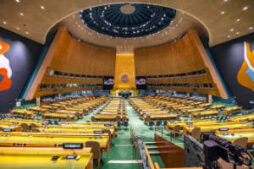
The official Russian diplomatic recap identifies 13 meetings Lavrov held on September 24: Senegal, Serbia, Jordan, Nicaragua, the Dominican Republic, Panama, Mali, Brunei, Iran, the Alliance of Sahel States, Pacific Small Island Developing States, IAEA Director General Rafael Grossi and UN Secretary-General António Guterres.
Bassirou Diomaye Faye, Senegal

Lavrov and Senegalese President Bassirou Diomaye Faye discussed bilateral relations and the international agenda. Russia invited Senegal to the third Russia-Africa Summit in Moscow in late October 2026 and congratulated Dakar on its role in West African diplomacy. This meeting linked UN diplomacy directly to Russia’s Africa strategy. The Russia-Africa Summit creates a platform for discussions on energy, mining, agriculture, infrastructure, security and education, making Senegal a bridge between Moscow and wider West African networks. Our most recent update on Russia-Senegal ties is here.
Aleksandar Vučić, Serbia

The Serbia meeting covered bilateral ties and European and regional security. The relationship is significant because Serbia remains one of Russia’s principal political partners in Europe while maintaining its own foreign-policy links with the EU. The wider energy and transport dimension is also important. Russia’s relationship with Serbia has historically included energy, oil and gas, transport and infrastructure cooperation. Our most recent update on Russia-Serbia ties is here.
Ayman Safadi, Jordan
The Jordan meeting covered regional developments, particularly Middle Eastern crises. Jordan remains important because of its geographical position between the Levant, Gulf and Red Sea systems. The contact reinforced Moscow’s policy of maintaining communication with states that simultaneously work with the United States, Europe, Arab institutions and Russia. Our most recent update on Russia-Jordan ties is here.
Valdrack Jaentschke, Nicaragua

The Nicaragua meeting reinforced Russia’s Latin American network. Managua is among Moscow’s longstanding political partners in Central America. Its significance lies less in trade volume than in strategic connectivity: Nicaragua gives Russia another diplomatic channel in Central America and a partner in multilateral forums. Our most recent update on Russia-Nicaragua ties is here.
Víctor Bisonó, Dominican Republic

The Dominican Republic meeting widened Russia’s engagement with the Caribbean. Such contacts are relevant to tourism, aviation, agriculture, education and humanitarian cooperation, as well as UN coordination. The geographical breadth is notable: Russia was simultaneously talking to Cuba, Nicaragua, the Dominican Republic, Panama, Trinidad and Tobago, Brazil, Uruguay, Barbados, Guatemala and Guyana. Our most recent update on Russia-Dominican Republic ties is here.
Javier Martínez-Acha, Panama

The Panama meeting had particular logistical importance because Panama sits at one of the world’s principal maritime chokepoints through the Panama Canal. Even when political issues dominate, Russian diplomacy has a direct interest in maintaining channels with countries controlling or influencing global trade infrastructure. Our most recent update on Russia-Panama ties is here.
Abdoulaye Diop, Mali

The Mali meeting addressed regional security and cooperation. Mali is central to Russia’s expanding relationship with the Sahel and to the emerging Alliance of Sahel States. The significance is increasingly economic as well as security-related: Sahel engagement potentially involves mining, energy, agriculture, infrastructure and transport connectivity. Our most recent update on Russia-Mali ties is here.
Prince Abdul Mateen, Brunei
The Brunei contact broadened Russia’s Southeast Asian outreach. Brunei is small in population but significant because of its position in ASEAN and its hydrocarbon economy. For Moscow, maintaining direct ministerial contacts with ASEAN states supports a wider strategy of connecting Eurasian diplomacy with Southeast Asian markets and institutions. Our most recent update on Russia-Brunei ties is here.
Abbas Araghchi, Iran
The Russian-Iranian meeting focused on Iran and regional developments. Both sides stressed diplomatic settlement and discussed implementation of agreements reached by Presidents Vladimir Putin and Masoud Pezeshkian in Bishkek on September 1. The economic significance is considerable. Russia-Iran connectivity runs through the Caspian Sea, the International North-South Transport Corridor, energy cooperation and alternative trade mechanisms. With the Persian Gulf and Red Sea under pressure, the relationship has increasing relevance to Russia’s transport diversification. Our most recent update on Russia-Iran ties is here.
Alliance of Sahel States

Lavrov’s meeting with the foreign ministers of the Alliance of Sahel States such as Mali, Burkina Faso and Niger, represented collective engagement with a regional bloc rather than individual bilateral diplomacy. The significance is strategic: Russia is increasingly dealing with parts of Africa through emerging regional structures, linking sovereignty and security discussions with potential cooperation in resources, infrastructure, energy and agriculture. Our most recent update on Russia-Sahel ties is here.
Pacific Small Island Developing States

The Pacific SIDS meeting broadened the geographic footprint of Russia’s diplomacy into a region normally associated with Western and Asian-Pacific institutions. For Moscow, these countries matter primarily through multilateral diplomacy, climate discussions, maritime affairs, food security and development cooperation. The meeting also demonstrated that Russia’s concept of the Global South extends beyond the major BRICS states. Our most recent update on Russia-Pacific Island ties is here.
Rafael Grossi, IAEA
The meeting with IAEA Director General Rafael Grossi focused on Russia’s cooperation with the Agency, the Zaporizhzhia nuclear power plant and Iran’s nuclear programme following strikes on Iranian nuclear facilities. This was one of the meetings where energy security and nuclear diplomacy intersected directly. For Russia, nuclear cooperation is both a strategic-security issue and an international economic sector in which Rosatom maintains a large global project portfolio.
António Guterres, UN Secretary-General
Lavrov used the meeting with Guterres to raise questions about UN neutrality, representation and the organisation’s future. The Russian side argued that the Secretariat should more closely reflect the Global Majority and remain impartial. The meeting was significant because Russia is simultaneously challenging the current UN leadership and defending the UN system itself. This distinction is central to Moscow’s policy: Russia is not arguing for abandoning multilateralism; it is arguing for changing who exercises influence within it.
Day Three: India, Kazakhstan And A Wider Commercial-Geographic
The September 25 programme expanded further. TASS imagery confirms meetings with India, Singapore, Uganda, Iran, Brunei, Panama, Kuwait and Sudan, while Russian MFA reporting confirms additional contacts with Guatemala, Guyana, Morocco, Uruguay, Barbados, Iraq, the Maldives and Yemen.
Subrahmanyam Jaishankar, India

The India meeting was among the most strategically significant of the entire week. Jaishankar said the two sides reviewed bilateral relations and BRICS cooperation and exchanged views on current international issues. This is particularly important for trade and connectivity. Russia-India relations increasingly combine energy, defence, pharmaceuticals, fertilisers, payments, logistics and BRICS coordination. The meeting showed that Moscow continues to treat India not simply as a diplomatic partner but as one of the principal pillars of its non-Western economic strategy. Our most recent update on Russia-India ties is here.
Mukhtar Tileuberdi, Kazakhstan
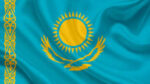
The Kazakhstan meeting reviewed bilateral cooperation, implementation of high-level agreements and coordination in multilateral organisations. Kazakhstan’s Foreign Ministry described the two countries as reaffirming their comprehensive strategic partnership and allied relations. The economic importance is particularly high because Kazakhstan sits at the intersection of Russia, China, Central Asia and the Caspian transport system. Cooperation through the EAEU, CSTO, CIS and SCO gives the relationship an institutional density that few other Russian partnerships possess. Our most recent update on Russia-Kazakhstan ties is here.
Vivian Balakrishnan, Singapore

The Singapore meeting showed that Russia’s Asian outreach is not restricted to countries openly aligned with Moscow. Singapore is a major financial, maritime and logistics centre. For Russia, communication with Singapore matters because Southeast Asian connectivity involves shipping, financial services, commodity trading and ASEAN-linked economic networks. Our most recent update on Russia-Singapore ties is here.
Jessica Alupo, Uganda

The meeting with Uganda’s Vice President expanded Russia’s East African engagement. It came alongside Russia’s broader Africa diplomacy involving Senegal, Mali, the Sahel states, Sudan and Morocco. The significance is the diversification of Russian-African relations beyond the traditional security agenda toward agriculture, education, energy, mining, infrastructure and trade. Our most recent update on Russia-Uganda ties is here.
Jarrah Jaber Al-Ahmad Al-Sabah, Kuwait

The Kuwait meeting added another Gulf partner to the New York schedule. Kuwait’s importance comes from its position in the Gulf, its energy sector and its role in Arab diplomacy. Together with the UAE, Egypt, Iran, Iraq and Yemen contacts, the Kuwait meeting shows that Russia’s Middle East policy is being built through a network rather than a single regional alliance. Our most recent update on Russia-Kuwait ties is here.
Mohi El-Din Salem, Sudan

The Sudan meeting demonstrated Russia’s continued engagement with the African Red Sea corridor. Sudan is strategically positioned between North Africa, the Sahel, the Red Sea and the Arabian Peninsula. This gives the relationship potential significance for ports, logistics, food security, agriculture and energy in addition to political and security issues. Our most recent update on Russia-Sudan ties is here.
Carlos Ramiro Martínez, Guatemala

The Guatemala meeting focused on developing Russia-Guatemala relations in bilateral and multilateral formats and increasing dialogue between Russia and Latin American and Caribbean integration structures. That formulation is important because Moscow increasingly approaches Latin America through regional organisations and economic mechanisms rather than through isolated bilateral relationships. Our most recent update on Russia-Guatemala ties is here.
Hugh Hilton Todd, Guyana

The Guyana meeting was another example of Russia reaching into smaller but strategically relevant Latin American states. Guyana’s growing importance in the global energy market gives such contacts a potentially wider economic dimension, particularly as Russia seeks relationships with countries whose commodity sectors influence global markets.
Nasser Bourita, Morocco
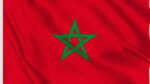
Russia and Morocco discussed bilateral relations, the 2016 Declaration on Deep Strategic Partnership and coordination over regional crises including Western Sahara. Morocco is particularly significant because it connects Russian diplomacy to North Africa, the Atlantic, the Mediterranean and African markets. The relationship also has agricultural and tourism dimensions. Our most recent update on Russia-Morocco ties is here.
Mario Lubetkin, Uruguay

The Uruguay meeting was unusually explicit about economic connectivity. The sides discussed bilateral relations and trade and economic cooperation, while also considering Russia-CELAC political dialogue and stronger links between the EAEU and MERCOSUR. This is one of the clearest indicators of the economic logic behind the New York diplomacy: Russia is trying to connect its Eurasian economic institutions with Latin American regional structures. Our most recent update on Russia-Uruguay ties is here.
Mia Amor Mottley, Barbados

The Barbados meeting addressed bilateral cooperation and the international agenda, particularly within the UN, and both sides expressed interest in deeper dialogue and cooperation. The contact further demonstrates that Moscow’s Global South strategy is not confined to large economies. Caribbean states are being incorporated into Russia’s broader multilateral network. Our most recent update on Russia-Barbados ties is here.
Fuad Hussein, Iraq

The Russia-Iraq discussion was one of the more explicitly economic meetings. The two sides discussed political dialogue and expansion of mutually beneficial cooperation in trade, the economy and humanitarian affairs, alongside the Persian Gulf situation. Iraq therefore represents another intersection between diplomacy, energy and regional logistics. Its position makes it relevant to Russia’s Middle Eastern connectivity and to the wider North-South transport concept. Our most recent update on Russia-Iraq ties is here.
Iruthisham Adam, The Maldives
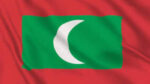
Russia and the Maldives discussed political dialogue and practical cooperation, specifically including tourism. This is an important economic signal because Russian foreign-policy engagement increasingly incorporates tourism as a connectivity sector. It links aviation, hospitality, consumer spending and direct transport routes. Our most recent update on Russia-Maldives ties is here.
Abdullah Al-Alimi Bawazeer, Yemen

The Yemen discussion focused on bilateral relations, UN coordination, the Persian Gulf and Red Sea situation and support for an intra-Yemeni political process under UN auspices. The Red Sea dimension gives the meeting direct commercial importance. Shipping disruption in the Bab el-Mandeb affects Europe-Asia trade, energy prices and alternative transport corridors, making Yemen part of Russia’s wider connectivity calculations. Our most recent update on Russia-Yemen ties is here.
Day Four: Germany, Mexico, Selective Western Contact & Latin American Continuity
Johann Wadephul, Germany

The meeting with German Foreign Minister Johann Wadephul was one of the most politically significant contacts of the week. It lasted approximately 22 minutes, was requested by the German side and was the first bilateral meeting between the two countries’ foreign ministers since January 2022. Wadephul reiterated Berlin’s established positions on Ukraine and raised allegations concerning hybrid incidents, escalation and Black Sea shipping. Lavrov said the German minister had largely repeated Germany’s publicly stated positions and that he had heard nothing substantially new. The significance therefore lies less in immediate policy change than in reopening a ministerial channel after more than four years. It also matters economically because Russia-Germany commercial relations remain significant large even after the sharp post-2022 contraction. 2025 bilateral trade was €8.54 billion.
The meeting itself, however, did not produce a reported agreement on trade, investment or business cooperation. This distinction is particularly important concerning the proposed Russia-US-Germany business forum for 2027. The forum was proposed separately by Kirill Dmitriev of the Russian Direct Investment Fund on September 9, before the Wadephul meeting. Dmitriev subsequently said that more than 20 requests from German business had already been received and that the event could be held in a neutral country, possibly in or near the Middle East. Therefore, the available evidence does not establish that Wadephul proposed or agreed to that business summit during his 2026 meeting with Lavrov. The two developments should be treated separately: one was a foreign-minister meeting requested by Berlin; the other was a Russian investment-diplomacy initiative announced by Dmitriev.
Roberto Velasco Álvarez, Mexico

The Mexico meeting covered current international and regional issues and multilateral cooperation through the UN, G20 and APEC. Its significance is economic as well as diplomatic. Mexico occupies a unique position between North America, Latin America and the Pacific. Maintaining dialogue with Mexico gives Russia another channel into the Western Hemisphere while preserving contact with a major manufacturing and trading economy. Our most recent update on Russia-Mexico ties is here.
The Eurasian Charter
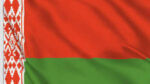
The most important institutional innovation of the week was not a bilateral meeting. On September 25, Russia and Belarus launched negotiations on a Eurasian Charter of Diversity and Multipolarity in the 21st Century. The initiative is designed to address security, economic cooperation, connectivity, humanitarian relations and equal decision-making among Eurasian states. The first negotiation round is planned for Minsk before the end of 2026, followed by another round in Moscow in the first half of 2027. The target is to negotiate a text potentially for adoption at a leaders’ summit in Minsk, tentatively by October 2027. This is where the New York meetings connect most directly to Russia’s long-term foreign-economic strategy. Moscow already operates through the EAEU, CSTO, CIS and SCO. The proposed Charter is intended to provide an additional continental political-security umbrella while explicitly incorporating economic cooperation and connectivity. The supplied material records Lavrov saying that Russia wants a continent-wide platform in which all Eurasian countries and organisations can regularly exchange views without external interference.
What Lavrov’s UN Speech Says About Russia’s Foreign Policy
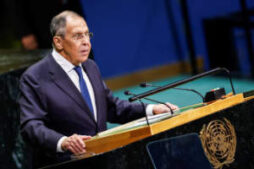
Lavrov’s September 26 General Assembly speech and subsequent press conference provide the clearest framework for interpreting the meetings. The first pillar is multipolarity. Russia is presenting the shift from a predominantly Western-centred international system toward a broader configuration involving Asia, Africa, Latin America and Eurasia. The diplomatic schedule itself was constructed to demonstrate this: India, Brazil, Iran, Egypt, UAE, Senegal, Mali, the Sahel states, Morocco, Iraq, Singapore, Brunei, the Maldives, Latin America and the Pacific all appeared alongside the United States, Germany, Switzerland and UN institutions. The second pillar is UN reform. Lavrov called for additional permanent representation from Asia, Africa and Latin America while rejecting additional Western permanent seats. He argued that the Security Council and Secretariat should better reflect the distribution of global political weight. The third pillar is sovereign economic development. In the press conference, Lavrov linked political independence in the Global South to continuing economic dependence and argued that this dependence can persist or even increase after formal decolonisation. This is directly relevant to trade policy. The emerging Russian model is increasingly based on national-currency settlements, alternative payment mechanisms, regional development institutions, transport corridors, energy partnerships, technology cooperation and trade conducted through non-Western intermediaries.
Rubio & the United States: Normalization Without Economic Engagement
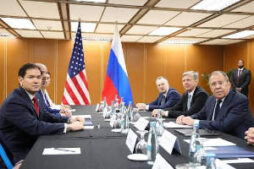
The Rubio meeting demonstrates that Russia is not closing the door to the United States. Lavrov said that he had met Rubio five or six times during the new Republican administration and that additional American representatives, including Steve Witkoff and Jared Kushner, maintain contact with Moscow. But he simultaneously stressed the contradiction between diplomatic engagement and economic pressure. According to Lavrov, Washington is conducting diplomacy while maintaining sanctions and economic measures against Russia, including measures affecting major Russian oil companies. The practical direction is therefore selective normalization rather than broad normalization. Political communication can expand first; commercial relations would require separate decisions concerning sanctions, payments, energy, logistics, diplomatic property, travel and investment. Meanwhile, many media outlets reported that the Trump administration is considering business deals with Russia first before a ceasefire. According to The New York Times, the White House is reportedly considering signing certain economic agreements with Russia before the Ukraine war ends, based on information from two people familiar with negotiations involving Trump’s special envoys.
The planned 2027 Russia-US-Germany business forum also fits this economic track, but it remains a separate initiative rather than an outcome of the Wadephul-Lavrov meeting. Dmitriev said more than 20 German business requests had already been received and that the venue might be a neutral country.
India, Iran, Africa & Latin America Show The Economic Centre Is Moving

The strongest economic pattern in the New York schedule is the simultaneous engagement of India, Iran, Kazakhstan, UAE, Egypt, Iraq, Africa, Southeast Asia and Latin America. India provides the largest example. The Lavrov-Jaishankar discussion linked bilateral cooperation with BRICS. Iran provides the transport and energy corridor dimension. Kazakhstan anchors the Eurasian land bridge. The UAE provides finance, logistics and business connectivity. Egypt links Russia to the Suez route and Arab markets. Iraq links Russia to Gulf and Mesopotamian logistics. Uruguay explicitly connected Russia’s EAEU with MERCOSUR. The Maldives meeting brought tourism into the diplomatic agenda. This suggests that Russian foreign-economic policy is increasingly being organised around connectivity chains rather than individual markets. Russia is seeking routes connecting the EAEU to India through the INSTC; links with China and Central Asia through Eurasian land corridors; Gulf logistics through Iran and the UAE; African routes through Egypt and the Red Sea; and Latin American markets through BRICS, CELAC, MERCOSUR and bilateral trade.
The Key Trend: Connecting The Pivot To A Larger Network
The New York marathon therefore indicates a development in aligned with the present trend of Russia’s “pivot to Asia.” The pivot is becoming a network strategy. Asia remains central, but Russia is connecting Asian relationships with Middle Eastern, African and Latin American partners. BRICS provides one layer; the SCO, EAEU, CSTO and CIS provide others; bilateral trade and investment agreements form another; transport corridors and alternative payment systems provide the economic infrastructure. The nearly 50 contacts are important precisely because of their geographical distribution. Russia was not simply meeting countries that share Moscow’s positions on Ukraine. It was also meeting states with different foreign-policy orientations, including Singapore, Switzerland, Mexico, Panama, Jordan and the UAE. That creates a more complex pattern than a simple Russia-versus-West diplomatic divide.
Russia’s Developing Global Trends: Trade, Business And Connectivity
- The first emerging trend is continued de-dollarisation and diversification of settlement mechanisms. The political language of sovereign development is increasingly accompanied by practical arrangements involving national currencies and alternative financial channels.
- The second is transport diversification. Iran, Kazakhstan, the UAE, Egypt, Iraq and the Red Sea repeatedly appear in the diplomatic agenda because transport geography is becoming a central element of Russian foreign policy.
- The third is energy diplomacy. Russia’s conversations with India, Iran, Egypt, Iraq, the UAE and African states connect foreign policy with oil, gas, nuclear power, electricity and fuel logistics.
- The fourth is tourism and people-to-people connectivity. The Maldives discussion explicitly included tourism, while Lavrov also addressed direct international connectivity and practical cooperation in other meetings.
- The fifth is institutional linking of economic blocs. The Uruguay meeting’s reference to EAEU-MERCOSUR relations is particularly revealing. Russia is increasingly trying to make its own regional economic structures interact with Latin American and Asian institutions rather than relying on direct bilateral trade alone.
Summary
Lavrov’s final media conference reinforced this pattern. He said Russian delegation had completed nearly 50 meetings and described the week as an active process of “exiting isolation.” But the important analytical point is that Russia’s concept of “exiting isolation” is not synonymous with restoring relations with Western Europe. The meeting record shows a different mechanism: maintaining Western channels where useful while increasing the density of non-Western relationships. The German meeting illustrates the first part. The Rubio meeting illustrates the second. India, Iran, Kazakhstan, Africa, ASEAN-related states and Latin America illustrate the third. The final result is therefore not a single diplomatic breakthrough but a change in the architecture of Russian external relations.
Russia is retaining dialogue with Washington. It has reopened a ministerial channel with Berlin. At the same time, it is deepening contacts with India, Iran, Kazakhstan, the Gulf, Africa, Southeast Asia and Latin America and attempting to institutionalize a Eurasian security and connectivity framework. That combination is the most important takeaway from the New York week. The supplied material itself reaches a similar conclusion: the meetings translated the stated concept of multipolarity into a measurable volume of diplomatic activity, while the Eurasian Charter moved the concept toward an institutional process. The evidence points to a Russian foreign policy that is becoming less dependent on the restoration of any single Western relationship and more dependent on the simultaneous development of multiple economic, political and transport corridors.
The United States remains important. Germany remains important. But the New York schedule shows that Russia’s practical foreign-policy infrastructure is increasingly being built through a much wider geography: India and Iran for Eurasian connectivity; Kazakhstan and other EAEU/CSTO partners for continental integration; the Gulf for finance and logistics; Africa for resources, infrastructure and markets; Southeast Asia for trade and tourism; and Latin America for BRICS, EAEU-MERCOSUR and wider Global South cooperation.
The 2027 business-forum proposal involving Russia, Germany and the United States should consequently be viewed as one possible Western economic channel within this wider system, not as evidence that Moscow is reversing its broader diversification strategy. The proposed forum had attracted more than 20 German-business expressions of interest by September 12, according to Kirill Dmitriev, but its venue and participation remained under discussion. While the Wadephul meeting itself produced no reported business agreement, and was somewhat ridiculed in Western media, its significance was diplomatic: a German foreign minister once again sat across from a Russian foreign minister. The economic significance will depend on whether such political channels eventually generate practical movement on sanctions, energy, transport, investment and corporate access.
In that sense, the New York week produced a very specific picture of Russian foreign policy in late September 2026: dialogue with the West where channels remain possible, institutional consolidation across Eurasia, and a widening economic network across Asia, Africa, the Middle East and Latin America. These diplomatic encounters were less a collection of isolated meetings than a demonstration of how Moscow is connecting these separate regional networks into a single foreign-economic system.
This analysis was written by MD. Rana, an Russian-Global South affairs, economics and geopolitical analyst for Russia’s Pivot To Asia. The author can be reached at info@russiaspivottoasia.com